Unknown's avatar

About ogresan

Richard Parks' stories have have appeared in Asimov's SF, Realms of Fantasy, Fantasy Magazine, Weird Tales, and numerous anthologies, including several Year's Bests. His first story collection, THE OGRE'S WIFE, was a finalist for the World Fantasy Award. He is the author of the Yamada Monogatari series from Prime Books.

“Is This the Five Minute Argument or the Full Half-hour?”

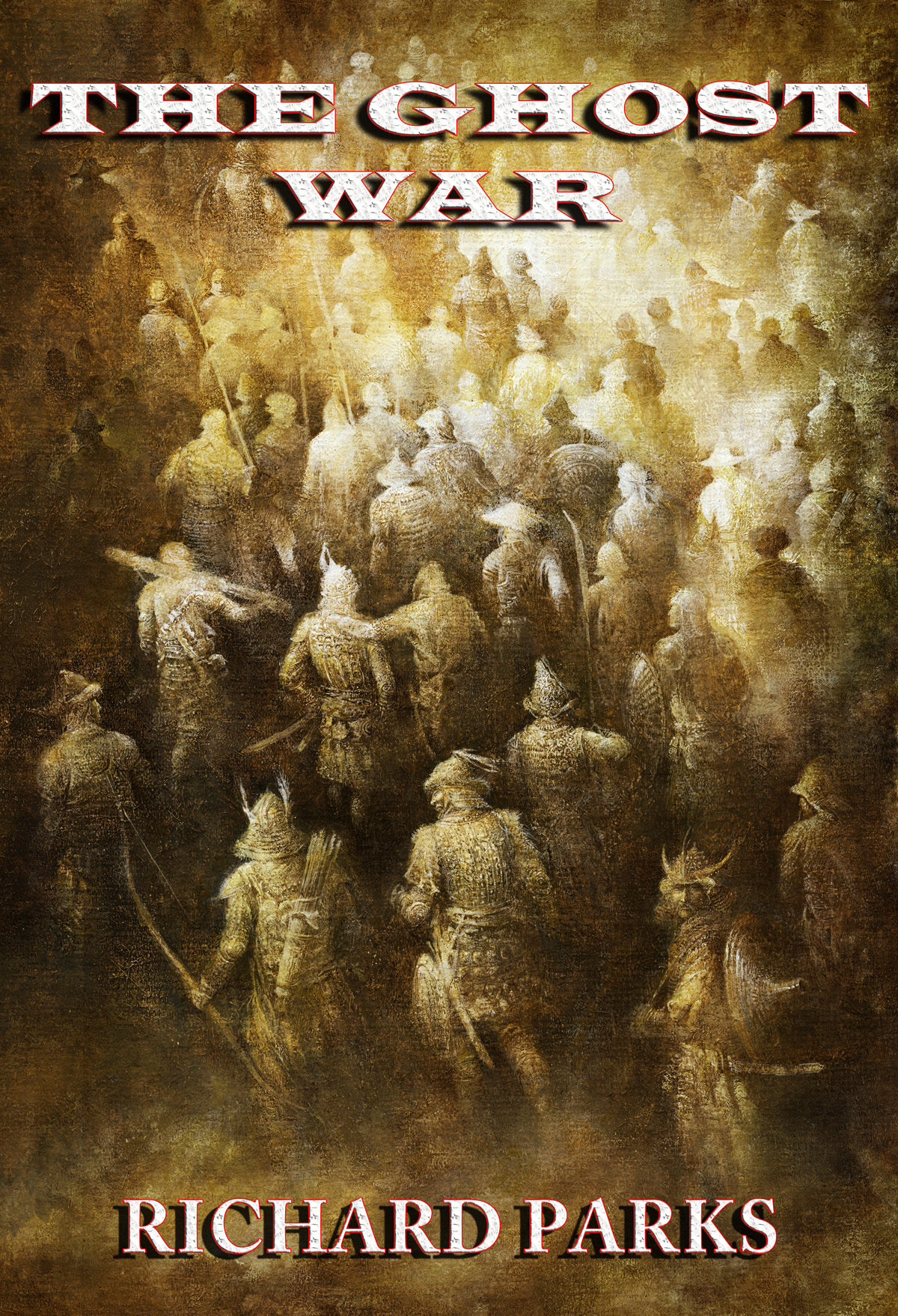
The Ghost WarThe subject came up for me because I got briefly involved in an online discussion, which on the surface was about Ursula Le Guin’s Earthsea trilogy. The instigator of the discussion readily admitted that the books were classics, but by implication wondered why they were classics. After all, there was very little overt action, the pacing was slow, and thus the books weren’t that entertaining. My first reaction was something along the lines of WTF??? After I picked my jaw up off the floor, I had to think about that for a bit.

I’m not going to get into a discussion of reading protocols. I’m not qualified, for one thing. However, there is something I have known for a long time, and the ancients knew long before I did—and so I shouldn’t have been at all surprised by that reader’s reaction to a series I did and still do think is brilliant. The proper response is not “What the hell is wrong with you?” The proper response is to shrug and remember “De gustibus non est disputandum.” More or less, “You can’t argue matters of taste.”

Of course, people can and do argue matters of taste. All the time. People like to argue, and for people who do like to argue, matters of taste are simply perfect. For as humanity has understood for a long time and the Romans expressed so succinctly, it’s a completely and utterly pointless exercise. There’s no logic to express, no preponderance of evidence to introduce, no real case to be made. Every such argument starts with one basic position by both (or all) disputants, and that is “Why don’t you like what I like?” The simple and obvious answer does nothing to derail the argument. It’s pointless, but only if you don’t realize that the argument itself is the point. Nothing is settled and no one is persuaded. Arguing in its purest and most honest form.

The thing is, we never read the same books, see the same plays, hear the same music, because we can’t. In order for me to do that, I would have to be you. And frankly, I have more than enough on my plate just trying to be me. My perspective and experience are not yours, and vice versa. If someone says the Earthsea books are slow paced, I would say they are thoughtful. If someone says that there’s no overt action, I would say that most of the conflict is internal but expressed beautifully in the text. If someone says that nothing really happens I’d say nothing but an entire world changing in front of our eyes. And whoever that theoretical someone was, we’d both be right.

Sometimes I think the real miracle is that we ever agree on anything.

A Picture is Worth…

Heavenly Fox - eBook1This weekend I received the preliminary sketch for the cover of To Break the Demon Gate. It promises to be pretty cool. I’d post it here, but first of all I don’t have the rights, and second, the artist would kill me, and rightly so. Like a rough draft, the job of a preliminary sketch is not to be good, but to be done, mainly to show the artist’s concept and whether those in a position to decide (mostly PS) think it’ll work. I do, and said so. If you’ve seen the cover art to The Heavenly Fox, you know the artist, Ben Baldwin. There will also be endpapers, because there will be a separate, signed edition. I wasn’t sure about that, but apparently it’s happening. For the endpapers he’s probably going to do one of my favorite scenes, Lady Snow dancing outside the Gion Shrine. I can’t wait to see what he comes up with.

Which brings me or leaves me at the subject of illustrations. I have to say that I have been very fortunate in my illustrators over the years. I mean, consider the list: Ben Baldwin, Jon Foster, John Berkey, Tiffany Prothero, Steve Fabian, Steven Gilberts, Ruth Sanderson. Heck, my first ever professional story was illustrated by Alicia Austin. And if you’re unfamiliar with any of these, a good Google search will quickly explain how chuffed I am about it all. Granted, the artist’s vision is never going to match your own, but that’s kind of the point. You get to see your work reimagined, and find out what it triggers in another creative perspective. Not everyone gets that chance.

Wait For It…

SleepingBuddhaI love to wait…said no one, ever. And yet it is one of those times. PS Publishing has an artist lined up for the cover of To Break the Demon Gate, but even preliminary sketches take time and I won’t have any idea what the cover is going to look like until much later in the process. I’ve got contracts and royalty payments hanging fire, but again nothing is ready now and won’t be for weeks, likely. I’ll send out the manuscript for The War God’s Son probably later this month, and there’s another long wait in the making.

Everyone has to “wait for it” at one time or another, in cases where it can’t be avoided, like the DMV or the dentist’s office. Relatively brief times, but they seem longer because there’s nothing else to do but anticipate the joy to come. But for what I call the real waiting, on matters that may take weeks, or months, even years? I sometimes think writers do more than their share. We’re always waiting, if we allow it.

Whaddya mean, “if we allow it”? It isn’t up to us! Oh, but it is. The key to bearing up to all the waiting, of course, is that you’re not waiting. Or to be more accurate, you’re not just waiting. There are things to do, stories to write, books to read, guitars to play, tires to patch and gutters to muck out. You don’t keep yourself busy as a distraction, you keep yourself busy because you’re alive and you’ve got better things to do than wait. Then one day a check and/or contract arrives in the mail, an email arrives with a decision made for good or ill, or maybe a preliminary/final cover jpeg arrives, and you go “What? Already?”

Or you can simply “wait for it” and focus on what isn’t happening and stew away your stomach lining and your last good nerve all the while, and waste one hell of a lot of precious, non-retrievable time in the process. That’s always an option. Not a good idea, but an option.

No one likes to wait. The trick, if there is one, is to simply refuse to do it.

Auld Lang Sighs

Lucille2013. Ugh. If that year had been a story in a slush pile, it wouldn’t have gotten past the first reader. I did see one new collection published by Prime, and finished the next Yamada novel (The War God’s Son), so it wasn’t a total waste. 2014 looks to be…interesting.

So. Anything you’re looking forward to in 2014?

Why Doesn’t the Skeleton Sing?

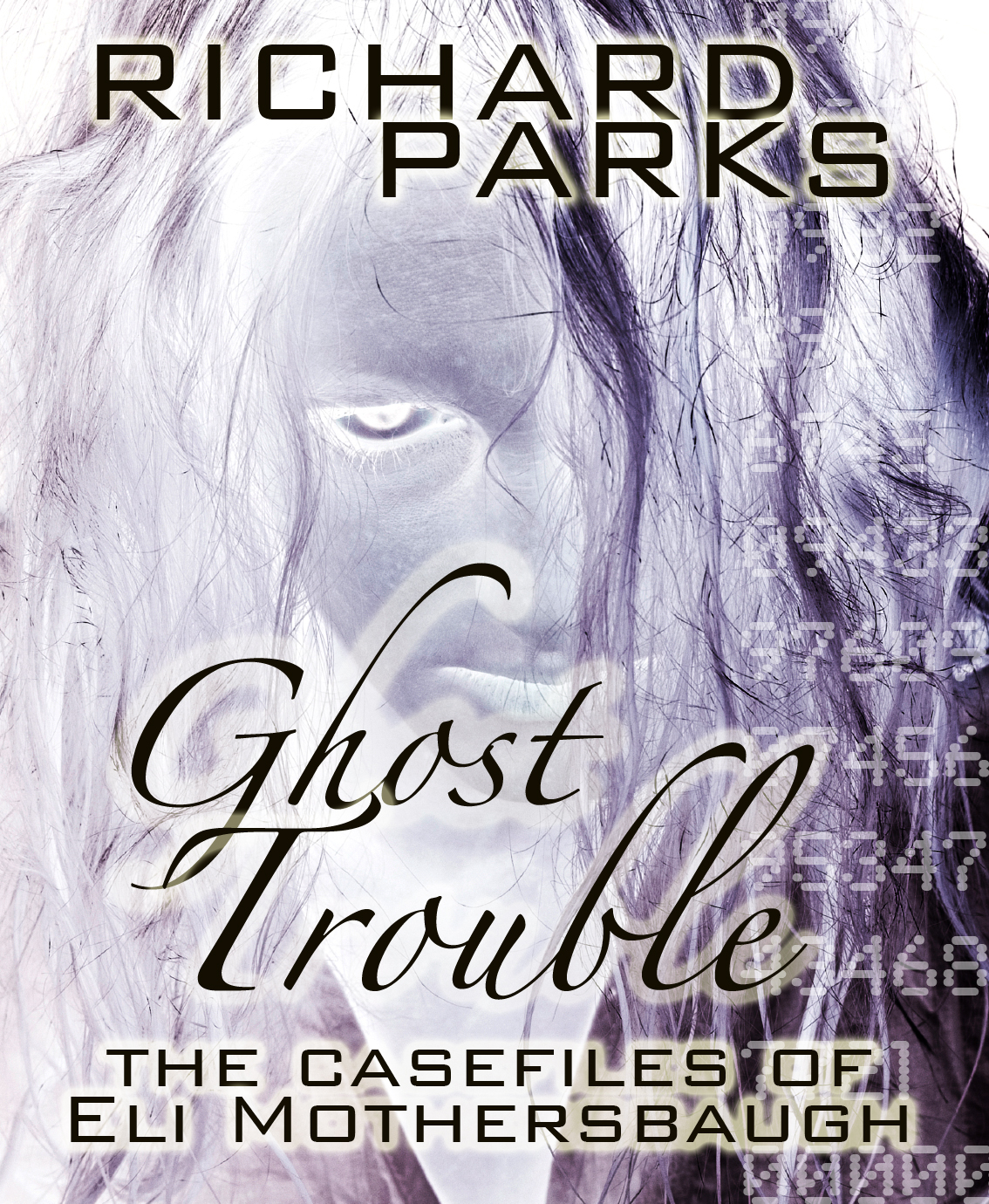
eBook cover for Ghost Trouble--The Case Files of Eli MothersbaughI don’t usually get story ideas from dreams. Usually because my dreams are an ungodly mess in terms of story, and I usually can come up with something better—and more coherent—when I’m awake. Story ideas have happened a couple of times, but no more than that. What happened on my last outing to the dreamtime was something a bit different—I got, not a story, but a question.

In the dream, someone asked me why my skeletons didn’t sing and I was answering that question.  Which sort of tells you all you need to know about my dreams. Silly things, the lot of them. And though I’ve never written about an animated skeleton I have written plenty of ghost stories staring my paranormal investigator, Eli Mothersbaugh, and the same principles applied. I have always considered the Eli stories to be science fiction, not fantasy, on the “change one thing and let the logic of your world building arise from that” school of science fiction construction. In Eli’s world, ghosts are a fact. A scientifically demonstrable, repeatable under laboratory conditions fact. And, as I was explaining in the dream, skeletons don’t need air, which is a good thing since they have no lungs and therefore no breath. Singing requires breath and vocal chords. Skeletons have neither, therefore skeletons don’t sing. Or scream, or talk, or do much of anything that requires breath. In the case of a paranormal ghost this isn’t even an issue. Of course an animated skeleton could talk in that situation, the same paranormal forces that would animate a skeleton in the first place would certainly not balk at speech. Logically, of course, it couldn’t talk, but then logically it wouldn’t exist in the first place, unless….

Unless the implied rules of the story universe which it inhabits allows for it. Since the thing exists in the first place, then it follows that it would be able to speak. Yet Eli’s universe has no animated skeletons. It might have ghosts that manifest visually as an articulated (not articulate) skeleton, but keep in mind that Eli’s universe is our universe, or rather one very much like it. With one small change. Ghosts may exist, but they have no physical form. They are pure bio-remnant energy in a more or less cohesive unity. In order to speak, they have to use that energy to manipulate sound waves and it takes a lot out of them, so most don’t bother. There was one exception, and if you’ve read the story “Diva” in the Eli Mothersbaugh collection, you know what—or rather who—that exception is. Yet even there a logical reason for Madame Caldwell’s ability exists. Has to exist, because the rules of this story universe require it.

Which brings me to my point, finally (Seriously, if you’ve stuck with me so far you had to be wondering if there was one, by now). Every story is set in its own universe, even the ones that appear to be set in our own, with the exception of series, in which case they’re set in their own universe. Most of the rules of that universe—and you might call them physical laws, but it goes beyond that—are implied in the setting and development of the story itself, and not always made explicit. That doesn’t matter. What does matter is that you violate those implied rules at your peril, because the reader won’t stand for it.

Whadya mean, “won’t stand for it”? How are they going to know that you’ve done so? They don’t know what the rules are! Oh, but they do, because everything they’ve read of your story up to that point has told them what they are. You imply, consciously or not. They infer, consciously or not. And when you break your own rules, they’ll know that something is not right. They might not know precisely what isn’t right, but they’ll know that something is off. And they’ll start thinking about what that something might be rather than being caught up in the story you’re trying to tell them, and you might as well butter it at that point, because that particular story is  toast.

I’m not saying it’s impossible to pull off, mind. It can be done, especially if you’ve used a bit of misdirection to make the reader infer something that you did not in fact imply, but that’s very tricky to pull off, so you’d better have a really good reason for doing it. Readers like being fooled, but you have to do it honestly. Otherwise you’re playing fast and loose with the rules, and remember you never get to decide if those rules work or not. The reader does that. And their decision is always final.