Unknown's avatar

About ogresan

Richard Parks' stories have have appeared in Asimov's SF, Realms of Fantasy, Fantasy Magazine, Weird Tales, and numerous anthologies, including several Year's Bests. His first story collection, THE OGRE'S WIFE, was a finalist for the World Fantasy Award. He is the author of the Yamada Monogatari series from Prime Books.

On Having Four Seasons

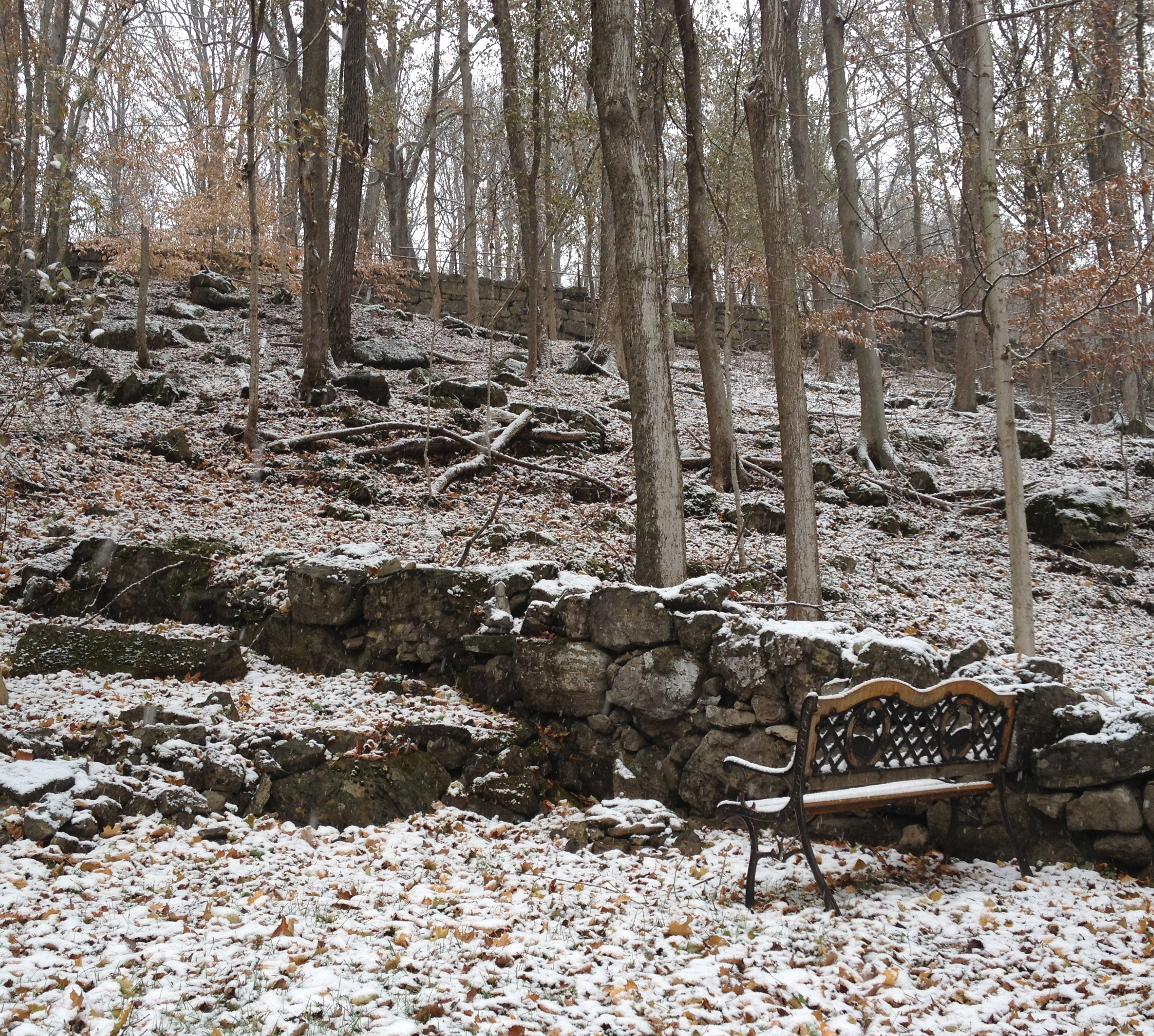
It’s about to start snowing again, which means it’ll be time to clear the walk, car, and driveway (again), so basically it’s a typical winter in central New York state. After so many years in my home state of Mississippi it still feels a little odd to have the actual four seasons I’d heard so much about. I mean, up here things close “for the season.” This is a new concept to me. Down South, as I’m sure I’ve mentioned before, we only had two real seasons: Winter(ish) and summer. Blazing. Hot. Summer. There was a sort of spring, but it lasted a week or two, tops and by the time you were sure it was there, it was gone. There was a sort of autumn too, but likewise. It was soon blended into winterish, and you couldn’t really tell where one ended and the other started.

Up here, You Can Tell. Fall is when the leaves turn colors, not just die and fall off from heat exhaustion. The maples in the woods behind and to the side of us really put on a show. It’s rather striking. There’s a brief peak time, but the show itself lasts for weeks. Last year and strictly by accident we managed to be in Vermont for peak season. It was dramatic, to say the least.

One trick to recognizing spring in the South was when the wildflowers bloomed. It’s pretty much the same here, but except for a few hardies like clover and the like, wildflowers were pretty much gone by the time summer was well in. Here, it’s different. Wildflowers last all summer long. Not the same ones, of course, but it’s sort of like a relay race: first the daffodils and tiger lilies bloom, and that lasts for several weeks. Then the wild chicory takes over, and it doesn’t stop until winter, and not even immediately then. Plus there’s the cottonwood season, and later milkweed, and sprinkled in between things I’m not even sure what they are. But they’re there, flowers of some sort, for the duration. The heat doesn’t kill everything, or hardly anything. It gets over 90 degrees but seldom stays there, unlike in MS, where 90 degrees in summer is a cold front. That’s compensation for shoveling all that snow. Not to mention the flowers, which I just did.

Another difference here from there is the type of snow. It did snow, now and then, down south during winterish. This year there was a fairly hefty band of it from Texas to Georgia, so remarkable that it made the news even up here. Saw pictures of maybe 4” accumulations, so of course there were pictures of snowmen. You don’t see so many of those up here, mainly because a lot of the snow we get is lake effect snow from Lake Ontario. It’s light and fluffy and doesn’t stick together at all. Good for skiing, I’m told, but I’m never going so far as to strap two planks to my feet just to find out. I’ll take their word for it. Being light and fluffy it’s relatively easy to shovel, for which I am grateful. If you ever had to shovel the wet slop that falls in the south (which you don’t, or didn’t where I lived. There’s not enough usually. Maybe in Tennessee or North Carolina), it’d break your back in short order.

So far the snow is holding off. We got maybe an inch last night, which doesn’t require drastic measures, so I’ll try to knock out a writing assignment due on Wednesday. In the meantime, the snow shovel is by the back door, on call, for the inevitable.


Story Time: Crows

Today’s Story Time is “Crows,” originally published in Fantastic Stories of the Imagination in Summer, 2000, and later collected in Our Lady of 47 Ursae Majoris and Other Stories in 2011. It’s not exactly an optimistic story, depending on your point of view, but…well, there aren’t really any “buts.”

Sometimes you just have to let the Dark Side out to play.

Pentatonic Minor Thoughts

It’s snowing as I write this. I almost wrote “snowing outside,” but then realized what a silly thing that was to say. Of course it’s snowing outside. If it was snowing inside, that would be either remarkable or a serious problem, possibly both. What is somewhat notable is that it wasn’t supposed to snow today. Or at least that was the prediction yesterday. But then friends and relations from down south have been posting snow pictures for the last few days, snow from Texas to Georgia. It was snowing in MS back when it wasn’t snowing here, only about eighty miles from the Canadian border. I was starting to feel left out, which is another silly notion. When they have enough snow that the local hardware stores start stocking snow shovels, then we’ll talk.

In addition to the guitar (no segue for you), I’ve added a couple more instruments to my “can’t play this worth a flip” category: pennywhistle and native style flute. By most accounts, the pennywhistle has only been around since the late 18th century. The native flute, by contrast, can be traced back for a few thousand years, and if you throw in the Neolithic bone flutes, a lot longer. Modern examples, whether of the five or six-hole variety, are tuned primarily to the pentatonic minor scale in different keys, though an advanced player can play other scales on the same flute; the older flutes (a few intact examples survive) were apparently tuned to the ear of whoever made it. Rather like how guitars can be relative tuned so that the notes and chords sound fine together until you try to jam with another guitar in standard tuning, where the differences suddenly become relevant. One gets the impression that the original native flute was a solitary instrument unless everyone in the group was playing an example made by or tuned to the same maker.

Yes, I know. But I’m just learning this stuff and now so will you. I’m mostly trying to be clear about my own understanding of a given subject, and I tend to do that by writing it down. As I’m doing here.

One interesting facet of learning the native flute is the order of learning. Once you have a handle on how to sound the notes and play the scale cleanly, the next order of business isn’t learning songs. No, the next order of business is: improvise. As long as you’re in the scale there’s no such thing as a wrong note. Try playing them in different orders, learn trills and (note) slurs and even bending notes. Odds are you’ll have made up your own songs even before you learn anyone else’s. And you’ll be ready to do that, if you want.

I do. I’ve even heard “Stairway to Heaven” on native flute, though it’ll probably be a while before I tackle that. Maybe “Silent Night.” After all, ‘tis the season.


Story Time: Drowning My Sorrows

To make up for being so late with Story Time today, I’m uploading a piece of original flash fiction, “Drowning My Sorrows.”*

Also a brief announcement: Two books, Ghost Trouble: The Casefiles of Eli Mothersbaugh and The Collected Tymon the Black are now available through Google Play. I’ll be adding more as time allows.

As always, “Drowning My Sorrows” will only be available until next Wednesday, December 13th, and then the story changes.


*Edited to add: Actually, this is the story’s second appearance. I did an earlier version as a blog post some time ago and completely forgot about it. To make up for it, I’ll be adding one more Story Time this week, probably Friday**. I’ll keep both up until next Wednesday, when we’ll start over and try not to repeat that mistake.

**And done. The second Story Time Story is also up now on the same page as the first. This one is “The Queen of Diamonds.”

I Don’t Know Why You Say Hello, I say Goodbye

One of the nice things about the internet is that it lets you reconnect with old friends long separated from you by time and distance. One of the horrible things about the internet is that it lets you reconnect….well, you get the idea.

Some time ago I heard from a very old friend indeed, someone I’d met in community college and spent two happy years with as a close friend before I went off to USM and we lost contact, as those things tend to happen. Cool, I think, and it’s great to be able to catch up. As it turned out, not so great. Reading her profile I found that she’d become “Born Again” and to a particularly virulent strain of evangelical pseudo-Christian. Next thing I’m checking out her blog and reading a very bigoted and hateful rant about immigrants and welfare recipients and a host of other imagined enemies of the lunatic right. Not so unusual, especially these sorry days, but you have to realize that this person, when I knew her, was just about the kindest, gentlest, sweetest, go-out-of her-way- to-help-anybody person that I’d ever met. I looked at this and could not find a trace of that person left.

Not sure what the moral is here, if there is one. It’s no newsflash that people do change, and not always for the better. It had been a long time and it was unrealistic of me to think that she’d be the same person I used to know. She’s not, but then again, neither am I. Even so, that was the end of that re-connection. It’s probably selfish of me, but I’d rather remember who she was, not what she became. At least that way the person I once knew still survives, after a fashion. The person I once knew was the sort of person the world needs more of now.

We have more than enough of the latter.