Unknown's avatar

About ogresan

Richard Parks' stories have have appeared in Asimov's SF, Realms of Fantasy, Fantasy Magazine, Weird Tales, and numerous anthologies, including several Year's Bests. His first story collection, THE OGRE'S WIFE, was a finalist for the World Fantasy Award. He is the author of the Yamada Monogatari series from Prime Books.

Oddly Ends

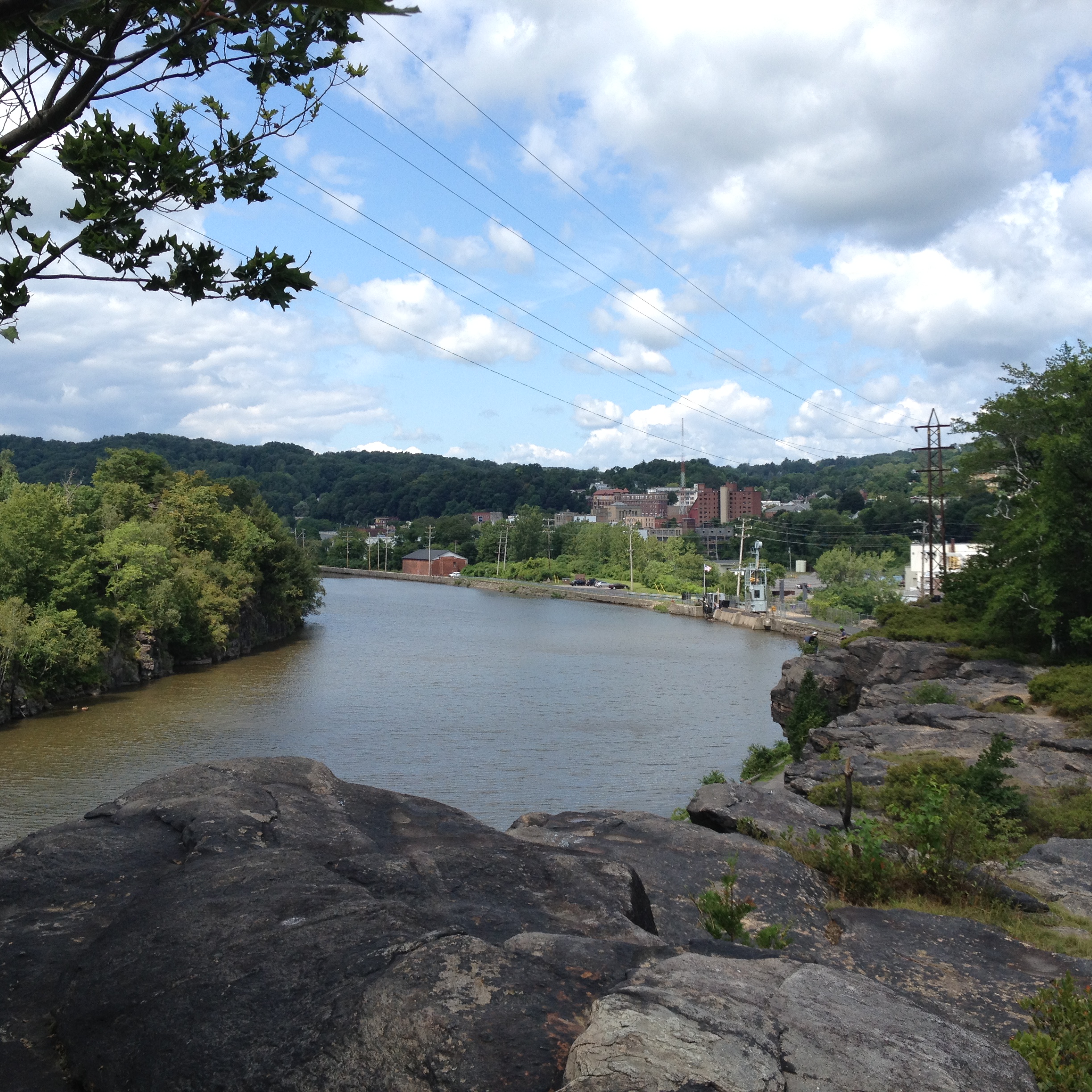
Little Falls as seen from Moss Island

Having finally learned the best way to get to Lock 17 and Moss Island, Carol and I decided to take a little hike yesterday. I’ve mentioned Lock 18 as part of the canal cruise we took recently, but Lock 17 is the one located closer to home. It’s also, at 40 ½ feet, the tallest vertical lift of any canal lock in the United States. That’s because the land cut (section of canal that is separated from the Mohawk River) was created to get around a waterfall located in that section of river. Moss Island is an island because the Eerie Canal needed to cut out a path through a big section of rock to make that land cut. The result, other than Lock 17, is an island about 625 feet by 1500 feet composed mostly of volcanic syenite. Syenite is similar to granite and makes a strong rock, which makes Moss Island a favorite of local rock climbers. We decided to take the “easy” way up.

This is a view of Moss Island from the top of Lock 17. You have to admire all the trees that have managed to find a foothold on the island over the centuries, as it’s still basically a rock and not a lot of soil to work with.
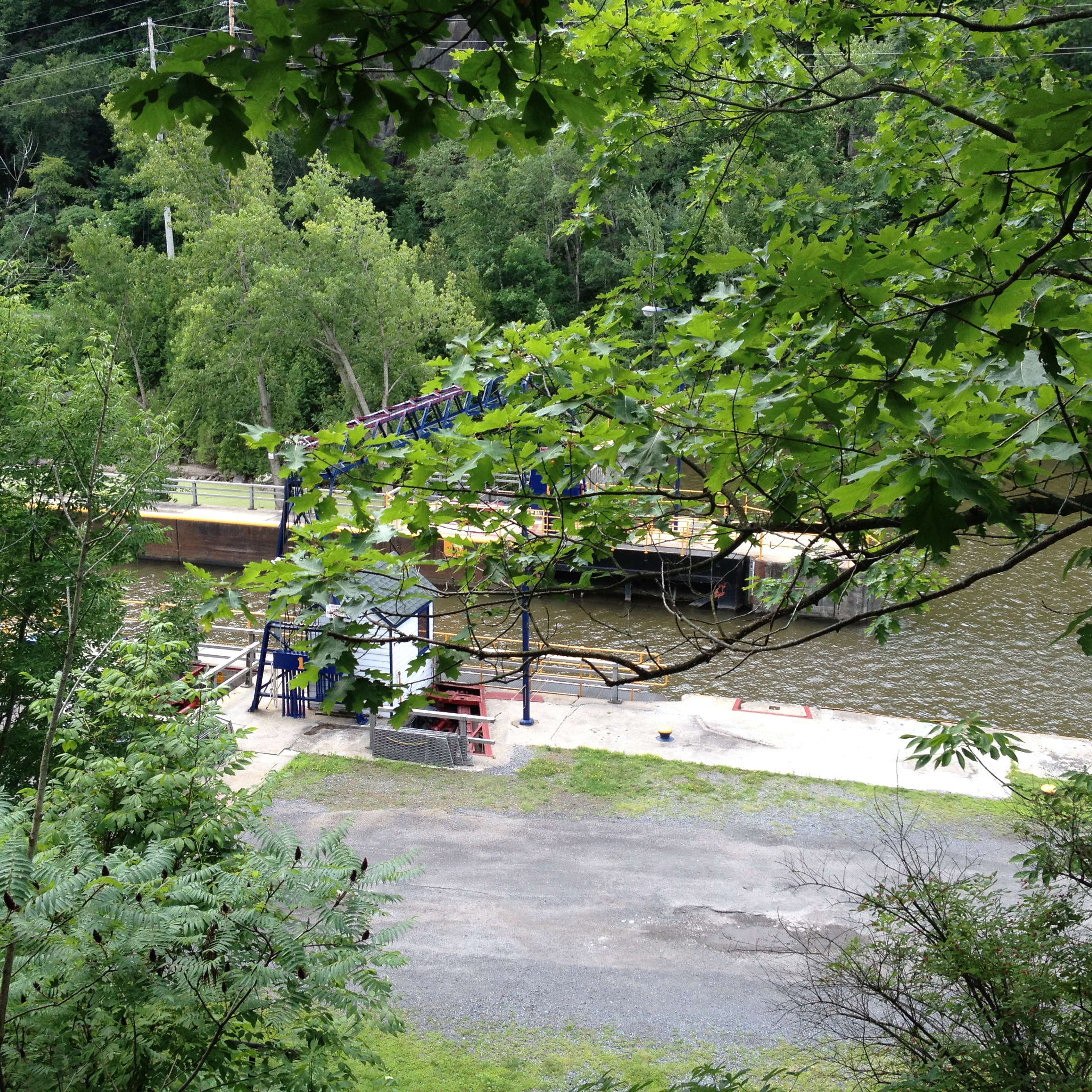


To be fair, now here is a view of Lock 17 as seen from Moss Island. Just out of view on the opposite side of the lock are the remains of the 19th century version of the lock. I’m sorry I didn’t get a shot of that, as it illustrates just how much narrower the boats traveling the canal were then. Below this is a shot of one of the two massive electric winches that operate the lock doors. It’s hard to get a proper sense of scale from the picture, alas, but it’s pretty darn big.


We followed as many of the trails as my stamina and Carol’s knees would allow, finally arriving at the southwestern tip looking back toward the town. Next trip I want to cover more of the river side of the island.

*

Since someone asked about the ebook version of the Tales From the Sunrise Lands anthology, I can only say at this point that it won’t be before next month (September) at the earliest. But it’s going to happen. Once I find out anything more definite, I’ll post it here.

All right, it’s time for a new Story Time. The piece I’ve chosen is “The Trickster’s Wife.”  This story originally appeared in Realms of Fantasy, February 2001 and was included in my WFA finalist first collection, The Ogre’s Wife: Fairy Tales for Grownups. I was looking over my files and realized, when I switched word processors some years ago, I had never converted it to the new format. While I was taking care of that, I thought it would make a good Story Time. The genesis was me considering how, imo, Loki’s wife got a raw deal. I thought maybe in this version she should get a little of her own back.


Tales of the Sunrise Lands: Anthology of Fantasy Japan

After the blog post, the commercial:  David R. Stokes at Guardbridge Books has edited an anthology of Japanese themed stories, Tales of the Sunrise Lands: Anthology of Fantasy Japan. This includes an original story by me, “The Cat of Five Virtues.” If that sort of thing appeals to you (and why not?), check it out.

Edited to Add: For those who asked, the Kindle version is now available here.

On Efficiency

For those of us by our natures who are forced to figure things out as we go, there’s a part of the creation timeline I’ve come to refer to as the “Fits & Starts” stage, which is rather where I am now. In a short story it usually doesn’t last very long if the story is going to work. A book, if you’ll pardon the expression, is another story. It can last for chapters at at  time and often does. If it lasts more than that, well, that’s a problem.

Fortunately for me, my characters usually sort that stuff out themselves, once I’ve got a handle on them and what they’re up to. Yet sometimes it seems that this “sorting out” happens when they insist on talking to each other for extended periods. Sometimes these are the sorts of conversations that the eventual readers needs to be in on from the start. Sometimes not.  Or as one of Ursula Le Guin’s early editors of what became the Earthsea Trilogy is alleged to have said–“Ged is talking too much!” With all due respect to everyone involved,  I think I know why.

I definitely  know the time will come when, after the sorting out period and rough draft period, there will eventually come the rewrite period, and at least some of these fascinating (to me) conversations will have to end up on the cutting room floor, so to speak. Pity? No. Pitiless. When something once served the book but no longer does, “When it’s a drag on the flow, it has to go.” It’s our job to write it, and our job to cut it if and when the time comes when sections of the prose no longer serve the story. Chunks of any given book are completely necessary for us to write, and absolutely useless, nay counterproductive, for the reader to slog through. It’s sort of a paradox, but there are a lot of them in this process, so you just go with it.

As others have rightly observed, writing and then disposing of these chunks of superfluous wordage is not a very efficient way to go about the job of writing a book, and I heartily agree. I might find myself in envy of those people who can work all this out in a detailed outline before they even start. Then again, writing a hundred page outline of a three hundred page book doesn’t strike me as all that efficient either. Maybe writing is not supposed to be “efficient.” Maybe it’s just supposed to be done, and any way you can do it is the absolute best way there is.


True Things

A wise writer (@saladinahmed) once tweeted something to the effect that the plot of any story will fall apart if you look at it closely enough, because it was a story, not real life. What wasn’t said, naturally, is that the difference between a story and real life is that a story, at least within the confines of its internal logic, has to make sense. Real life, as Mark Twain once famously observed, suffers no such limitations.

So we’re automatically at a disadvantage at least in that regard, trying to write a story where the reader, at least for the space of time they’re reading it, can forget that they’re not really living a story but reading words on a page or screen. We like to talk about something called “The Willing Suspension of Disbelief,” which is the ability to do just that. We like to talk about it because, to a fiction writer trying to reach a fiction reader, it’s beyond important—it’s absolutely necessary. All fiction readers have it or they wouldn’t be reading stories. Some people, I’ve discovered, have this ability to lesser degrees or even not at all. I vividly remember doing a signing where an older lady approached and asked if my books were about “True Things.” It took me a while to realize she wasn’t talking about non-fiction. She was talking about stories that mirrored and reflected, to a greater or lesser degree, the sort of things she saw and experienced every day. Give such a reader a story by, say, Ray Bradbury or Octavia Butler and the immediate reaction would be something along the lines of “This isn’t real!”

Of course not. It’s a story. If it’s a good one there’s Truth in it, but real? No. Then again, the “True Things” which she enjoyed weren’t real either, but try to explain that? No thanks. I’ve seen that lack go even further, and those readers only read news stories or biographies or, well, words on a page which claim to mirror actual events. Nothing speculated, nothing made up. It’s not their fault, but for whatever reason, they lack the toolset for anything else. I’ve tried to imagine what that’s like and the closest I can get is to picture a situation where you hear people talking about different shades of red when you’ve been colorblind all your life. You’d think they were talking nonsense, and from your perspective, you’d be right.

Anyway, to get back to my colleague’s point, no plot is perfect. There’s always a hole somewhere. If we do our job right it’s a little one, hardly noticeable or missed completely if the narrative pulls the reader along as it should. There’s a reason it’s called The Willing Suspension of Disbelief. It’s primarily our job not to muck with it as we spin our stories. Anything that throws the reader out of the story, even for an instant, makes them less inclined to trust you next time, if there even is a “next time.”

There will be holes, and inconsistencies, and whatnot. That’s inevitable. What’s not inevitable is that they will ruin the story. If the story works, the question on the reader’s mind will be “What happens next?” rather than “WTF was that?”

It’s our job to make sure the reader’s concern is the former and not the latter. If anyone ever said this was easy, that was not a “True Thing.”

Two Ships From History

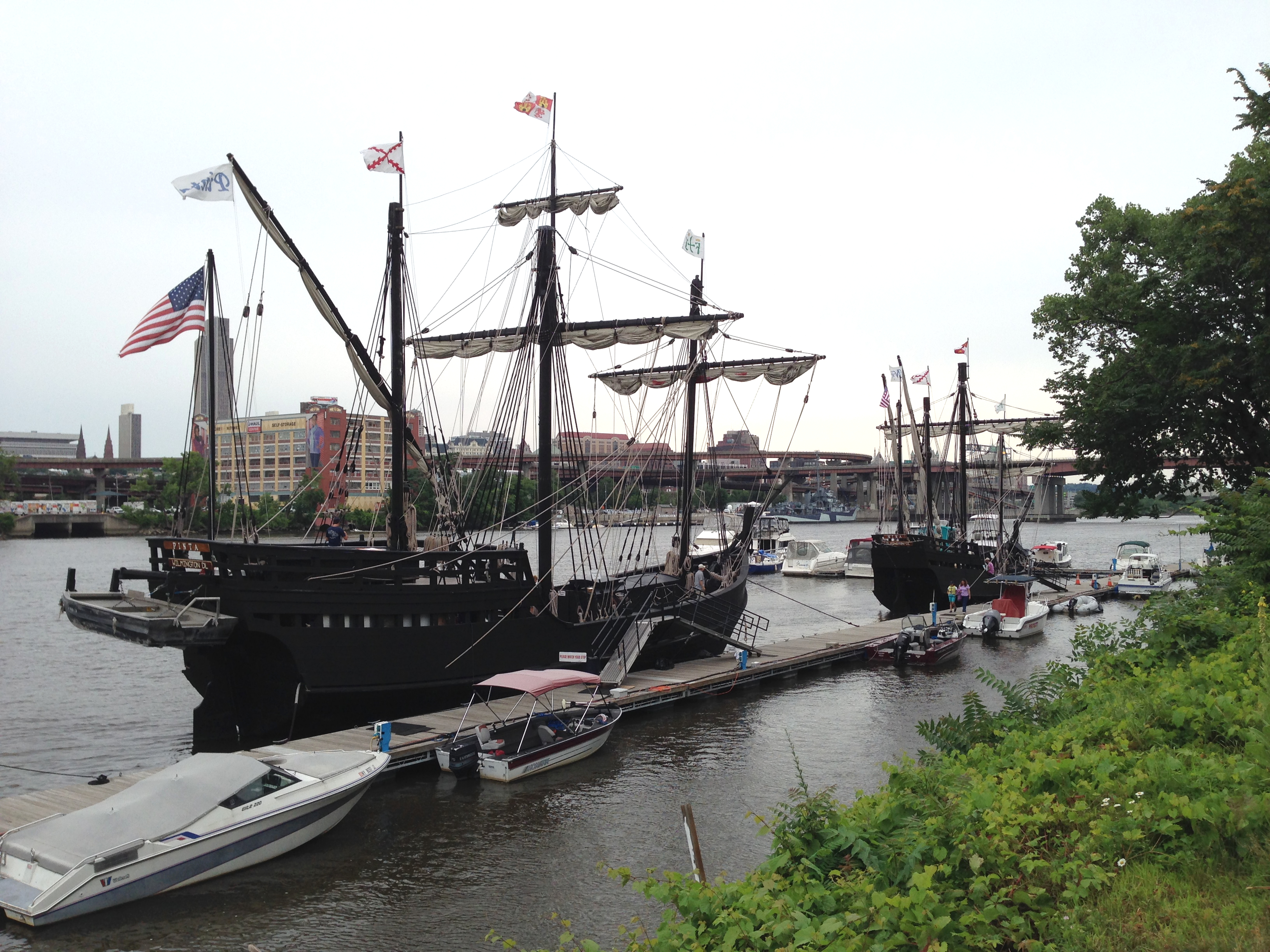
View of the Pinta and Nina Replicas, Hudson River 2017
Photo by Carol Parks

Friday we took a trip to Albany to visit replicas of two of Columbus’ three ships, the Pinta and the Nina, docked on the Hudson River. It’s the sort of thing anyone with more than a passing interest in history tends to do (Remember the viking ship? Yes, sort of like that). In case you were wondering about the third ship, the Santa Maria? There isn’t one. A replica, that is. Since it never made it back, no one’s entirely sure what it looked like. Plus Columbus hated it, which is why he spent more time on the Nina, despite its small size. Or because of it. He considered the Santa Maria too big, clumsy, and slow. As for the Pinta, apparently Columbus hated its captain, Martín Alonso Pinzón. Some accounts say this was why the ship was named the Pinta, which translates as something a bit rude.

At this point we might as well address the elephant in the room. Columbus’ crimes against the people he met in the New World are well documented and I’m not going to deny, defend, or rehash them here. Yet there’s a perspective to history you don’t really get from a book, important as books are. Take a good look at the two ships in the photo above, then compare them to the speedboats and small pleasure craft with them at the dock, and you soon realize something important–those ships are tiny. Yet over five hundred years ago about fifty men willingly got into those craft and sailed out into the wild Atlantic Ocean to they knew not what. Say what you will about their moral failings, that took some cojones.