As I’ve probably mentioned to the point of nausea, I’m from the American South. People in other parts of the country all seem to think they know what that means. so when they get to know me, it’s a mental hotfoot.
“But…you’re not like that!”
“Like what?” I ask in all innocence, and the conversation gets even more awkward from there. Yes, there are stereotypes. Some even aren’t that far off. A lot of it is bullshit and distortion and ignorance. However, in one regard I freely confess that I am exactly like that.
I do love my grits.
It’s my go to breakfast food and has been for a long time. Then I moved to New York state, for reasons far too complicated to get into here. I was resigning myself to having to order my grits supply online, until I found out they’re actually available here. That surprised me, right along with finding more people flying the Battle Flag of the Army of Northern Virginia than had likely ever been to Virginia, or any place below the Mason-Dixon line. Unlike the latter, finding grits was a pleasant surprise.
Then the year that wasn’t. Covid. Shortages of paper towels and toilet paper, which seem mostly if not entirely over, except for cat food, which is often in short supply. Then, for the past two weeks, our grocery has been completely out of grits. None. Zip. Nada. I mean, it’s not as if they’ve ever had a lot. Maybe one stack in the cereal aisle, but that’s it. Only now, isn’t.
I shall try to be brave, but this state of affairs simply cannot continue.
I recently had occasion to look up the difference between “hypnagogic” and “hypnopompic” hallucinations. The first happen when you’re falling asleep. The second, on waking up. Otherwise? No difference. Supposedly one symptom of narcolepsy…maybe. One article also stated that about seventy percent of people have one or the other at some point in their lives.
I dunno. That’s an awful lot of narcolepsy.
Or maybe it’s just the natural result of passing through a liminal (there’s that word again) point between waking and sleep. A transition where you’re not quite in one and not quite out of the other. And apparently a lot more common than one might think. Especially if that one is me.
Mine are the hypnopompic sort, apparently. I had my first experience when I was about eight years old. Scared the crap out of me. Perhaps it was the one-two punch of coinciding with my first experience of sleep paralysis. Are the two related? Maybe. They’re grouped together under the general heading of “parasomnia,” which covers almost everything related to sleep disorders. Night terrors, apnea, waking confusion, sleep talking, sleepwalking, paralysis, etc. And hallucinations, let’s not forget those.
Regardless, once I could move my body again more than a tremor, the air around me was filled with a swirl of small images of which I distinctly remember two: a boxing ring where two cartoon ghosts were fighting, and the other I swear was the Dixie Lilly Flour logo. The first was animated. The second, static. There were several others, but those two repeated, as if on a film loop.
No one knows what causes it. I mean, chemically they do. Something to do with phosphene. What triggers it? No idea, though in general parasomnia tends to run in families. My younger sister talked in her sleep. My mother and I both had occasional sleep paralysis. I’m the one who got the hallucinations.
Lucky me.
Actually, that’s not meant to be sarcastic. I really was lucky. The hallucinations can be severe, terrifying, even debilitating. None of which happened to me, despite being weirded out the first time. These aren’t the sort of hallucinations that make you walk into traffic thinking you’re at the beach. Nope. I always knew they weren’t real, even that first one, and once I got over being afraid, it was much easier to appreciate how darned interesting they tended to be. You’re basically seeing dream images while you’re awake. I have seen everything from flying art-deco kitchen appliances to a two-foot tall glowing Pikachu floating over my nightstand.
It only happens occasionally. And, while I do find the subject interesting, as an old married man I’m really glad I didn’t get the “talking in my sleep” aspect. I’ve gotten in enough trouble for things my wife only dreamed I did. Imagine the trouble I could get in for things I dreamed I did. Though she did inform me that at least once recently I hummed a tune in my sleep. I hope it happens again since I’d like to know what tune I’m humming, but I still prefer the images.
There’s a story from old Japan about a monk who liked to go off by himself to a secluded garden and meditate. It was his favorite thing to do. Yet there was a problem when he tried to avail himself of this simple pleasure—a ghost kept interrupting his solitude.
Every evening there was the monk in the garden and there was the ghost, that of a wild-haired young woman who never spoke. She simply appeared some short distance away and stared at him. Naturally, the monk assumed that some devil had sent the creature to either tempt or distract him away from his meditations and so set obstacles in his path to Enlightenment. The monk resolved to meditate even harder. He meditated with a new and fierce determination, and the ghost continued to stare at him
Despite himself, the monk began to wonder about her. In the monk’s world, ghosts were dangerous and deadly creatures, usually bent on the revenge of some wrong. As he had been dedicated to the temple at birth, he knew that he himself could have done nothing to arouse a spirit’s ire. He was neither a former lover nor in his life had he ever harmed anyone. Then there was the ghost’s appearance. Aside from her wild hair and pale, haggard countenance, she didn’t seem especially threatening, nor had she ever taken any action to harm him. Which, he had to admit, would have been easy enough to do since he normally meditated with his eyes shut.
Yet, as I believe I’ve already mentioned, all she did was stare, expressionless, neither seductive nor malevolent. She was simply there, and what he had once considered the greatest pleasure of his life had now turned into a nightly battle, and the monk was not enjoying himself. He was starting to drag his feet a little when the time came to go to the garden, knowing the ghost would be there.
This went on for quite some time, until the monk had to admit himself defeated. He wasn’t getting any meditating done, his path to Enlightenment was as obscure as it had ever been, and the ghost kept their rendezvous night after night after night, until one night the monk broke down.
“What in the world do you want?”
As if a spell was broken the ghost smiled, lost her haggard appearance, and explained to the monk that she had died for love, and so was attached to the physical world and could not move on. All she wanted was for the monk to cut her hair and make her a nun, so she could finally renounce the world and leave. He did so. She left.
There are those who want to attach a lesson to the fable about perseverance, which makes no sense. Yes, the ghost was persistent but the monk caved, and it was only by abandoning his own stubborn perseverance was he freed to remedy the situation. Bit of a mixed message there. A far better lesson might be the one the monk never did seem to get:
The Law of Unintended Consequences (TLOUC). Supposedly coined by the British Philosopher and Physician John Locke in the 17th Century. Roughly stated, Unintended Consequences are any unforeseen effects of a deliberate course of action. Example, when kudzu was brought in as an erosion control plant in the 1930s Southeast. Now it covers large areas of my home state and others because…well, it grows fast. In hindsight, they should have seen that coming. I’ll give the soil conservation people a pass and say they didn’t anticipate just how much kudzu would love that steamy climate, but the damage is and continues to be done.
Now consider the humble tomato. I grew up with home-grown tomatoes. They were delicious. Were. Now, not so much, and I’ll argue that anyone under the age of forty who says they don’t like tomatoes have never had a real one. See, sometime in the past century people got together to solve a problem in the shipping of tomatoes. They bred varieties with a tougher skin that would survive shipment better. Didn’t taste as good, but who cared? It solved the problem. Now almost any tomato you buy or grow tastes the same, because pollen is a promiscuous wanderer and the new varieties cross-bred with everything. Now, I do accept the idea that a person’s tastes change as they get older, and maybe I’m remembering the older varieties with a touch of nostalgia. Maybe, but every now and then, against the odds, I’ll get one that tastes the way they all once tasted, and get mad all over again.
While dwelling on these I was thinking, as almost universal as it is, TLOUC doesn’t cover everything and maybe we needed a new formulation. Maybe the Law of No Skin Off My Nose, to cover cases where people knew there would be problems with a course of action but did it anyway. When I looked up the formal definition of TLOUC, however, I found that TLOUC has three categories:
Unexpected Benefits. As when a policy/action has a good effect no one saw coming.
Unexpected Drawback. The same, except not good.
Perverse Result: The action/policy has an effect opposite of the stated intention.
So the actions of the Governors of both Texas and Mississippi in repealing the Mask Mandate before the Covid vaccine rollout is complete still fall roughly under the umbrella of TLOUC. If I were feeling kind, I’d say #3, since the stated goal of restarting the economy will take a huge hit if Covid spikes again, as seems likely. If I’m not feeling kind, I might think #1 applies, since the people most at risk are not necessarily people who would vote for them anyway. It takes a leap of faith greater than mine to think this hasn’t crossed their minds.
Or maybe I’ll be generous and say they just don’t give a damn, in which case The Law of No Skin Off My Nose probably applies better. Even to the tomato thing.
Apologies for the lateness of this and my absence last week. Sometimes adulting is just too hard.
Lots going on in the world, but nothing I want to talk about. So instead I’m offering a snippet of the WIP. Marta is returning to Shalas after the events of Power’s Shadow, and the vague “he” referenced is a person she doesn’t know she knows, and that’s all the context you’re going to get, because that’s what the book’s for.
The next morning Marta reclaimed her horse and set out on the road south. Dessera had tucked herself out of the sun and into some quiet crevice of the saddle bag. Bonetapper rode on Marta’s shoulder, sound asleep. He’d spent the night scouting the southern road until it reached the sea and turned east toward Shalas and didn’t return until just before dawn.
“Didn’t see anything or anyone at all until I reached the sea road,” he reported. “Traveling merchants, one or two wandering priests. Not much else. Either he didn’t go that way or he’s better at hiding than I am at looking.”
“Interesting, but not very reassuring. No matter; we have to take this route if we’re going to reach Shalas before winter.”
That was the end of the discussion and Bonetapper nodded off soon after. Marta rode on, enjoying the silence. She was tempted to turn west when she reached the sea road; it was the most direct route to Lyksos and home. Yet circumstances had dictated that she leave her cart and pony in Shalas, and she was not inclined to abandon either. As for home…was there really any point in going there at all? She would only have to leave again when the Arrow Path relented and showed her the path to the Seventh Law.
Assuming it ever did.
This possibility was one Marta did not enjoy considering. The Arrow Path asked a great deal, whether you were the witch following it or the one who incurred the Debt because of it. Those who accepted the bargain an Arrow Path witch offered did so freely if not always wisely. They weighed the value of what they received against what they gave up, and for them the scales balanced. For those who followed the Arrow Path, the bargain, both in terms of value and loss, was not so clear. Yes, it led them to the Laws of Power without which they would be unable to meet their obligations, with the promise of both power and the freedom to use it however one saw fit at the end of it all. That was the lure that brought so many to it. But was this ‘promise and hope of mist and smoke,’ as the child’s rhyme went?
Has anyone ever found all Seven Laws?
Perhaps her mother had done so. She was, after all, widely regarded as the most powerful witch in the Seven Kingdoms. But if she had found it, why had nothing changed for her, in all the time Marta had known her? And then there was the undeniable fact that Marta’s own discovery of the Sixth Law owed more to dumb luck than guidance and she did not feel any pull from the direction of the Seventh Law at all.
We had a bargain, Amaet. Me, my mother, and every Arrow Path sorceress who ever lived. Are you going to honor it? Or have I, after all I’ve been through, misunderstood everything the Arrow Path was supposed to be?
It was a careless thought which Marta regretted immediately when the voice echoed through her skull like a bad memory.
“Smart girl,” said the familiar voice. “Would you be surprised to know your mother asked the same question? It’s true. And she had her answer. Will you have yours? The anticipation is delicious.”
“And when will I know?” Marta asked. “Will you tell me that much at least?”
“Certainly, because it’s something I need you to understand when the time comes. You will have your answer,” Amaet said, “When you find the Seventh Law of Power.”
“But—” Marta didn’t bother to finish. The silence in her mind told her not to waste her time.


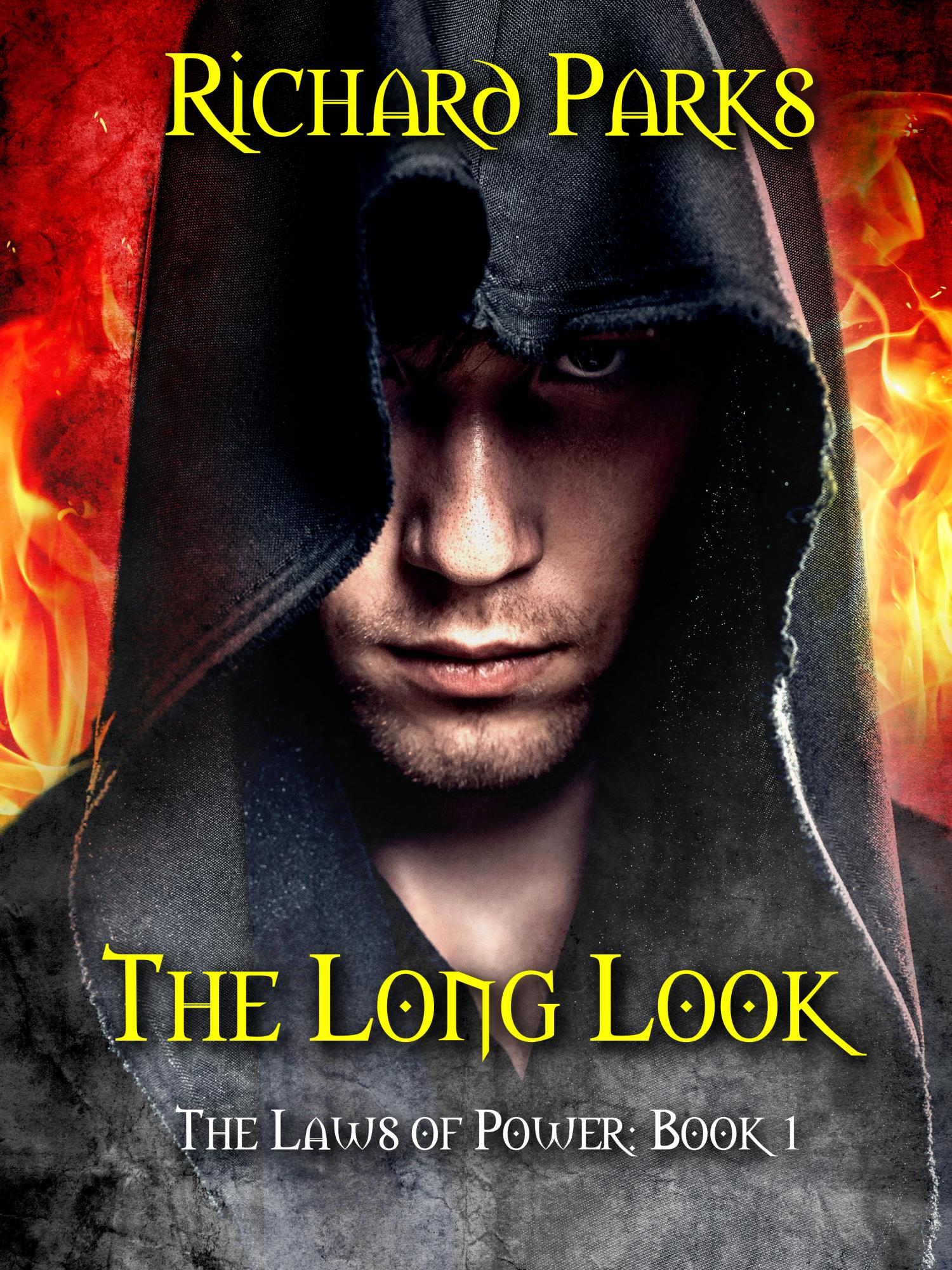
 Richard Parks