
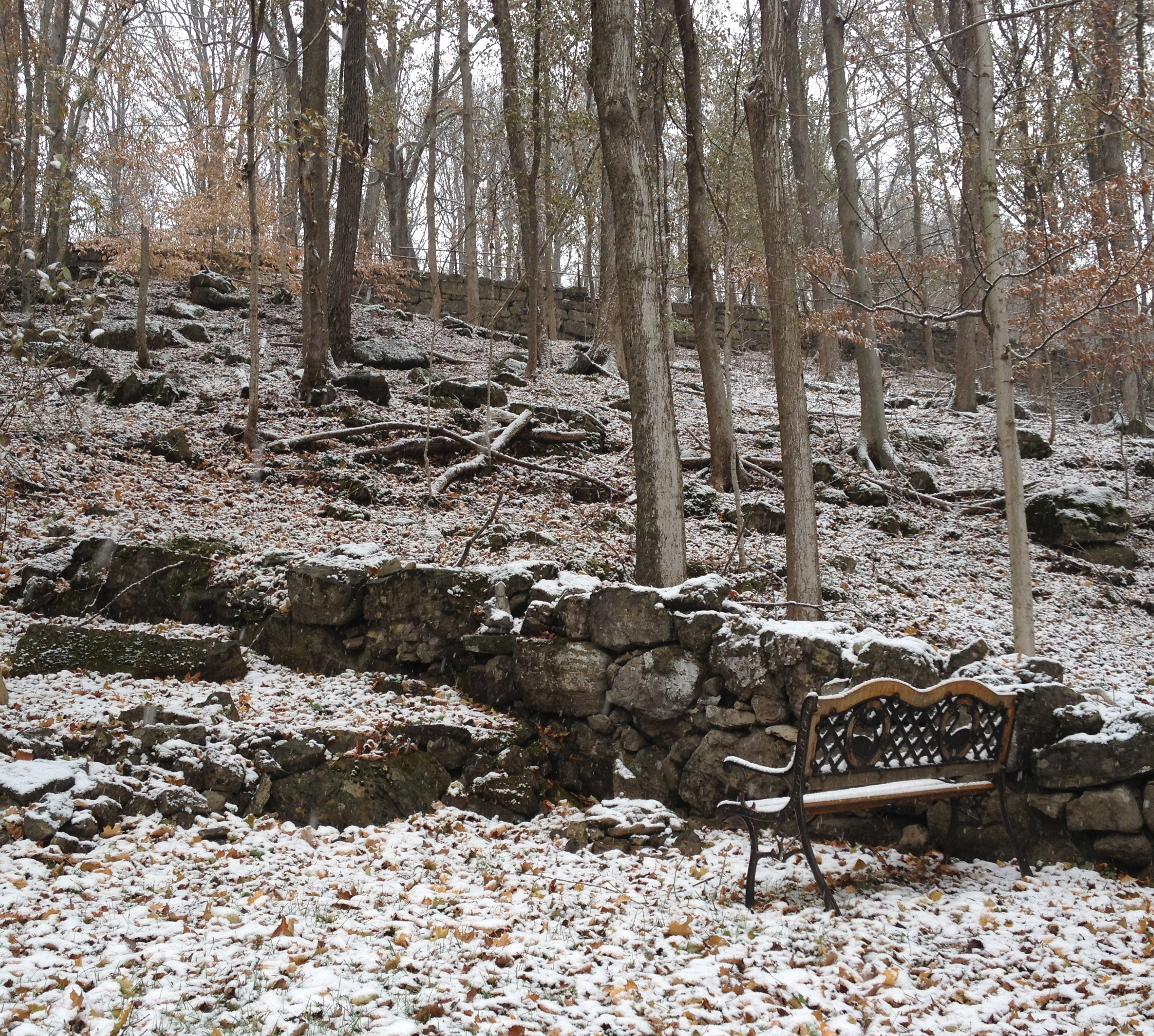
 It’s about to start snowing again, which means it’ll be time to clear the walk, car, and driveway (again), so basically it’s a typical winter in central New York state. After so many years in my home state of Mississippi it still feels a little odd to have the actual four seasons I’d heard so much about. I mean, up here things close “for the season.” This is a new concept to me. Down South, as I’m sure I’ve mentioned before, we only had two real seasons: Winter(ish) and summer. Blazing. Hot. Summer. There was a sort of spring, but it lasted a week or two, tops and by the time you were sure it was there, it was gone. There was a sort of autumn too, but likewise. It was soon blended into winterish, and you couldn’t really tell where one ended and the other started.
Up here, You Can Tell. Fall is when the leaves turn colors, not just die and fall off from heat exhaustion. The maples in the woods behind and to the side of us really put on a show. It’s rather striking. There’s a brief peak time, but the show itself lasts for weeks. Last year and strictly by accident we managed to be in Vermont for peak season. It was dramatic, to say the least.
One trick to recognizing spring in the South was when the wildflowers bloomed. It’s pretty much the same here, but except for a few hardies like clover and the like, wildflowers were pretty much gone by the time summer was well in. Here, it’s different. Wildflowers last all summer long. Not the same ones, of course, but it’s sort of like a relay race: first the daffodils and tiger lilies bloom, and that lasts for several weeks. Then the wild chicory takes over, and it doesn’t stop until winter, and not even immediately then. Plus there’s the cottonwood season, and later milkweed, and sprinkled in between things I’m not even sure what they are. But they’re there, flowers of some sort, for the duration. The heat doesn’t kill everything, or hardly anything. It gets over 90 degrees but seldom stays there, unlike in MS, where 90 degrees in summer is a cold front. That’s compensation for shoveling all that snow. Not to mention the flowers, which I just did.
Another difference here from there is the type of snow. It did snow, now and then, down south during winterish. This year there was a fairly hefty band of it from Texas to Georgia, so remarkable that it made the news even up here. Saw pictures of maybe 4” accumulations, so of course there were pictures of snowmen. You don’t see so many of those up here, mainly because a lot of the snow we get is lake effect snow from Lake Ontario. It’s light and fluffy and doesn’t stick together at all. Good for skiing, I’m told, but I’m never going so far as to strap two planks to my feet just to find out. I’ll take their word for it. Being light and fluffy it’s relatively easy to shovel, for which I am grateful. If you ever had to shovel the wet slop that falls in the south (which you don’t, or didn’t where I lived. There’s not enough usually. Maybe in Tennessee or North Carolina), it’d break your back in short order.
So far the snow is holding off. We got maybe an inch last night, which doesn’t require drastic measures, so I’ll try to knock out a writing assignment due on Wednesday. In the meantime, the snow shovel is by the back door, on call, for the inevitable.



 Richard Parks