Review: The Ten Thousand Doors of January

The Ten Thousand Doors of January, Alix E. Harrow, Hachette Book Group, 2019.

January Scaller is a young girl living in the mansion of the insanely wealthy William Cornelius Locke, a mansion packed with valuable collectables from all over the world…and some that apparently don’t belong in this one.  Her father, Julian, is an employee of Mr. Locke charged with traveling the world in search of said wondrous objects, so he isn’t home very much. Sometimes Mr. Locke has to travel himself, and sometimes he takes January with him as a treat or distraction.

On one such trip, January finds a doorway between worlds. So much for plot summary, because what happens doesn’t actually tell you what’s happening. That’s a separate issue altogether. Suffice to say there are more doors where that one came from and January’s discovery of them leads into all kinds of trouble, and not just for her.

I picked this one up on the recommendation of people whose taste and judgment I trust. I’m also a sucker for portal fantasies, probably ever since I came across George R.R. Martin’s “The Lonely Songs of Laren Dorr” in Fantastic Stories years ago. This is one of the best ones I’ve ever read. From the first page I knew I was in for a treat, for it was clear the author was a person in love with language, specifically language in the service of story. A sentence might be as long as it needs to be, and sometimes it may be convoluted, but it’s never clumsy. A sort of wordy precision which is almost but not quite a contradiction in terms, and so rare to find.

I don’t think I’m giving too much away to note that January isn’t quite what she seems, but then neither are most of the rest of Harrow’s cast. Of course their secrets are tied to the existence of the doors and the astute reader will winkle most of it out before book’s end, and that’s half the fun. There are elements that wouldn’t be out of place in a horror novel, but this isn’t one. There’s contemplation of the nature of story itself and its role in the world. Not to mention one adventure after another, which are all part of the same adventure: growing up, and self discovery.

Recommended. Heartily.

Season’s Creaking

Getting close to that time…meaning the holiday season. I know the actual number has been counted before, but I’m not looking it up now. Everything from Hannukkah to Bodhi Day, and that’s not even counting the Feast days. The point is there are a lot of holidays this time of year. If I know someone celebrates Christmas, I’ll say “Merry Christmas.” If I don’t know what they celebrate, then it’s “Seasons Greetings,” or as in the case here, “Happy Holidays.”

Yes, there are those who consider this offensively PC. People get bent out of shape over the silliest things.

All that aside, I’ll just mention that those of you on my Newsletter list will shortly get an early excerpt from The Seventh Law of Power. Though I did misspell “peek.” Serves me right for getting in a hurry, and that’s on me. As for those who aren’t on the list, what’s stopping you?

Sterling

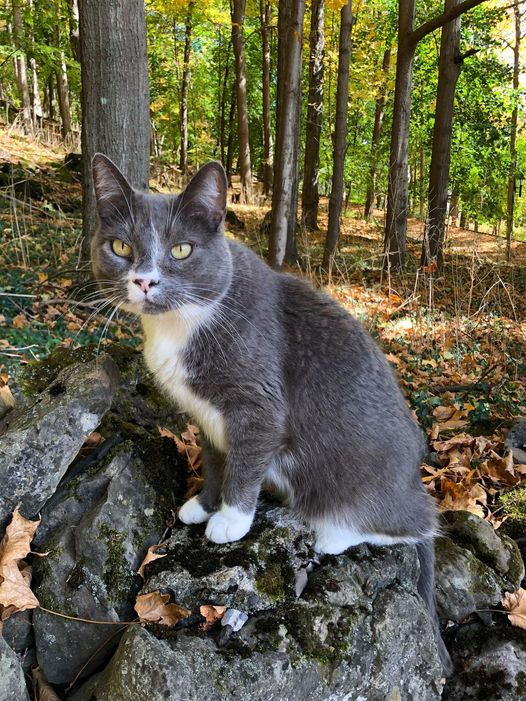
We had to say goodbye to Sterling, aka Lord Flopsnuggle, this morning. We’d been expecting it for a while, which should have made it easier, but not really. His breathing had gotten to be more of a rattle, turning his purr into a motorcycle sound effect. Vet’s diagnosis was an inoperable tumor. Steroids helped his breathing temporarily, which gave us more time with him, but couldn’t prevent the inevitable. When it was clear he was struggling, we knew we couldn’t wait any more.

Stirling leaves one brother, Sheffield, and two sad humans. He was a handsome boy and a very good cat indeed.

Internal Editor and Writer Dialogues #1: Process

“Three brothers traveled along a lonely road at—”

“Stop. This is sounding suspiciously like a ripoff.”

“Oh ye of little faith. Now, where was I?”

“You were about to say ‘twilight,’ I believe.”

“You believe wrong. May I continue?”

“By all means, but just so you know, the onus of proof is on you.”

“Always is. Starting over. ‘Three brothers traveled along a lonely road at….”

“Wait for it….”

“…odds with each other. One wanted to go forward. One wanted to go back. One wanted to get off the damn road and take a hike through the lovely woodland on either side of the road.”

“Okay. At least you’ve gone off script, but do you have any idea where this is all going?”

“Of course not. You write a sentence. It implies action, or a consequence. Maybe it only sets a mood. Regardless, you write another sentence that goes with the first sentence. Goes where? No idea. Write another. Is there movement? Progress? Do the sentences, taken together, appear to be working?”

“When you say ‘working,’ what does that mean?”

“I mean the sentences belong together and point to something greater. And before you ask, of course you don’t know what that ‘something’ is, at least not at first. Your job is to figure it out.”

“You mean it’s your job. Figured anything out?”

“Yes. Three brothers traveling along a lonely road, bickering.”

“That’s not a lot.”

“No, but it’s something. Other than the something I have to figure out, of course. Now that I think about it, I take that back. You don’t figure it out. It’s a story. It was always there. You discover it instead.”

“Now you’re getting mystical on me. That’s really annoying.”

“I don’t do it to annoy you. That’s just a bonus.”

“You’re digressing, and it’s not as if you have all the space or time in the world. Focus!”

“The middle brother went back the way they’d come. He was still on a lonely road, only now he was alone. He wandered into darkness and distance and was never seen again.”

“Bit of a downer, that.”

“You want happiness and light? Go to the greeting card aisle.”

“I want the rest of the story. What about the other two brothers?”

“The oldest brother was tired of the road as well. He left the road at a promising spot and hiked off into the woods by a lovely stream. He listened to the birds and the wind in the trees. He saw many wonderful things and congratulated himself on making such a wise choice. Then he was eaten by a bear.”

“Seriously, that’s it? That’s your grand adventure?”

“More like a light lunch in the bear’s story. As for the youngest brother, he kept walking on the road. The end.”

“That’s terrible!”

“Because my impatient internal editor horned in during the creation phase. Which makes for a terrible story or no story at all. Next time, wait your damn turn.”

©2020 by Richard Parks. All Rights Reserved.

Peg O’Nell and the Well

Peg O’Nell fell in a well

Or so one story goes.

Was she pushed?
Was she shushed?

In truth, nobody knows.

That’s the trouble with folklore. First, there was no Peg O’Nell, or at least no proof of one. So who are you going to believe? Absence of proof is not proof of absence. Maybe there was a Peg O’Nell, maybe there wasn’t. The story says there was. Is the story factual? It exists, so that much is fact. Everything else could be a lie and still be true.

Stories are like that, and folklore is basically stories, so you see the problem, I trust.

Now then, the story.  Waddow Hall is a grand estate near the River Ribble in Lancashire. Originally, the river was said to be the home of a vengeful spirit which demanded a sacrifice every seven years, or else. In the 18th century, the story changed, and Peg O’Nell becomes the main character. It’s a rather tawdry tale at heart. She was a beautiful scullery maid who drew the wandering eye of the Master of Waddow Hall, much to the annoyance of the Mistress…yes, one of those. Easy to draw parallels to the amorous adventures of gods like Zeus who had their fun and left their paramours to deal with the wrath of his wife, Hera, who always seemed to think his actions were her signal to punish the girls involved. Depending on which version of the story you believe, the Mistress sent Peg to draw water from a nearby well on a bitter cold night and she either had someone push the girl into the well or Peg slipped on the ice and broke her neck and fell in on her own.

One or the other, or maybe neither.

Now Peg is the vengeful water spirit. I can imagine the original spirit might be a little put out by that. After all, they were there first. Sacrifices now go to Peg, who may not want them. No one asks. Yet there is a well on the grounds of Waddow Hall near the River Ribble, known as Peg’s Well. It’s guarded by a statue with no head. Said to be a likeness of a saint, or Peg herself, and that Mistress took an axe to it in order to break Peg’s power over the living, which she certainly never had when she was alive, if she ever was, and why would a scullery maid have a statue in the first place? So many questions.

So few answers.

This much we do know: Waddow Hall exists. A well exists. The River Ribble exists. People think there was a scullery maid named Peg O’Nell. Maybe, maybe not. You can’t prove them wrong. Absence of proof is not proof of absence, and things like that.

One last thing, that sacrifice I mentioned? It has to take place every seven years on the anniversary of Peg O’Nell’s death. Problem is, nobody knows when that was. And one or two people still disappear without a trace every seven years or so.

Just sayin’.