Unknown's avatar

About ogresan

Richard Parks' stories have have appeared in Asimov's SF, Realms of Fantasy, Fantasy Magazine, Weird Tales, and numerous anthologies, including several Year's Bests. His first story collection, THE OGRE'S WIFE, was a finalist for the World Fantasy Award. He is the author of the Yamada Monogatari series from Prime Books.

The Children’s Hour

None of what follows negates what I said in the previous post, “The Selfish Meme,” but as with anything more complicated than a carpet tack–say, for instance, a human being–there’s always more to the story. I was recently reminded of a writer friend who had asked a question in her journal about early influences. Lots of people contributed but I wasn’t much help. It occurs to me that’s because the biggest very early influence–so early it was many years before I even thought about writing–wasn’t necessarily a single author–it was a collection of books ( I said I couldn’t hold it to 15). Specifically one of those cheap sets of children’s books they used to sell to young mothers back in the fifties and sixties. My mother was a hard working single mom with not a lot of cash back in the day and she was certainly the target audience, so to amuse me and my sisters she bought one.

This one was called The Children’s Hour  edited/compiled by Marjorie Barrows, and I have to say that Mom got her money’s worth. The set had everything–A volume of folktales. A volume of adventure stories. A volume of myths and legends. A volume of poetry. A volume of science fiction, for gossakes. This was my introduction to fairy and folk tales, which took a while to sink in properly but re-emerged as a dominant theme in my work. It was my introduction to poetry, of which (poets) I’ll never be one, but learned to appreciate. Also to The Song of Roland and the Arthurian cycle, and to sf (stories by Asimov & Heinlein, plus “Miss Pickerel Goes to Mars,” and “Lancelot Biggs of the Saturn.”) In hindsight it’s obvious to me that almost everything I do, nearly everything I’m interested in as a writer has a precedent in that one set of books.

It’s also probably why I’m not a proper “Southern Writer,” for better or worse. By the time Faulkner and Welty came along for me it was too late–I was already imprinted with a different strain of the fantastic, and remain so to this day.

Something New, Nothing Old or Borrowed

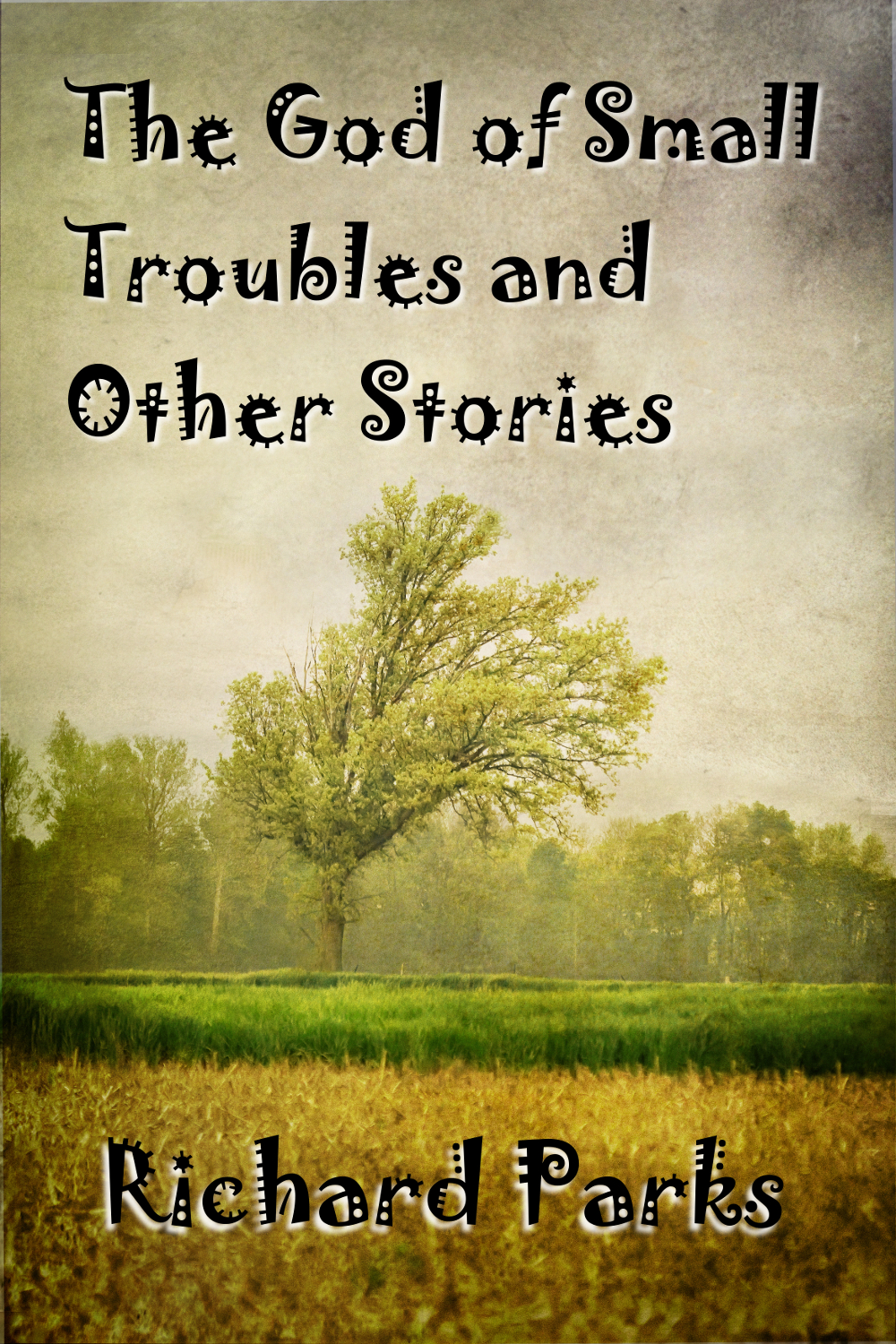
The God of Small TroublesThe official publication date for Yamada Monogatari: To Break the Demon Gate has been moved up from December 3rd to November 13th, but while we’re still waiting (humor me) I’ve put a new novella-length collection out in an ebook-only edition, The God of Small Troubles & Other Stories. This contains five new, original, never published anywhere else stories exclusive to this volume. The Kindle edition is out now. There will be a Nook and Kobo edition as well, but those are going to take a little longer.


TOC

The God of Small Troubles

Anchors and Sails

Olam Drexler’s School for Exceptional Children

Small Deaths

Miss Jean Takes a Walk

Things Here, Things on the Way

Final-CoverBefore I get the next installment of Power’s Shadow up, I do have a few developments I’d like to share. The first is that the Audible.com audiobook edition of Yamada Monogatari: Demon Hunter, is now live. This is from their announcement introducing the voice talent for the book: “Brian Nishii is a bicultural, bilingual performer from Tokyo. As an actor and dancer, he has worked with theatre companies such as La Mama’s Great Jones Company, Robert Wilson, In Mixed Company, Fluid Motion, Crossing Jamaica Avenue, and The South Wing. Film and television credits include Robot Stories, Sex and the City, and Law & Order (CI). He also provides lead vocals and antics for the colorful band, HappyFunSmile. He currently lives in Los Angeles with his wife and baby boy.”

You can find the Audible edition here.

YMBreaktheGate_5.5 x 8.5_V01Second, and in a clear sign of the changing times and paradigms, the Kindle edition of Yamada Monogatari: To Break the Demon Gate is now fully pre-orderable through Amazon just like the print edition, so if you prefer reading on the Kindle, we’ve got you covered.


That’s all for now. Next up, Power’s Shadow, Chapter 6, Part 2.

Regrets, I Have a Few

Epi Les Paul Special IIAnd to your immediate left is one of them. That’s an Epiphone Les Paul Special II, and it was the first guitar I ever owned. While I was sad to part with the Peavey Horizon II that passed out of my hands recently, I did and still do feel it was the right decision under the circumstances. When I think of the Epi, I can’t say the same.

For those who have known Epiphone only as the budget brand arm of the Gibson Company, it’s easy to forget that they were once a powerhouse guitar maker in their own right, accorded equal (and often greater) prestige than Gibson itself. But they fell on hard times and were eventually bought out. The thing is, they still make pretty darn good guitars. Ask Gary Clark Jr., whose go-to guitar is an Epiphone Casino, and it ain’t because he can’t afford an ES-335. While I don’t think anyone is saying that, say, the Epiphone Les Pauls are in the same class as a Gibson Les Paul Standard, the Special II is closer in design and intent to the old Gibson LP Juniors and Melody Makers. And for someone just getting started especially it’s a heck of an axe to cut your playing teeth on. It’s a good sounding, easy playing guitar. Whenever I hit a sour note, I knew it was me, not the guitar, and that’s not always the case for guitars in the “student model” class. That Epi took a lot of the guesswork out of starting out and it was, as my Brit friends might say, “cheap as chips.” I did good when I chose it to start on. I did less good, even though I’m leaning more to Strats these days, when I decided to part with it.

If I had it to do over, I wouldn’t have done it. Really big word, that.

If.