Weird Detectives: Recent Investigations

Paula Guran at Prime Books just released the contents of her Weird Detectives anthology. I’ve got a story in this one. Note that this is an alphabetic listing, not necessarily the final order of the stories. You can see a more complete description at the Prime Books web site.

“Cryptic Coloration” by Elizabeth Bear
“The Key” by Ilsa J. Blick
“Mortal Bait” Richard Bowes
“Star of David” by Patricia Briggs
“Love Hurts” by Jim Butcher
“Swing Shift” by Dana Cameron
“The Necromancer’s Apprentice” by Lillian Stewart Carl
“Sherlock Holmes and the Diving Bell” by Simon Clark
“The Adakian Eagle” by Bradley Denton
“Hecate’s Golden Eye” by P.N. Elrod
“The Case of Death and Honey” by Neil Gaiman
“The Nightside, Needless to Say” by Simon R. Greene
“Deal Breaker” by Justin Gustainis
“Death by Dahlia” by Charlaine Harris
“See Me” by Tanya Huff
“Signatures of the Dead” by Faith Hunter
“The Maltese Unicorn” by Caitlín R. Kiernan
“The Case of the Stalking Shadow” by Joe R. Lansdale
“Like a Part of the Family” by Jonathan Maberry
“The Beast of Glamis” by William Meikle
“Fox Tails” by Richard Parks
“Imposters” by Sarah Monette
“Defining Shadows” by Carrie Vaughn

Continue reading

Yamada Monogatari — Covering the Cover

Maybe arriving at the final cover art will prove to be a lot like watching sausages being made (and if that doesn’t put you off eating sausages, nothing will), but I’m going to run down the broad strokes of turning a licensed image into a finished cover. We started with the image of a samurai duel above(“By the Sword”–Artist: Glenn Porter). Also note that when I said “we” up there I mostly mean my editor/publisher Sean Wallace and Prime’s art director, Sherin Nicole. I was in the loop, but mostly as cheerleader. Continue reading

Yamada Monogatari: Demon Hunter — Update

We’re still on track for a February release, and so far everything’s looking great. I’ve been in the loop on the cover design progress, and we’re close to having a final. When that’s done I plan to post some of the preliminary images to show what changes/refinements a cover might go through before it’s ready for–pardon the expression–Prime time. But we’re not quite there.

For now, and knowing that there will be readers who haven’t a clue who Lord Yamada is, this is a working draft of a proposed introduction. It may and likely will change a bit before it goes live, but this is the gist:

“This book is about a man named Yamada no Goji and set during a time in ancient Japan now known as the Heian period. Although the term is derived from the capital city during the era—Heian-kyō (modern Kyōto)—the word heian simply means means “peace and tranquility.” In comparison to the later feudal era of Japan, when the rise of the samurai class meant every two-bit lording and their armies were at each others’ throats, the word is probably appropriate.

A time of learning, great poetry, and literature, the Heian period (794 – 1185) is rightly considered Japan’s Golden Age, at least for the upper classes, but they had their problems:

Demons. Ghosts. Monsters.

While the political situation was relatively stable, the spiritual universe of Heian Japan was in the grip of powerful supernatural forces, most of them malicious and all extremely dangerous. That’s where Yamada no Goji comes in. A minor aristocrat from a nearly extinct clan, he has no property and no family connections. What he does have is a sharp sword, an even sharper mind, and a willingness—if the price is right—to use both to take on any monster the Heian underworld can throw at him.

“Monogatari” just means “story” and this is Yamada’s story, or at least part of it. I originally envisioned him as a sort of Japanese Sam Spade. That original tone is clearest in the first section, “Fox Tails.” But, as characters often do, Yamada had his own ideas about that. Still, that’s where it all started, and that’s where this book starts. Where it ends…well, I hope you’ll enjoy finding that out for yourself.

—Richard Parks”

Review -*Green Snake (Tsui Hark, 1993)

Ching Se (in the west as Green Snake). Hong Kong,1993
Directed by Tsui Hark


This film is based on the old Chinese legend of  “Madame White Snake,” or rather it’s based on a novel that was based on the legend, which is no surprise since it’s a popular story and there have been many interpretations over the years, including a Peking Opera. Two snake spirits (also sometimes referred to as snake demons)  named White Snake and Green Snake decide that they want to be human, and transform themselves accordingly into two beautiful sisters and attempt to live in the human world. White Snake is the older of the two, and her spiritual power is greater than Green Snake’s, who sometimes can’t control her snakey impulses and tends to revert to her snake form at very inconvenient moments. You may recognize the basic plot from my earlier review of The Devil Wives of Li Fong by E. Hoffman Price, which is based on the same story.

White Snake soon attracts the attention of the scholar Xian Xu and becomes his wife, complicated by the fact that Xian Xu is deathly afraid of snakes and, as noted above, White Snake can keep her human guise well, but Green Snake can’t always keep her snake impulses under control. Aside from Green Snake’s occasional indiscretions, their attempts to be fully human are complicated by the fact that the sisters have also attracted the rather unwelcome attentions of two other men. One is a Taoist priest who of course recognizes their true nature and attempts on multiple occasions to destroy them. This is played mostly for comedy since he’s nowhere near their level on the power scale. The other one is a Buddhist monk named Fahai and he’s the real threat. The only thing that saves the sisters initially is that he sees them working for good purposes, like using their magic to save their village from a flood. He is both unsure of how to proceed and also—though he is in deep, deep denial—attracted to Green Snake. Continue reading

Life Could Be a Dream

No, this isn’t a dream diary. Most people’s dreams aren’t as interesting as they think they are, including mine, for the simple reason of perspective. A dream is VR in a way that current VR tech can only envy: Fully immersive. Sight. Sound. Taste. Touch. All that is vivd to the dreamer in a way it’s never going to be to the one hearing about it. “I went flying last night! It was wonderful!” and we all go, “Umm, yeah, that’s nice.” Unless we were the ones doing the flying. Quite often without a plane. Exciting? Sure, to the one doing it. Fun? Likewise. Interesting to others? Not so much. Rather like vacation photos. (Disclaimer: There are exceptions. I did say “most.” No, I’m not going to name them. You can assume I’m talking about you.)

Rather, I’m thinking about dreaming as it relates to the writing process. I’ve dreamed complete, wonderful stories that–see above–turned to complete dross in the morning, rather like fairy gold. Even when I remember one in every detail, by morning I realize they make no sense at all. None. And they don’t work. The unusual thing is when they DO work, and I’ve found that the ONLY time a dream suggests a real, workable story to me is not when it tries to hand me a plot. My dream plots are complete nonsense, and those never work. Sometimes I’ll get a workable image, but only now and then. What does work is when the dream hands me a character. And even that doesn’t happen very often. But I can think of three very — to me — notable exceptions.

1) Treedle. This character appeared in “What Power Holds,” an early story published in Dragon Magazine back in 1994. He only appeared in the first one written, but the series he sparked is still going on. The last short story in the series was “The First Law of Power” in RoF in 2001, but it was also the genesis of The Long Look and Black Kath’s Daughter, and whatever more books may come.

2) Golden Bell. I don’t even remember much of the dream she came from. What I do remember was her standing before me, saying, “I have a malady of music, a fever of poetry that consumes me.” That line made it into the story almost unchanged, which was “Golden Bell, Seven, and the Marquis of Zeng.” Published in the first issue of Black Gate, and also the first piece of mine to ever make it into a Year’s Best compilation.

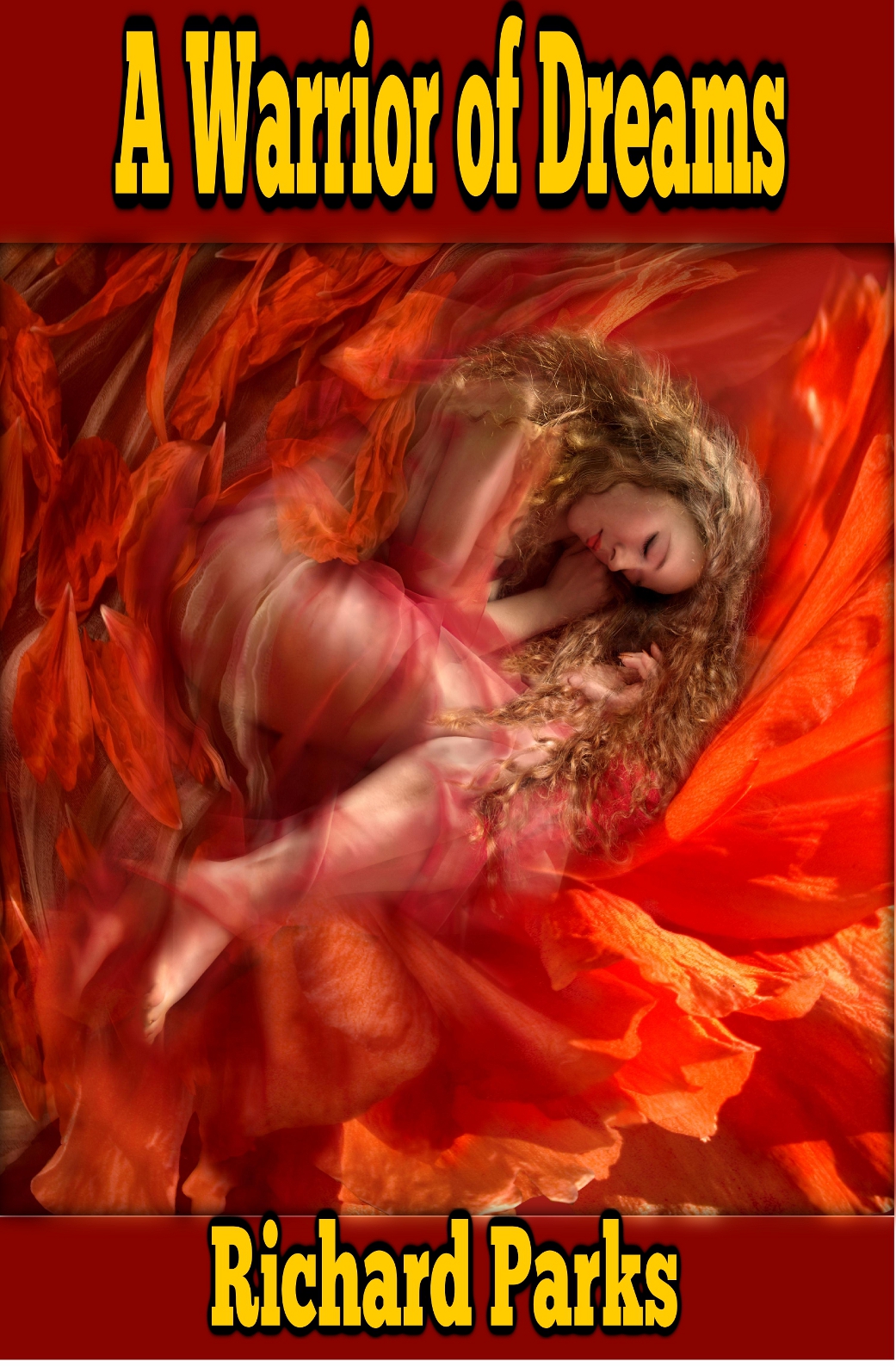
3) The Lady Scythe. Dreamed her exactly as she was in the story, down to the no-nonsense work clothes she wore underneath her ceremonial attire. She was the Emperor’s executioner, set in the same universe as A Warrior of Dreams. She looked a lot like a cheerful high-rent tavern wench. In actuality she was a psychopath with a heart of ice. Came with the job.  “Courting the Lady Scythe,” in Paper Cities, said book being the winner of a World Fantasy Award that year in the anthology category.

Only three times so far. And in each case, the character with the dream origin is NOT the main character, even though they are responsible for the story coming into existence. This may mean something. Or not. But it’s fun to think about, at least to me. If not for the rest of you, well, dreams are a tricky subject. 🙂