What’s He On About Now?

YamadaEmperor-600One drawback of working on a longer project like a novel is you don’t have a lot left in you for anything else. Say, blogging, for example. Normally I try to post these every Monday like clockwork, but here it is Wednesday (thank you, Captain Obvious) and I am late. I don’t like being late. Normally I show up for appointments fifteen minutes early or more and everyone ELSE is late. Usually doctors and dentists, whose time as they will willingly tell you is much more valuable than yours.

Well, to them or anyone else this is literally true, since all any of us has is time. Everything else—money, cars, clothes, your ipod–is a temporary construct relating to how we live in the world, but time is what matters and no one as a general rule knows how much they have. There is much unnecessary fretting over this. I’m prone to it myself, especially when I’m under a deadline, either contractual or self-imposed, makes no difference. It reminds me of a scene from Neil Gaiman’s Sandman graphic novel series where his sister Death has just collected the soul of a baby who passes in SIDS, and the baby is not happy about it, to paraphrase, “That was it? That was all I got?” To which the reply was, again paraphrasing, “You had a life. That is all anyone has.”

So all we have is time, but the only time we really have is now. So what we decide to do with it? Yeah. It kind of matters. I don’t always make the best choices about that, but then I don’t know anyone who always does. We act like we have forever even when we know it is not true. Sometimes that illusion is all that gets you through a day, but best not to forget that it is an illusion. If there is anything at all which is not an illusion, it is now, the only point in time where action is possible. Like writing a late blog post, because there were things I believed to be more important at the time.

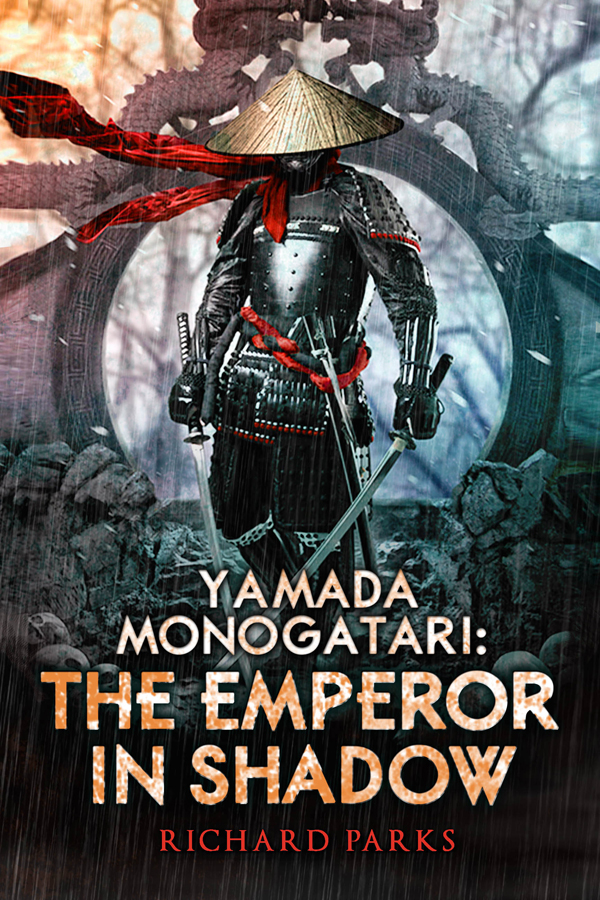
For instance, finishing the first draft of The Emperor in Shadow, complete at 94k words. It’ll probably be close to that after the rewrite. I usually put in as much as I take out. Sometimes more, sometimes less, but usually within close tolerances. I won’t call the book done, since that doesn’t happen until it has gone through rewrite then editing and come back from the printers. Then, for better or worse, it is done, and likely on time for a September release.

Then it is time to move on to something else because, you know, that whole “now” thing keeps happening. Until it doesn’t.
 

These Dreams…

YamadaEmperor-600The book has crossed the 80,000 word mark and is moving toward the end. Which means, rather than being created or complicated, situations are being resolved. I know who is behind most of the challenges Yamada has faced in this book. He’s about to find out, too, as matters move toward final settlements and crimes/sins accounted. There’s one scene I’m especially looking forward to writing. It won’t be a long one, by my estimate. Just a few pages, and I pretty much know how I’m going to write it and what happens and what it will mean to Yamada. I could have written it already, frankly, but I’ve held off, because it will be my reward for completing the book, even though part of me doesn’t want to write “The End.” A major story arc is being closed, and when it is done, I’m not sure what will be left. Perhaps nothing. We will see.

Something is happening that does happen now and again when I’m at this point in a story—I start to dream about it. Night before last and last night I was dreaming about possible events in the book, as if my subconscious was trying to suggest new avenues to explore. I considered them all, but realized they were all burdened with dream logic, which doesn’t really make sense to anyone outside the frame of reference of that dream. So they are no go. Except possibly for an image that I may use. I haven’t decided yet.

Once that dream was over, next I was surprised to find myself dreaming about Gwyneth Paltrow, and no, not that kind of dream. Her career was in danger, she was about to star in a new film, and she needed me to tweet the news. Why? Beats hell out of me. Apparently it was crucial, as she was almost literally begging me to make the tweet. And all I had was my phone and the tiny virtual keyboard, and I was messing up the hashtags and having all sorts of problems and her insistence wasn’t helping. I hit <Send> and the next thing I know she’s on some big talk show pimping the film, which is apparently of Oscar contention quality, so apparently I did okay.

The film? The story of a Marshall Tucker cover band.

Yeah.

That’s the thing about dreams. We all have them. We all need them. But they are not the most reliable things in the world. Take what you can from them. Learn what you can. Do not expect them to make too much sense. That is not their job.

The Parts You Don’t See

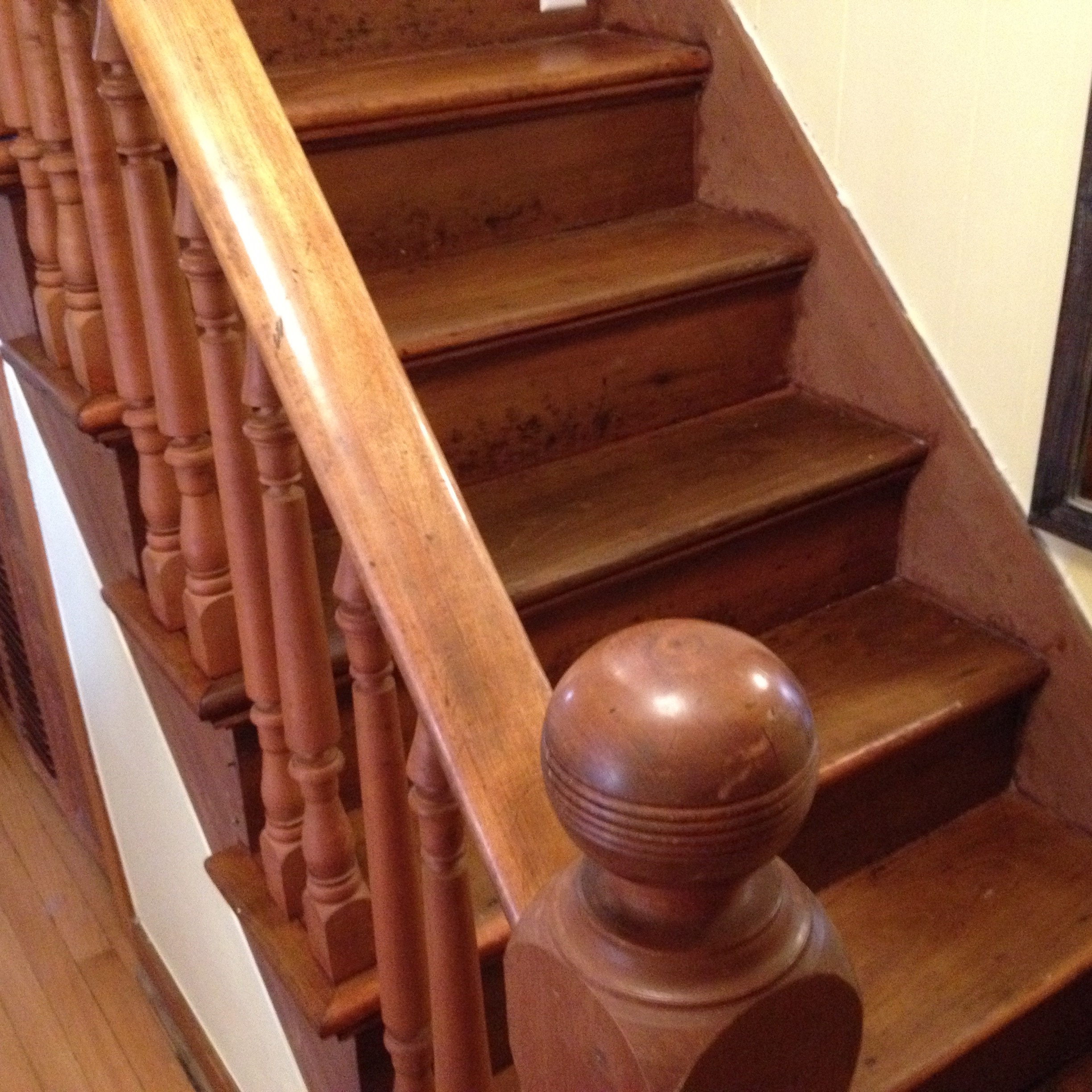
StairsOur “new” house was built in 1900, so naturally it has a few quirks. Some of those are of the “just the way it is” variety, and you learn to appreciate them because they’re not changing. Others require modification, like a replacement window or installing a vent to bring a bathroom up to code. The usual things. In a house this old, a lot has changed of necessity over the years, but I’ve recently had reason to notice one thing that has not–the staircase. It is all original.

Three things brought this to our attention, other than its obvious age and patina. The first was when Carol noted that the spindles on the banister were not all exactly the same shape, as they would have been with CNC machine-cut spindles. These were done individually on a lathe by hand. Then I noticed a faint but distinct pattern of radial lines on top of the banister that ran the length of the rail, and realized they were the trails left by planing where the curve of the railing had been shaped by hand. The third confirmation came when I was coming down the stairs in my sock feet and slipped, knocking a couple of the spindles loose from the tread as I slid down the stairs on my butt. Fortunately there was no permanent damage either to me or the stairs, but now I could see that the spindles ended in hand-cut dovetails that fit into the side of the step and were held in place with a mitered cap fastened with square–not drawn wire–nails. This was something the homeowner was never supposed to see, that construction beneath the surface that just does its job, has to be done right, but by design will never show.

Which reminded me–and you just knew I was going there, didn’t you?–of something similar in the act of writing, in that a lot of what makes a piece of writing work is usually below the surface, doing its job but not, by design, drawing attention to itself. Even though the Yamada books are pure fantasy, they are set in a specific time and place that is well-documented. Many if not most of the people who come on stage or get mentioned in the books were real people, holding the positions I said they did, sometimes even doing the things I attribute to them. Not always, but often enough. So why is that important? Simple–it helps me anchor the narrative to the time and place where the events are set. It sometimes even suggests events that fit the narrative and give it direction.

For instance, in the late Heian  period the mighty Fujiwara Clan is losing its influence over the court of the Emperor for a lot of reasons, not the least of which is the rising power of the warrior clans (foreshadowing the later samurai class). At this point in history the two clan leaders, Yorimichi and Norimichi, get into a feud which prevented them from acting together effectively to curb the rise of the Emperor’s faction opposing them. Family squabbles happen all the time, but this one occurred just when the reigning Emperor was in a position to take full advantage of it. Does the reader need to know this? Nope. But I did, because it pointed the current story toward a particular path that, in my opinion, made for a better story as well as following the actual historical timeline. It informs everything that follows in the book, like those invisible dovetails in the spindles that keep the railing on the stairs in place.

That railing has stood for over a century, despite clumsy clods in their sock feet. I took a lesson.

Heroes: R.A. MacAvoy

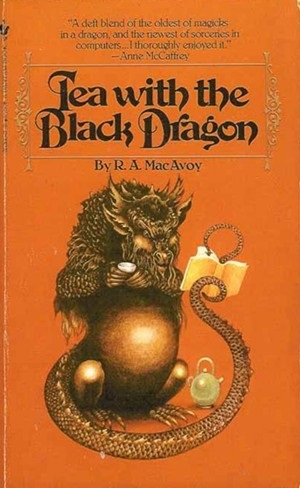
TeaWithTheBlackDragonWriting heroes attain that status in my very subjective opinion for various reasons. Sometimes it’s for a body of work, but just as often it is for a very specific work, a work that shows you something you didn’t understand before, or even shows you something you didn’t know existed before. Last time I talked about Andre Norton’s influence in general, but specifically about Perilous Dreams and how its tone and approach informed A Warrior of Dreams. I use the term “informed” rather than simply “influenced,” to make a subtle but very real distinction. Lots of things influence a writer from time to time and day to day. I’ve read books—or in some cases attempted to read books—as I’m sure you have as well, whose main effect was to make you swear to never, ever publish anything that lame with your name on it. So in that sense they were important influences. No, “inform” is another level altogether. While anyone who reads both would know one is not a pastiche of the other, I have no trouble admitting that AWOD would have been a very different book, indeed may never have been written in the first place, if I hadn’t read Perilous Dreams first.

The very same dynamic exists between R(Roberta). A(Ann). MacAvoy’s classic Tea With the Black Dragon and what is one of my favorites of my own books, All the Gates of Hell. Continue reading

Switching POV–The Writer’s, Not the Character’s

YamadaEmperor-600If I ever knew who said it first, I’ve long forgotten. But the phrase had reason to kick me in the butt again this week—“I don’t know how to write a novel. I only know how to write the last one.” Which in my case is profoundly true. Every book is different, even if they’re in the same series concerned with—mostly—the same characters. It is a different book, or else why bother to write it at all? Yet writing other books in the Yamada series does not help very much with this one. Ask me how to write The War God’s Son and I could tell you, because I’ve already done it. Ask me how to write The Emperor in Shadow and I’d have to say, honestly, I’m still figuring that one out. Worse, I’m putting obstacles in my way.

Among my many failings is a natural gift for complexity. By which I mean that I have a habit of taking something inherently simple and turning it into something complicated. I don’t mean to do this, it’s just something that happens, given half the chance. It applies to home DIY as well as writing, though in both cases it makes accomplishing a goal harder than it needs to be. The current project is a prime example. Continue reading