Fighting Your Strengths

Sometimes where writing is concerned, it’s easy to confuse skill with enthusiasm. I mean, if you have two separate pieces of prose, one that flowed siwftly from the pen (metaphorically speaking) and one where the composition of each and every word felt like an exercise in either pulling teeth or deciphering Linear-B, one might draw the obvious conclusion that the first piece was playing off of one or more of your strengths as a writer, while another, say a long narrative section, was getting done by sheer persistence since you’re fighting against a severe weakness in your craft. It ain’t, as the man said, necessarily so. Sometimes you’ve got that backwards.

I’m taking the example nearest to hand: the novel project just prior to the most recent one. I wrote a complete draft but then basically stuck it aside and never did much with the working draft for various good reasons, but now that the most recent project is at rest for the moment I’ve been going back to this one and trying to get it into shape for possible submission later. I still like it. I still think that the cosmological and theological questions I wanted to play with there made for a good story. At least, “in theory.” One problem though, and it’s sort of a big one–everybody talks too darn much.

Completely my fault. As anyone who’s read much or maybe any of my work should know, I love dialogue. I don’t pretend to know whether we’re talking about cause and effect here, but one possible reason that I love dialogue is that it’s one aspect of writing that I have always found extremely easy. Get two interesting characters with something at stake, something to potentially gain or lose, and get them talking to each other? Feh. The scene practically writes itself. Yet in this project that very strength was killing the book.

I have to fight the urge to get carried away, and clearly as I reviewed the text of this book, it was obvious that I hadn’t fought hard enough. Which brings up something I’m not, or at least didn’t use to be good at–cutting. I had to struggle to learn this, and it took years. Lots of them. But I finally turned that weakness into a skill. I am still not a fast or enthusiastic cutter. I would even say I’d have to improve to be reluctant. But I’m a precise one. Which is fortunate, since judicious cutting is all that will save this book. More than save, it may just reveal it as something that’s every bit as good as I thought it was when I wrote it.

If your strengths can kill your work, your weaknesses can save it. Reminds me of the First Law of Power (Black Kath’s Daughter): “What Power Holds, Weakness Frees.” Strengths can bind and limit, weaknesses can cut the cords. All you have to do is recognize both for what they really are.
Life Could Be a Dream

No, this isn’t a dream diary. Most people’s dreams aren’t as interesting as they think they are, including mine, for the simple reason of perspective. A dream is VR in a way that current VR tech can only envy: Fully immersive. Sight. Sound. Taste. Touch. All that is vivd to the dreamer in a way it’s never going to be to the one hearing about it. “I went flying last night! It was wonderful!” and we all go, “Umm, yeah, that’s nice.” Unless we were the ones doing the flying. Quite often without a plane. Exciting? Sure, to the one doing it. Fun? Likewise. Interesting to others? Not so much. Rather like vacation photos. (Disclaimer: There are exceptions. I did say “most.” No, I’m not going to name them. You can assume I’m talking about you.)

Rather, I’m thinking about dreaming as it relates to the writing process. I’ve dreamed complete, wonderful stories that–see above–turned to complete dross in the morning, rather like fairy gold. Even when I remember one in every detail, by morning I realize they make no sense at all. None. And they don’t work. The unusual thing is when they DO work, and I’ve found that the ONLY time a dream suggests a real, workable story to me is not when it tries to hand me a plot. My dream plots are complete nonsense, and those never work. Sometimes I’ll get a workable image, but only now and then. What does work is when the dream hands me a character. And even that doesn’t happen very often. But I can think of three very — to me — notable exceptions.

1) Treedle. This character appeared in “What Power Holds,” an early story published in Dragon Magazine back in 1994. He only appeared in the first one written, but the series he sparked is still going on. The last short story in the series was “The First Law of Power” in RoF in 2001, but it was also the genesis of The Long Look and Black Kath’s Daughter, and whatever more books may come.

2) Golden Bell. I don’t even remember much of the dream she came from. What I do remember was her standing before me, saying, “I have a malady of music, a fever of poetry that consumes me.” That line made it into the story almost unchanged, which was “Golden Bell, Seven, and the Marquis of Zeng.” Published in the first issue of Black Gate, and also the first piece of mine to ever make it into a Year’s Best compilation.

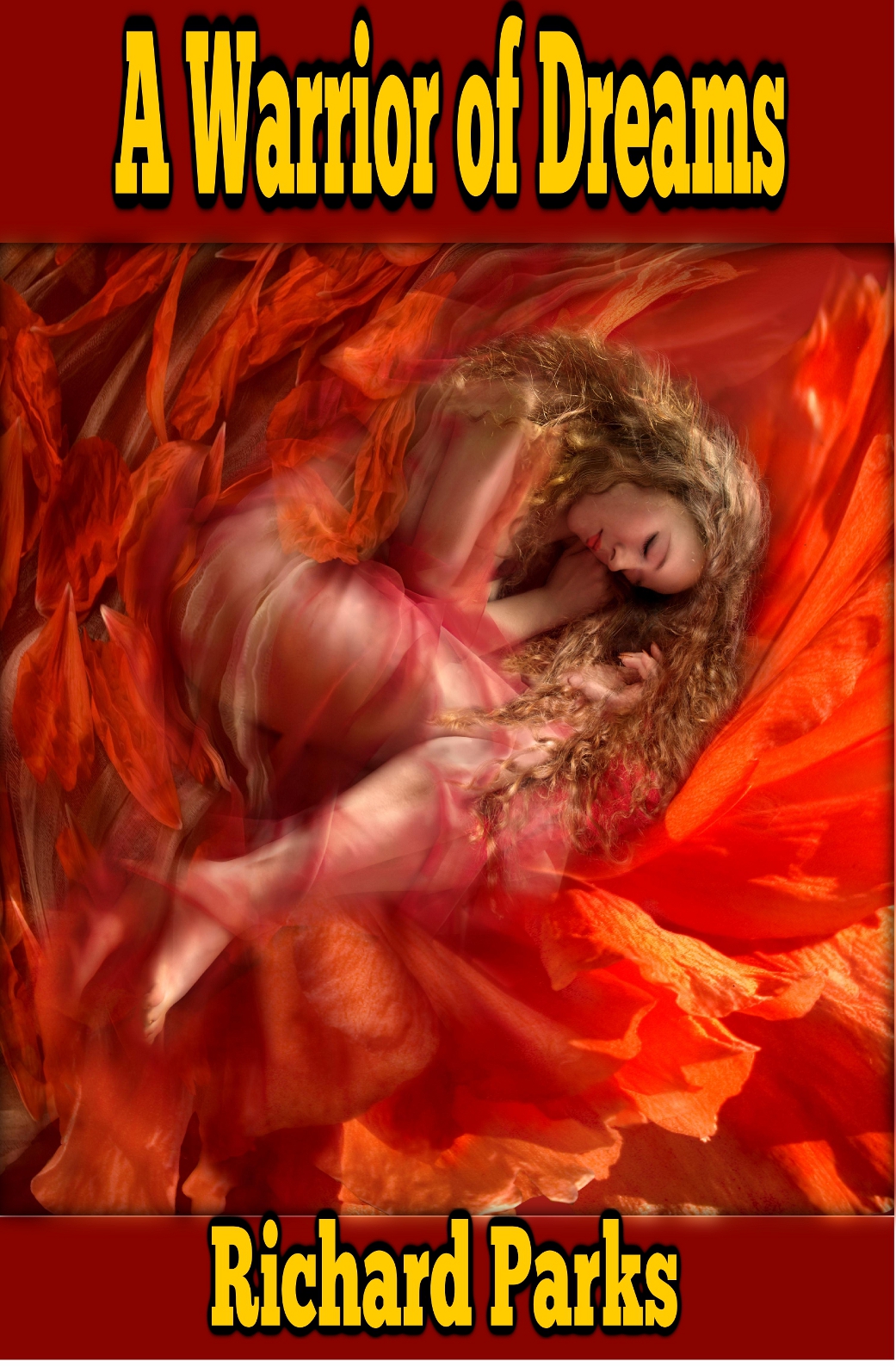
3) The Lady Scythe. Dreamed her exactly as she was in the story, down to the no-nonsense work clothes she wore underneath her ceremonial attire. She was the Emperor’s executioner, set in the same universe as A Warrior of Dreams. She looked a lot like a cheerful high-rent tavern wench. In actuality she was a psychopath with a heart of ice. Came with the job.  “Courting the Lady Scythe,” in Paper Cities, said book being the winner of a World Fantasy Award that year in the anthology category.

Only three times so far. And in each case, the character with the dream origin is NOT the main character, even though they are responsible for the story coming into existence. This may mean something. Or not. But it’s fun to think about, at least to me. If not for the rest of you, well, dreams are a tricky subject. 🙂

Something Like Progress

Darling Du Jour, or Just to Show That I AM SO working on the sequel to Black Kath’s Daughter. The working title is Power’s Shadow. Subject to change, of course.

In this scene, Marta and her companion Sela are getting a report from Longfeather, a once and future pirate who, for Marta’s convenience, is currently a goshawk:

            It wasn’t long before Longfeather also returned from his scouting mission. He landed on a nearby pine branch and gave his report. “There’s not a lot of activity at the docks just now. There are two merchant ships making ready to set sail, but of course they aren’t going anywhere near the Five Isles. They’ll hug the coastline until they reach Borasur.”

           There was an aspect of the debt-bond that made it difficult, even painful, for the one who was in bond-service to work against the interests of the one who held the debt, in this case Marta. She could see how uncomfortable Longfeather was, and she easily guessed the reason.

                “Is that really all you saw?” Marta asked, and she put the power of the debt-bond behind her words.

                “No,” Longfeather finally admitted. “There was someone else.”

                The way he’d phrased his response wasn’t lost on Marta. Not ‘something else’ but rather ‘someone else.’ “No more dancing around the subject, Longfeather,” Marta said. “Tell me who you saw at the docks.”

                “I saw a vessel called Blue Moon. Her captain is a woman named Callowyn. She’s mostly a smuggler and does errands for Boranac, and so operates under his protection, but she’s a pirate, too, at opportunity. I do not trust her.”

                “And is there a pirate or smuggler that you do trust?” Marta asked.

                “Well…no,” Longfeather admitted. “Most of them are like me.”

                “So why did you feel it necessary to point out this particular lack of trust?”

                Longfeather apparently gave up. “This Callowyn…we have a history, of sorts.”

                   “What sort?” Sela asked. “Or shall we guess?”

                   Longfeather shrugged, and briefly displayed his wings. “She’d probably cut off my privates with a dull knife and spike them to her mast as a trophy before bothering to chop off my head  for the reward. That sort.”

                Marta smiled then. “A woman of taste and judgment. I think I like her already. But do not worry, Longfeather. She’s not going to see you. She’s going to see a goshawk.”

                Longfeather sighed, which was a very strange sound indeed, coming from a goshawk. “She’ll figure it out. I know she will.”

Bits of Pieces

This is going to be a sort of general update post. It’s not that a lot is happening, but some things are happening, things that, for a change, don’t have a lot to do with the daily grind of getting all the things done that I have to get done before I can do the things that I wanted to do in the first place. If you understand that—and I’m betting that most of you do—you’ll get how even a few changes can nudge the needle past So? all the way to Hey! Worth Noting.

First of all, after floundering for a bit (okay, five months), I’m starting to make some headway on the sequel to Black Kath’s Daughter. I still have a long way to go, but forward motion, believe you me, is an improvement. And if everything works out the way I think it’s going to, I’ll finally make a proper connection between the Amaet who was the bane of Tymon’s existence in The Long Look with the Amaet who is the creator of The Arrow Path and the bane of Marta’s existence in Black Kath’s Daughter. And vice versa, truth be told. The working title is: Power’s Shadow. Subject to change, being a working title and all.

The Yamada novel (To Break the Demon Gate) is still on track at PS Publishing for release early next year. So is the Prime Books collection of Yamada stories, Yamada Monogatari: Demon Hunter. One interesting thing when working with a smaller publisher is that sometimes you actually have some input into the cover design. Not always, but sometimes. I found the image we used for the first mockup of the Yamada collection, but the consensus (and I agree with it) was that it was both too modern and too “horror.” Yes, there are demons in the Yamada stories (and ghosts, and youkai, and…well, lots of such things, and anyone who’s read them knows that already) and they can be dark at times, but definitely not horror, so that’s not going to work. We’re still looking for something with the right atmosphere, and finding just the perfect thing is going to be tricky. When the cover is set I’ll put it up here as soon as the publisher okays it.

A couple of final notes—“In the Palace of the Jade Lion” from Beneath Ceaseless Skies #100 got a Recommended from Rich Horton in the October  Locus Magazine. It’s not as if that’s the first time I’ve gotten one, but it’s always cool. And the most recent Yamada story, “Three Little Foxes,” is due to go live up at BCS in the next few days. I’ll post a link here when that happens.

Working Cover

I had one more project to finish before getting back to the sequel to Black Kath’s Daughter. The working (and likely final) title is The Ghost War, and I’m not too far from done, just a few line edits and minor corrections left. It’s a stand-alone, which most of my novel-length work is, the Laws of Power sequence being the only exception so far. I know a few people are actually waiting for the next novel in the series and I promise I’ll get it done. In the meantime, have a look at the eerily appropriate working cover for the new project.