Unknown's avatar

About ogresan

Richard Parks' stories have have appeared in Asimov's SF, Realms of Fantasy, Fantasy Magazine, Weird Tales, and numerous anthologies, including several Year's Bests. His first story collection, THE OGRE'S WIFE, was a finalist for the World Fantasy Award. He is the author of the Yamada Monogatari series from Prime Books.

Back to Press, and the Great Cleanup

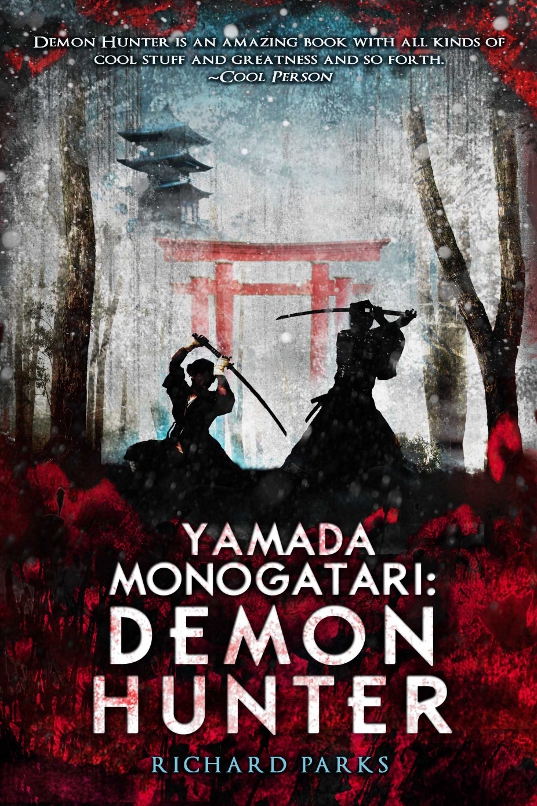
Step4-YamadaFirst off, I got the news a few days ago that Yamada Monogatari: Demon Hunter is going back to press. This makes the third printing. Not too shabby for a book that is, in essence, a themed collection.

Just in time for the 4th, what should appear in my inbox but the copyedited version of the third book in the series,  Yamada Monogatari: The War God’s Son, which both Prime Books and Audible Books are waiting on. Oof. It did remind me of why I usually don’t show first drafts to anybody. It appears that there are certain words and phrases I’m waaay too fond of. “That” is one. There are others. Lots of them. Paula Guran at Prime pronounced the manuscript “structurally perfect,” but stylistically? Not so much until I clean up some of this. Okay, a lot of this. We suffer so that you don’t have to.

Well, not much in the way of suffering, really. While I am embarrassed by some of my writing quirks, re-reading the book in the process is reminding me of how pleased I was with it, overall. Not “satisfied,” because one never is, but pleased none the less. Coming back to it cold after this time away I’m a little relieved to say that I still like it, and maybe some of you will too. It moves Yamada’s story arc forward quite a bit. Plus you get to meet Yamada’s elder sister.

The great file purge is still in progress. I was one of those sods who held onto everything: rough drafts, rejection letters, correspondence, contracts…keeping the contracts, naturally. And some of the correspondence. The rest is either tossed or put through the shredder, depending. It wasn’t as depressing as if could have been, especially when I was reminded of who rejected what story, and with hindsight could either see that they were right or “You passed on that one? WTF were you thinking?”

My shelves are almost bare. Most of my books are already packed away, minus the ones I’m debating whether or not to keep. I hope I won’t need any of my references for a while, though I do need some information on Empress Sadako for the next project. Which I need to get busy on. Which has to wait for the current revisions to be done.

Which means back to work.

Review–Proteus in the Underworld by Charles Sheffield

WRITING 02Originally appeared in Science Fiction Age, May, 1994.

Proteus in the Underworld, by Charles Sheffield, Baen Books, 299 pages

Proteus in the Underworld is the latest in Charles
Sheffield’s Proteus series.  For readers–like me–who discovered
this series late, it’s set in a future where a delicate balance
of hardware, software, and bio-feedback allow human beings to
transform themselves into a nearly infinite variety of
alternative physical forms.  This has allowed humanity to adopt
specialized forms suited to almost every solar environment from
Mars to Saturn to the Oort Cloud.  It also has extended human
life spans, nearly eliminated disease and deformity and rendered
cosmetic surgery both obsolete and superfluous.

Note the emphasis on ‘human.’  Only human beings have proved to
have the required combination of intelligence and will that
allows them to interact with form change machines and the
bio-feedback that is at their heart.  This truism has been
formalized as the “humanity test,” and all children of a certain
age have to pass the test or be sent to the organ banks.  For a
test with such potentially dire consequences to be acceptable it
has to be objective, accurate, and foolproof.  So when several
so-called “feral forms”–little more than mutated monsters–born
in the outer solar system pass the humanity test handily but
prove to be neither human nor even sentient this presents a
problem.

Sondra Wolf Dearborn is the agent of The Office of Form
Control assigned to find the solution.  Sondra has little field
experience and is in over her head.  She’s smart enough to know
it and seeks help from her distant relative, the nearly legendary
Behrooz “Bey” Wolf.  Bey wolf is the retired former head of the
Office of Form Control and a master of form change theory and
practice.  He’s the perfect choice, only Bey Wolf is busy now
with his own private research and has no intention of being drawn
back into the problems and politics of his old department.
Of course things don’t work out that way.  The mere fact
that Sondra contacted him at all sets in motion a chain of events
that draw them both deeper into the mystery of the feral forms,
and the onion layers of conspiracy within conspiracy that are at
its heart.  Soon everyone from the Old Mars Policy Council to
Gertrude Zenobia Melford, head of the powerful Biological
Equipment Corporation and the richest person in the solar system,
are after Bey Wolf’s services.  It doesn’t take a genius of Bey
Wolf’s caliber to see that something odd is going on.  Just what
that is and the mostly separate paths Bey Wolf and Sondra
Dearborn take to piece the mystery together is at the heart of
this book.

There’s another emphasis.  Mystery.  Despite the sfnal
trappings I think the book also qualifies as a
mystery novel, in that the central puzzle is the driving force
behind most action.  Charles Sheffield is a working scientist and
his affection for ideas and speculation shows clearly in this
book–his design for a form-changed human who can survive on the
surface of Mars is as neat a bit of speculation as you’ll
find–but here most of that serves as foundation for what is
essentially a mystery plot.  At one point Robert Capman, a
form-changed human living on Saturn, goes so far as to inform
Sondra that “…Based upon what you have told me and what I have
told you, you have enough information to complete without
assistance from anyone the task assigned to you by the Office of
Form Control.”  Shades of an Ellery Queen episode.  “If you’ve
been watching–closely–you have all the clues you need” is how I
remember it, but the challenge is the same, for Sondra and the
reader.  The information is there–solve the mystery.

This isn’t a condemnation by any means.  Such cross-overs
have a long and distinguished history and if genre cross-over
leads to the kind of literary diversity that the genetic kind
creates in the biological sphere, I’m for it.  The only question
remaining is how well this particular example works.

Pretty well, I think.  One slight problem I had with the
book was in Sheffield’s handling of point-of-view.  Scenes that
were told from one POV sometimes had little asides that were
clearly not from that character’s viewpoint.  It tended to jar.
The story flow was strong enough to keep me going, but it would
have been a nicer trip without those little bumps.  I also wish
he’d spent a little more time showing the effect of the
form-change technology on day to day life, but the book’s focus
is clearly elsewhere.  The author’s interest is on the big
picture consequences of the technology, and that perspective
forms part of the denouement of the book.

Though it takes a little time for someone new to the series
to absorb the background, Sheffield makes it painless enough,
filling in what history is needed when it’s needed.  Someone
already familiar with the series would doubtless have hit the
ground running.  Sheffield also manages to include a few
interestingly oddball characters along the way, though it’s no
surprise that he’s at his very best when depicting scientists
happily working within their chosen specialties/obsessions.

It may be a stereotype that readers of hard sf like good ideas
better than good characters, but there’s enough of both here for
balance.  There’s also a neat little tag at the end that’s not so
much a twist as an implied promise.  I don’t know where or if
Sheffield plans to go with it, but I admit it–I’m curious.
Which may be the point.

You Didn’t Tell Me There Was Gonna Be a Test

Cover Art (c) 1979 by Tim Hammell

Cover Art (c) 1979 by Tim Hammell

Well, okay, I’m not grading this. I’ve talked before about the magazines that have come and gone, but today I started in on some of my files in preparation for moving, and I’m turning up things even I’d forgotten about. How many of you have heard of a magazine called The Twilight Zone? Maybe a few of you, since the TV show will likely appear in re-runs until the heat death of the universe and there was a well-regarded print magazine (redundant at the time. ALL magazines were print) dedicated to publishing TZ-esque stories. In theory. In reality it published dark fantasy of many types. It was a good magazine, I read it and hoped to write for it one day, but it ended before that happened.

Well, I can get a lot more obscure than that. How about Shayol? No? Perhaps Myrddin? Anyone? Bueller? Prelude to FantasyEldritch Tales? Fantasy Macabre? Fantasy Book? Copper Toadstool? Weirdbook? Maybe a few more on that last, since it’s been recently revived, or at least is going through the process. These were all small press fantasy/sf magazines that existed back when producing a magazine meant printing and distributing a magazine. It was expensive, and most didn’t last any longer than the publisher’s money and enthusiasm. Quality of the package ranged from saddle stapled with typewriter typography to typeset and perfect bound, usually with b/w line illustrations, but sometimes full color.

They’re like little time capsules, many of them. At a time when there weren’t that many outlets for fantasy writers/artists especially, people flocked to magazines like this. Which is why you’ll find names like Charles de Lint, Steve Eng, Tom Reamy, Pat Cadigan, and Brad Foster among the names on the contents pages. Right there along with people you’ve never heard of, and likely never will hear of, but that was the thing—everyone, from publisher to writer, to artist, was participating, creating, strictly for the love of the form, because nobody was making any money.

One or two even had someone named Richard Parks. Sometimes I wonder whatever happened to that guy. Regardless, I’ve been doing purges because anything I don’t get rid of, I have to move. And that is a hassle. I likely will be tossing a lot of rough drafts and ephemera, but most of these old zines? Yeah, I’m keeping them. There are some things, some ideas and ideals, you just can’t—and shouldn’t—let go of.

Do You Want Footnotes With That?

Heian Lady

Reference books. We tend to accumulate them in the natural course of our writing projects, whatever they may be. After all, Google doesn’t have all the answers, and while any single citation should be taken with a grain of salt, the ones you find on the internet need something more along the lines of a 50 lb bag. A source of reliable information is to be treasured, and since I’m going to be packing them up soon (oh, they are SO going with me), I thought I’d mention a few. I’ll concentrate on those I’ve found especially useful for the Yamada series and why, since I’ve been asked about them so apparently some people are curious.

Continue reading

Who Says You Can’t Go Home?

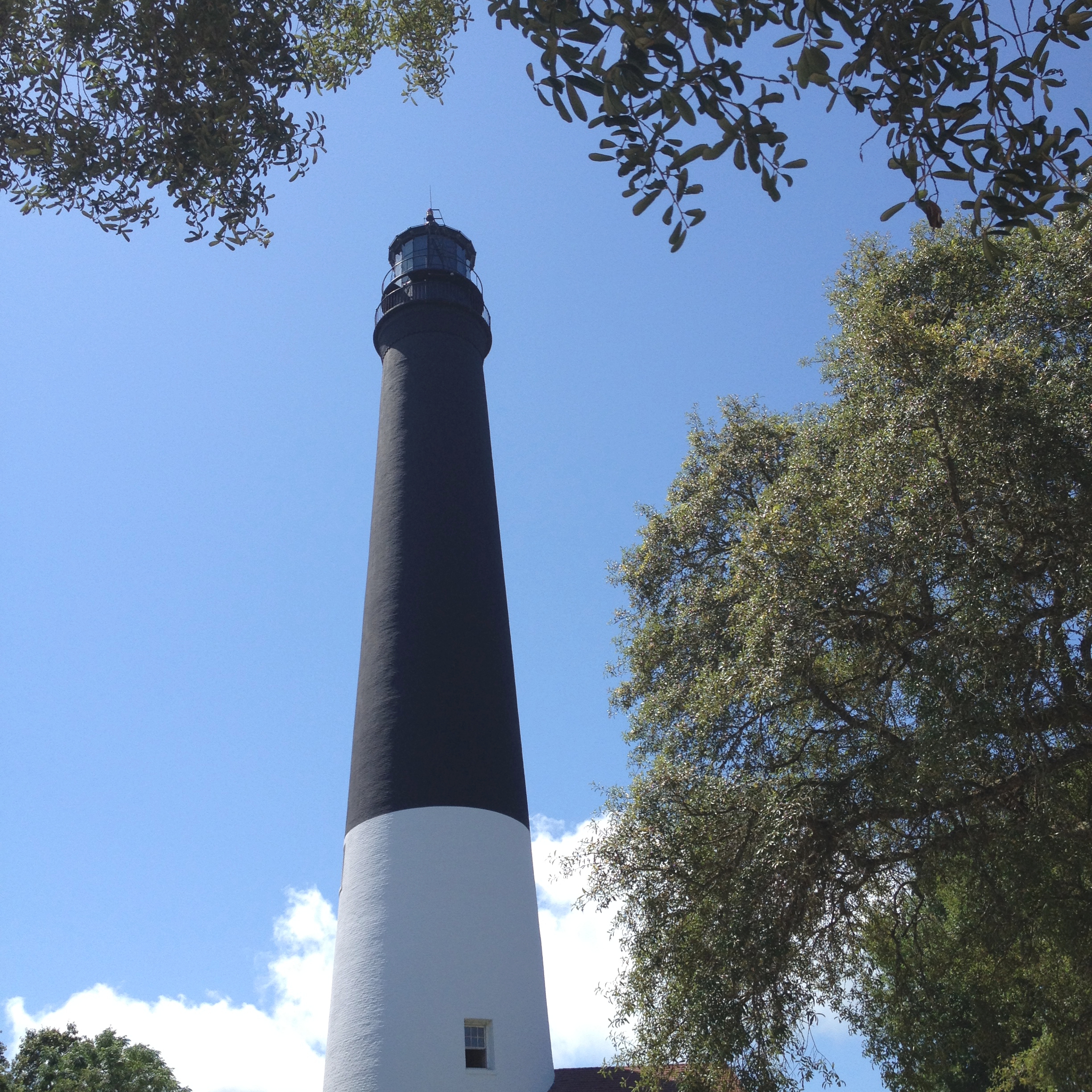
Pensacola-LighthouseWe took a short trip down to Pensacola, FL. That’s Carol’s hometown, and since there’s a good chance we won’t be back that way for some time, we took a nostalgia/farewell trip. I have a lot of happy memories–and some less so–from Pensacola, mostly due to its association with Carol, but it was home to her for a lot of years. Carol was pleasantly surprised by how much hadn’t changed–her old house was still in use, her grammar school is still there, even some old-school relic tourist motels that have served as landmarks for 50+ years, still in operation. Pensacola-Lighthouse-Keepers QuartersWe took advantage of the chance to visit the Pensacola Lighthouse, located on the Naval Air Station. Which, for the uninitiated, is also the home base for the Blue Angels precision flying team. The guard at the gate warned us about heavy traffic, and we were wondering why that would be the case? Then Carol realized that this was a practice day for the Blue Angels, and that they’d be flying near the lighthouse. We had thought about climbing to the top, but people book a year in advance to be able to watch a Blue Angels practice session from the top of the lighthouse. Must have been a fine sight, as we got a pretty good one just watching from the porch of the Keeper’s quarters. I was able to catch this one on a low pass. 1 Angel-BlueBest I could do with a camera phone. Those guys are fast. Carol grew up with this type of thing as a common occurrence, but for me it was a treat.

We’ve been pretty good vegetarians for a while (Well, Carol better than me), but it was time to eat seafood. Especially mullet. Carol wasn’t going to visit home without a taste of mullet. Sometimes, you just have to eat the fish and be done with it. Until the next time.

Power’s Shadow is still wending its way through the edit process. I’ll post here once I have a release time for the ebook.