Things I Like – Part 1

I’ve talked about Parke Godwin as a person before, but now I’m going to concentrate on his legacy a bit. He tried out science fiction  (see The Masters of Solitude written with Marvin Kaye) but he really hit his stride with historical fantasy. I rank his take on the Matter of Britain at the very least in a league with Rosemary Sutcliff’s, and I do not say that lightly. My first exposure to this area of his work was The Last Rainbow, a take on the legend of St. Patrick, a subject I didn’t think I cared a whit about until I read his version. Parke Godwin came from a theatrical background (he was an actor long before he became a writer) and you see it in the care that goes into the creation of every one of his characters. They are never around just to serve the plot, a failing you’ll often run into even in the best of other authors’ work. Each and every one has, for want of a more appropriate term, stage presence. If a tinker shows up on page 234 for one scene only, you can bet he has a backstory, his own reasons for being where he is, and you’re likely to remember him when the book is done. There are no throwaway characters in a Parke Godwin Book.

Next up is Firelord. This is the beginning of the diptych of Godwin’s take on the legend of King Arthur. If I had to single out any one book as Parke Godwin’s masterpiece, this would proabably be it. Godwin’s take on the story of King Arthur takes him from Celtic tribal prince to a soldier in the last days of the Roman Empire’s influence in Britain to war commander to king. The fantasy element is always slight enough that one could ignore it, up to a point, but it’s there in a way that makes sense. Even Merlin plays his part, though he’s not who you might think he is. It’s a unique take on the legend, and I’m not giving any more away, so read it yourself, if you haven’t already. You’ll note above that I said “probably” his masterpiece. The only reason I’m a bit wishy-washy on that is because I waffle between Firelord and the second book, Beloved Exile. If Firelord is mainly Arthur’s story, then Beloved Exile is Guenivere’s. Specifically what happens after Camelot falls, a time period given fairly short shrift by most accounts of the story, maybe because the early tellers saw that as the end, but there are no endings, not really, and there was no way in hell that the Guenivere of Firelord was going to be retiring to a nunnery, then or ever. Which book is my favorite rather depends on what day you ask me.

There’s a lot more I could talk about, but then I don’t want to spoil it for anyone just getting into Godwin’s work. I will point out that you don’t want to overlook either Waiting For the Galactic Bus or The Snake Oil Wars, Godwin indulging his comedy chops with the linked stories of two extremely advanced aliens who get “temporarily” stranded on the Earth and the extreme mess they make of the place. There’s his one collection of short stories, The Fire When it Comes, including the World Fantasy Award-winning novella of the same name. There’s Tower of Beowulf. There’s his marvelously off-center take on Robin Hood—Sherwood, and Robin and the King. There’s…well, lots. Unfortunately a great many of these are out of print, but editions are available, and I’d jump on them while they are. You wouldn’t be disappointed by any of them, and if you are, well, we have nothing to discuss.

Recommended Reading

WRITING 02It’s that time again—the Locus Recommended Reading List has been published at their web site. If you don’t know what this is, Locus has more or less been the trade magazine of the Science Fiction and Fantasy field for a lot of years. Every year they do a recommended reading list of the previous year’s fiction in several categories – novels, YA, collections, novellas, etc. You can see the entire list here. This time, my story from Beneath Ceaseless Skies, “Cherry Blossoms on the River or Souls” is included. Keep in mind that the LRRL acts as the unofficial “long list” for the 2013 Locus Awards, which will be decided by the votes of readers and subscribers. And yes, it’s always nice when your work is noticed in a positive way. Or, really, noticed in a negative way. The trick is to be noticed at all.

If you think I’m kidding, I invite you to take a look at the Locus reading list for 2013. Notice something? Yep. There’s a reason it’s referred to as a long list. Do you know how one gets a story or novel or collection on the Locus list? Two of the magazine’s contributors/editors/reviewers have to agree it belongs there. Sometimes, I am told, if a person argues passionately enough, it only takes one. Now, think of all the stories/novels whatever that did not make the list. For example, Yamada Monogatari did not make the list for collection. I’m disappointed but not surprised. It wasn’t reviewed by Locus and so didn’t come to their attention in any meaningful way. But there’s a lot of work out there in that same boat. And a significant percentage of it is of comparable or even better quality to what did make the list.

All this is not to complain but simply to point out a very basic reality—not every piece of fiction published in a given year is going to get any significant notice, regardless. There is simply too much of it. Great from a reader’s standpoint—there’s an embarrassment of riches out there. Not so good from the writer’s perspective. It’s hard not to feel like one snowflake in an avalanche. I mean, you’re there, but so what? Almost no one would miss you, and certainly not that small group of skiers you’re aiming at. If you’re lucky, maybe you’ll graduate to the status of one drop in a bucket. If you melt really well.

Put away the knives and nooses, this isn’t about despair. It’s about why we do what we do. If you’re writing to please other people, stop that. Find something more useful to do with your life while you still can. If you’re writing for posterity, for your own sake knock it off. Seriously. Posterity doesn’t give a damn. I’ve pointed out this fact before and it bears repeating—most writers, good, bad, and brilliant, are completely forgotten within fifty years of their shuffling off their mortal coils. I’d even go so far to say that most of them don’t even make it that long. If you’re doing it to make a living and you’re accomplishing that, great. You’re one of a rare breed.  If you’re writing fiction for yourself, if writing makes you a better, saner human being than you would otherwise be, also great. I can think of few better reasons

Otherwise, you’re wasting your time.


Why Doesn’t the Skeleton Sing?

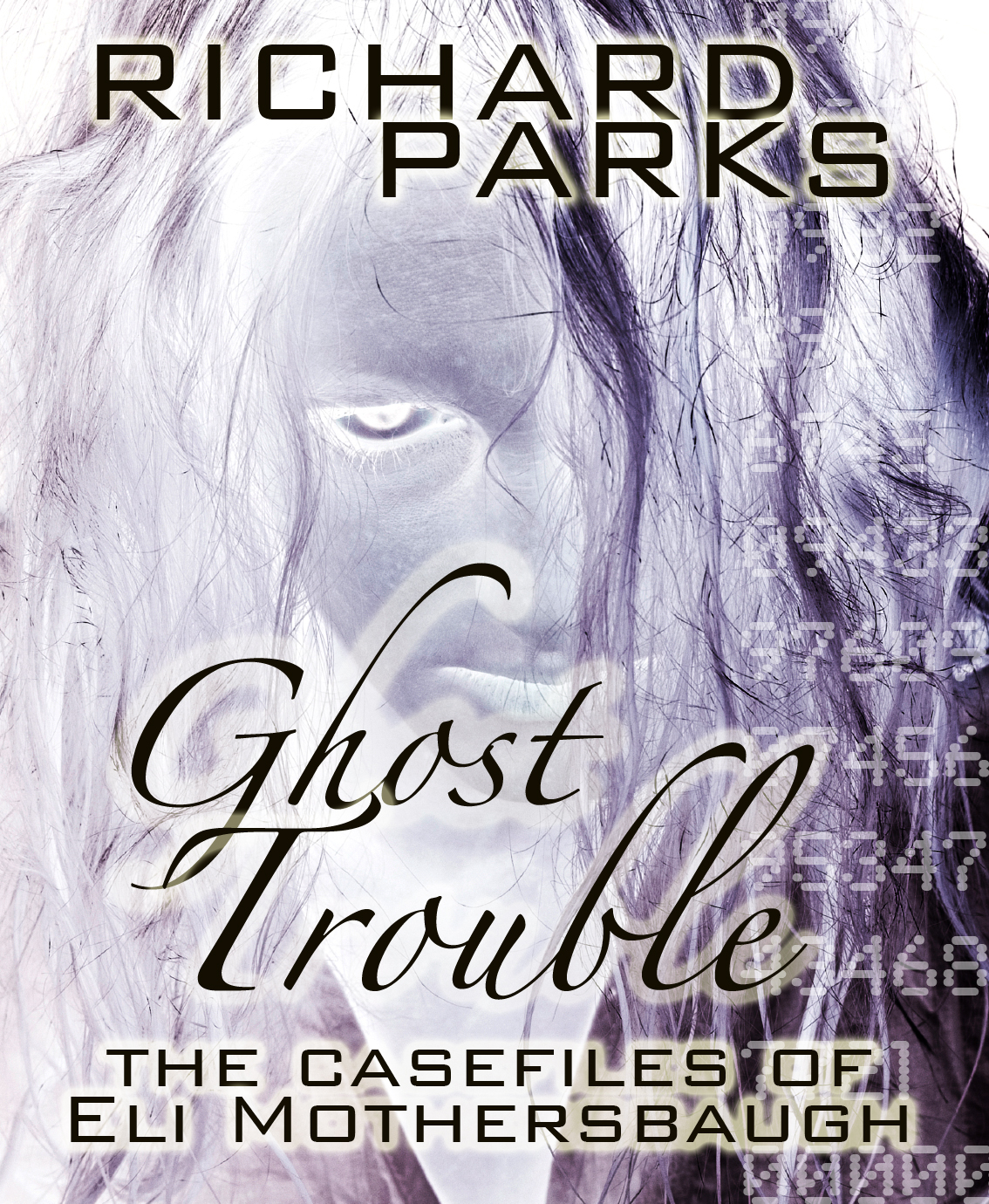
eBook cover for Ghost Trouble--The Case Files of Eli MothersbaughI don’t usually get story ideas from dreams. Usually because my dreams are an ungodly mess in terms of story, and I usually can come up with something better—and more coherent—when I’m awake. Story ideas have happened a couple of times, but no more than that. What happened on my last outing to the dreamtime was something a bit different—I got, not a story, but a question.

In the dream, someone asked me why my skeletons didn’t sing and I was answering that question.  Which sort of tells you all you need to know about my dreams. Silly things, the lot of them. And though I’ve never written about an animated skeleton I have written plenty of ghost stories staring my paranormal investigator, Eli Mothersbaugh, and the same principles applied. I have always considered the Eli stories to be science fiction, not fantasy, on the “change one thing and let the logic of your world building arise from that” school of science fiction construction. In Eli’s world, ghosts are a fact. A scientifically demonstrable, repeatable under laboratory conditions fact. And, as I was explaining in the dream, skeletons don’t need air, which is a good thing since they have no lungs and therefore no breath. Singing requires breath and vocal chords. Skeletons have neither, therefore skeletons don’t sing. Or scream, or talk, or do much of anything that requires breath. In the case of a paranormal ghost this isn’t even an issue. Of course an animated skeleton could talk in that situation, the same paranormal forces that would animate a skeleton in the first place would certainly not balk at speech. Logically, of course, it couldn’t talk, but then logically it wouldn’t exist in the first place, unless….

Unless the implied rules of the story universe which it inhabits allows for it. Since the thing exists in the first place, then it follows that it would be able to speak. Yet Eli’s universe has no animated skeletons. It might have ghosts that manifest visually as an articulated (not articulate) skeleton, but keep in mind that Eli’s universe is our universe, or rather one very much like it. With one small change. Ghosts may exist, but they have no physical form. They are pure bio-remnant energy in a more or less cohesive unity. In order to speak, they have to use that energy to manipulate sound waves and it takes a lot out of them, so most don’t bother. There was one exception, and if you’ve read the story “Diva” in the Eli Mothersbaugh collection, you know what—or rather who—that exception is. Yet even there a logical reason for Madame Caldwell’s ability exists. Has to exist, because the rules of this story universe require it.

Which brings me to my point, finally (Seriously, if you’ve stuck with me so far you had to be wondering if there was one, by now). Every story is set in its own universe, even the ones that appear to be set in our own, with the exception of series, in which case they’re set in their own universe. Most of the rules of that universe—and you might call them physical laws, but it goes beyond that—are implied in the setting and development of the story itself, and not always made explicit. That doesn’t matter. What does matter is that you violate those implied rules at your peril, because the reader won’t stand for it.

Whadya mean, “won’t stand for it”? How are they going to know that you’ve done so? They don’t know what the rules are! Oh, but they do, because everything they’ve read of your story up to that point has told them what they are. You imply, consciously or not. They infer, consciously or not. And when you break your own rules, they’ll know that something is not right. They might not know precisely what isn’t right, but they’ll know that something is off. And they’ll start thinking about what that something might be rather than being caught up in the story you’re trying to tell them, and you might as well butter it at that point, because that particular story is  toast.

I’m not saying it’s impossible to pull off, mind. It can be done, especially if you’ve used a bit of misdirection to make the reader infer something that you did not in fact imply, but that’s very tricky to pull off, so you’d better have a really good reason for doing it. Readers like being fooled, but you have to do it honestly. Otherwise you’re playing fast and loose with the rules, and remember you never get to decide if those rules work or not. The reader does that. And their decision is always final.

Yamada’s Saga – Timeline

Japanese Mask

It occurs to me, with the mixing of short fiction and novel-length stories that make up the Yamada timeline, that it might not be a bad idea to set this all out now, at least to the degree I understand it (and if you think the writer knows everything about what they’ve done, think again). Most of the stories occur in the timeline/continuity in the order that they were written, but the novels do throw one or two curves into the mix, so here goes:


“Fox Tails” – First Yamada story written. Knew it was a series then, didn’t know where it was going.

“Moon Viewing at Shijo Bridge” – Second Yamada story. Yamada’s sad history with Princess Teiko is revealed. This was the story where I think I first got a good handle on who Yamada was and what he was about.

YAMADA MONOGATARI: DEMON HUNTER.  First Yamada collection. The stories contained therein were usually a reader’s first introduction to the series and were published over a span of years and appear in the order they were written, but the continuity is not complete in them because….

Here’s where it gets a little complicated:

TO BREAK THE DEMON GATE.  First actual Yamada novel. TBTDG incorporates “Moon Viewing at Shijo Bridge” which forms the first section of the book, and no, I didn’t know that it was the first section of a novel when I wrote it. I figured that out later. The balance of the novel concerns the events leading up to Yamada’s final confrontation with Lord Sentaro. This was written after several of the stories appearing in YM:DH but before “The Ghost of Shinoda Forest,” which ends the collection, but in the continuity of the series, they all, except “Fox Tails” and “Moon Viewing at Shijo Bridge,” occur after the events of the novel. At the end of TO BREAK THE DEMON GATE, Yamada has still not made peace with the memory of Princess Teiko. That comes later (see “The Ghost of Shinoda Forest.”) I’m not sure when the PS Publishing limited edition is coming out, but Prime Books has the trade reprint scheduled for December 2014.

“The Sorrow of Rain” – If you have no idea what this story is, that is because it hasn’t been published yet. But it falls in the timeline before “The Ghost of Shinoda Forest” but after TO BREAK THE DEMON GATE.(Edited to note: Oops. It falls after “The Ghost of Shinoda Forest.”  I misremembered.)

THE WAR GOD’S SON – complete but under revision. The events of this book occur about seven years after “The Ghost of Shinoda Forest,” and take place after all the short stories written to date in the continuity. The novel is set during what is usually referred to as The Nine Years’ War in Japanese history (though, with delays and truces, it was more like twelve). The tearing of the social fabric that will eventually bring about the end of the Heian Period and the rise of the samurai is already evident, but won’t manifest completely for another hundred and twenty years. We also get to meet Yamada’s elder sister. There is no current publication date scheduled.

And that’s where it stands. Confused? I would be. I often am.

New Story Time

TrunkThe new Story Time (see link on the right) is “How Konti Scrounged the World,” which first appeared in Realms of Fantasy back in February, 2000, and reprinted in THE OGRE’S WIFE in 2002. I’m including the story note I wrote for the ebook edition of the collection, with the understanding that the note was written long after the fact, and might have no more to do with the story than something anyone else might say about it. Continue reading