Ursula K. Le Guin

Ursula Le Guin

October 21, 1929 – January 22, 2018

I haven’t written anything about the passing of Ursula Le Guin before now because I couldn’t put two coherent thoughts together. I’m still not sure I’m ready but I’m going to try, despite the cat purring in my lap demanding all the attentions. Living creatures have their own priorities and in that sense I’m no different.

I never met her. Other people who knew her best will have the personal remembrances of the woman herself, I can only speak of her work and its effect on me. I’ve spoken at times about influences that made me whatever I am as a writer, though as I look back on it these influences were more about teaching me something I needed to know at the time I was ready to learn it. Parke Godwin? He taught me lessons about humanity. Fritz Leiber? That the limits of genre were illusory, and there was very little it could not do. Ursula Le Guin? She taught me what magic was and—just as important—what it wasn’t.

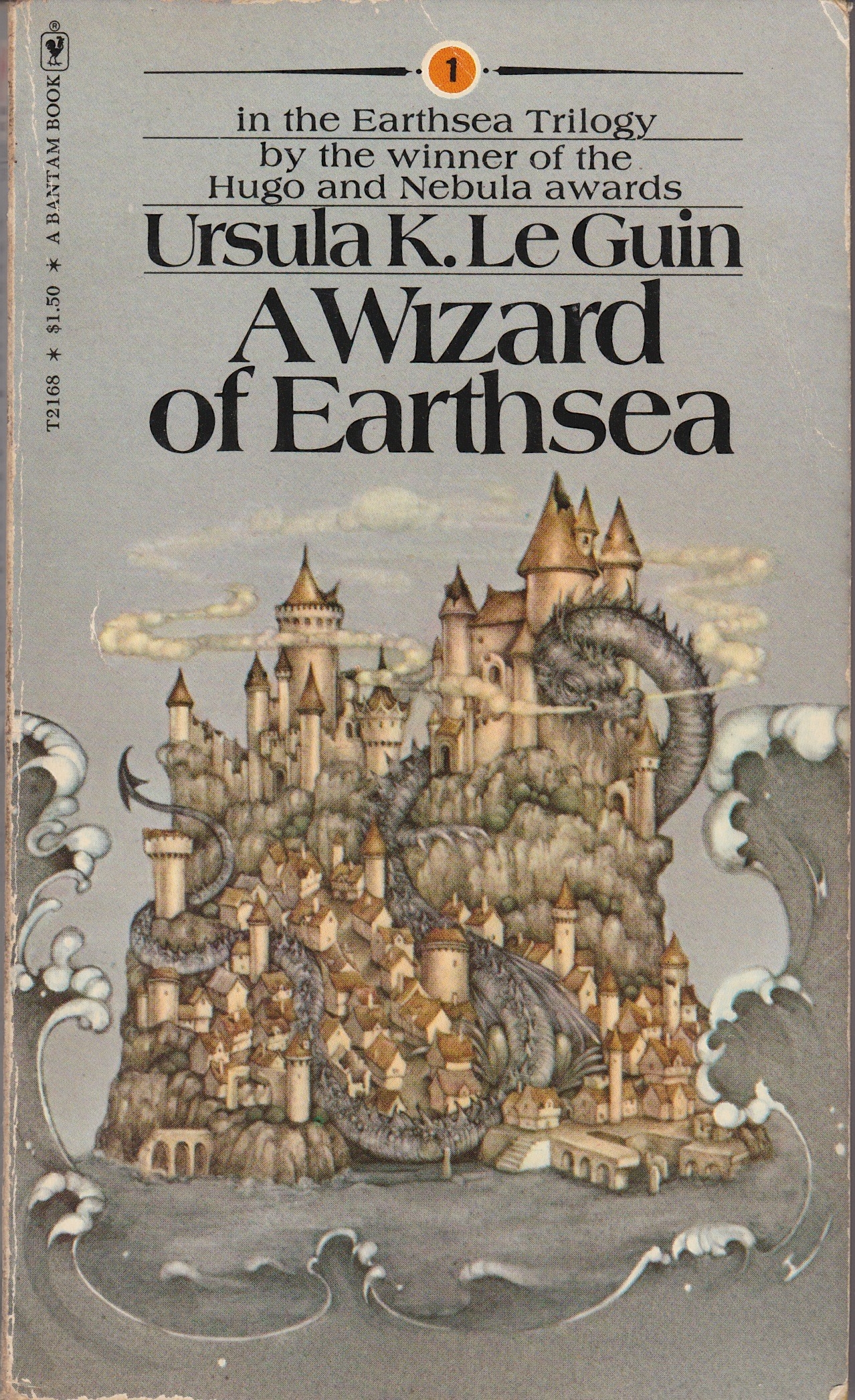
There are other lessons, of course. Some I still may not be ready for. Take her classic, The Word for World is Forest. I’m going to have to come back to that one, I hope when I’m a little stronger and wiser. At the time I needed it, however, there was The Earthsea Trilogy, which later became the Earthsea quintet with Tehanu and Tales of Earthsea. Yet in the beginning, there were three: A Wizard of Earthsea, The Tombs of Atuan, and The Farthest Shore. They were first marketed as “young adult,” probably because Atheneum, the original publisher, didn’t know what else to do with them, and it was true as far as it went. However, I read them in college, when I really was a young adult, or maybe just a kid trying to figure out what “adult” as in “grown up” really meant. Ged, the young wizard in Earthsea, was trying to sort out the same thing, and in the course of the three—then four—books, he does, even though all the books, especially the last few, aren’t really about him. Which makes sense—a lot of growing up isn’t about you at all, but everyone around you and your relationship with them. Some things I can see now that I couldn’t then, but that’s all right. The lesson was waiting for me.

Then there was her classic, The Left Hand of Darkness, which made me and a lot of other people think about gender and what it does and doesn’t mean. Her early collection of stories, The Wind’s Twelve Quarters, which remains one of my favorite books ever.

Now Ursula Le Guin the person is gone from the world, but Ursula Le Guin the writer remains, and there is, I realize, a lot of her work that I have yet to get to, and I hope I will.

I hope I’m ready.


Story Time: Closing Time

Today’s Story Time is from the collection The Devil Has His Due, published in 2012. It’s a book I put together myself, and many of the stories were originals. There’s a reason for both. See, I’ve always enjoyed “deal with the devil” stories. They’re fun to write, but old-fashioned (read “cliche”) and not likely to find sympathetic editors in most conventional places these days whether the story is good or bad. But sometimes I wrote them anyway, just because. So I put them there. “Closing Time” is a bit of an exception. It is not a “DWTD” story. It’s a consequences story. The fact that it takes place in hell is incidental.

Standard Note: “Closing Time” will remain online until next Wednesday, March 21st, when it will be replaced by something else.

Story Time: Doing Time in the Wild Hunt

Today’s Story Time is “Doing Time in the Wild Hunt.”  It was originally sold to an anthology to be titled Splatterfaires from the first incarnation of Pulphouse Publishing, which went under before the book was published. From there it found its way into my first collection, The Ogre’s Wife: Fairy Tales for Grownups.

Here’s what I wrote about the story for the afterwards in the second (Kindle) Edition. I don’t think I have anything to add now.


“Happily Ever After” is the most difficult and dangerous part of the story, and yet it’s the part you almost never hear about. There’s a reason for that — marriage is complicated. Slaying a dragon by comparison is simple. Not easy, mind, but simple. Consider: A dragon is between you and your Fated One and you’re a hero/heroine in love. What do you do? Duh. Now cut to this scene after the fairytale wedding, because sooner or later it’s going to happen. Your love is pensive, unhappy. You ask what’s wrong and they say, “Nothing.” When pressed they will explain: “If you don’t know what you did, I’m not going to tell you!”

What’s the plan now, hero?

I was driving to work one morning in 1994 and saw a white doe in the woods near the Natchez Trace. Far from blending into the trees and brush nearby, the deer was about as hidden as a neon sign. It seemed odd to me how it had managed to survive so long against all the odds but here it was standing there, watching me drive by. A miracle. Or maybe the deer was just doing what it had to do and, with a little luck and care, getting along. Maybe that’s the miracle. I don’t know. I just wrote this story because, once upon a time at the beginning of my ordinary day, I saw a white doe. My wife told me that, of all the stories I’ve ever done, this was the only one that made her cry. Discarding the other possible explanations, I take that as a sign I got the story right.

Take that, dragon.


Usual Disclaimer: “Doing Time in the Wild Hunt” will stay up until next Wednesday, February 14. At which time I might be too preoccupied to take it down, but don’t count on it.

Story Time: The White Bone Fan

Today’s Story Time is “The White Bone Fan,” Originally published in Japanese Dreams: Fantasies, Fictions,& Fairytales, Lethe Press, 2009. The story is a stand-alone excerpt from what eventually became the novel  All the Gates of Hell published in 2013. This is the kind of thing I was working on when I was also working on the Yamada series. One sort of fed into the other, and vice versa.

As always, “The White Bone Fan” will remain online only until Wednesday, January 3rd, 2018. Next year.

Story Time: Crows

Today’s Story Time is “Crows,” originally published in Fantastic Stories of the Imagination in Summer, 2000, and later collected in Our Lady of 47 Ursae Majoris and Other Stories in 2011. It’s not exactly an optimistic story, depending on your point of view, but…well, there aren’t really any “buts.”

Sometimes you just have to let the Dark Side out to play.