A Dangerous Pastime

Seems especially appropriate on the current project. After awhile I always end up asking the question. Is this a story? Or just you thinking out loud, except with typing? Sometimes it is just me thinking out loud, because I wonder about almost everything. How could you not? Almost everything is strange when you look at it for more than a few seconds.

I shouldn’t complain. Most stories begin because I’m thinking about something. A mythology, a popular delusion, it doesn’t really matter what. Sometimes it turns into a story, sometimes not. Sometimes if goes on and on and I’m really pulling for it to turn into a story, and it usually does, because that’s how my mind works. Trying to make sense of something that doesn’t always make sense on the face of it. There may be an underlying logic there. Or I just come up with one that seems plausible and fits, whether it’s actually there or not. Good stories come out of both types.

It is a bit frustrating, however, when you’re in the middle of either thinking out loud or writing a story, and you’re still not sure which. It’s even worse when the story could be a book. I don’t plot ahead of time because I can’t, but generally there comes a point where  I know where it’s going. I have no idea how to get there, but at least I’ve got a direction. That’s usually all I need.

Don’t know where I’m going yet on this one. Maybe I’ll figure it out. Maybe not. Won’t know without a lot more work, which writing is. You don’t have to be a genius, but you do have to think. It’s work.

My head hurts.

Spring? Maybe. A Little.

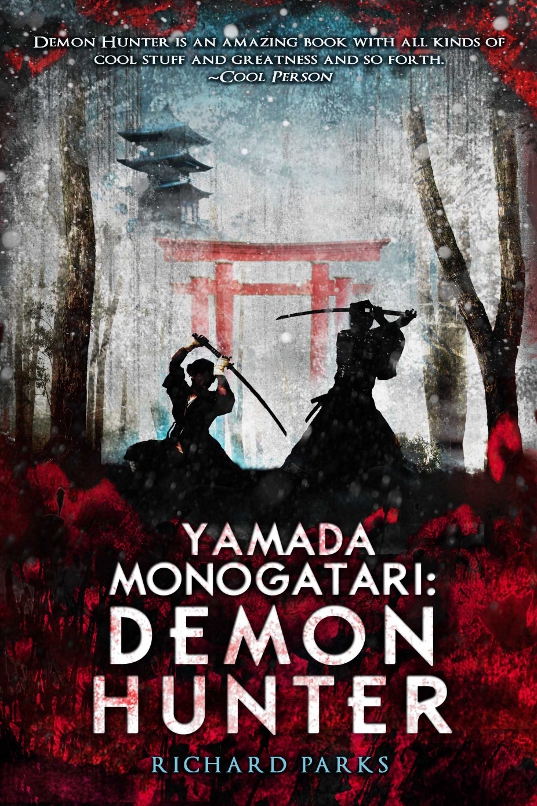
Another day of sunshine, and another new Yamada story. This one’s a true flash, so I likely won’t be expanding it, unless I reconsider some of the backstory I had to gloss over to make my word limit. Actually, there’s quite a lot there, now that I think about it. And a new character whose presence is ripe for making trouble.

Okay, maybe I will, the more I think about it. Yamada’s new situation does present some story possibilities I hadn’t considered before. Or maybe I just missed the guys, I don’t know.

I also need to get back to Marta…and Jing and Mei Li and that exorcist guy. I have been remiss. I have been up to my eyeballs, actually, but I’ve finally realized that’s not going to change…ever. I just need to find ways to work with it.

The short stories I can fit around the novel project, but not another novel. One at a time is my limit, I’ve discovered. I’m making progress, it just doesn’t seem like it most of the time.

Lately, it sort of does.

The Unexpected, and a Confession

Apropos of last week, I finished the rough draft of the new Lord Yamada story yesterday. I am honestly surprised. I have to blame the Flash Fiction group, since I was looking at the trigger word for that week’s assignment and thought to myself…that’s a Yamada story.

No way.

Yes, way.

So first I wrote the flash, then went on to expand it to (to me) proper story length. It’s still short for a Yamada piece. Most of those were in the 5-7k range and many went to novelette, even excluding the actual novels. This one’s only about 3000 words. May get a little longer (or shorter) in the rewrite. We’ll see. If and when it’s published, I’ll be sure to let everyone who’s interested know. And even those who aren’t. Blogging is like that.

Now the confession, triggered by a twitter exchange I saw a few days ago. A writer I know was confessing to writing fan-fic when she was starting out. Several others chimed in to, sharing their confessions. Some were still writing it, long after they turned pro.

I found this all a bit fascinating, so herein is my confession: I have never written fan-fic.

For the one or two of you out there who don’t know what fan-fic is, it’s simply writing your own stories using someone else’s characters and set in their universe. Just for fun. Or because you think you could handle certain things better than they did.

But wait, Straw Man says. I know for a fact you’ve written stories featuring Beowulf, and Oedipus, Hera, and Eris, Goddess of Discord.  You didn’t invent them! Very true. And I will concede that, legendary or not, someone made them up at some point. Unless Eris or Hera takes offense at that categorization and I therefore humbly withdraw it. I don’t want either one mad at me. Regardless, in my mind there’s a very fine but definite distinction between writing a story based on legend and writing, say, a Harry Potter story. That distinction is the author.

That, to me, is the difference. Writing a story based on a legend and supplying my own slant on the story is being part of a conversation that we, as human beings, have been having with ourselves for a long time, and one that deserves to continue. Writing in a known author’s universe, otoh, is me playing in their sandbox, and I do not belong there. It’s not even about copyright, for the most part, since most fan-fic writers only publish in closed groups and aren’t trying to usurp the original author’s prerogative. Even in cases where the copyright has expired, I still can’t do it.

It’s not a moral position. I know other people don’t have this problem, and if you can do something interesting with a public domain work, go for it.

There have been times when I’ve wanted to, mind you. A few years ago someone was putting together a Fritz Leiber tribute anthology. At that point, Fafhrd and the Mouser were fair game, and  since Leiber was one of my favorite writers ever, I wanted in.

I couldn’t do it. I tried, but every word I put down on paper echoed in my head as the same word: wrong. And no matter what I told myself, or what I wrote, that word never changed.

I’ll always regret not having my work in that book. But I’ll never regret why.


Senior Moments

I couldn’t call it a “senior moment,” singular. It went on too long. Last week I had a lovely fan post from a long-time reader. She was a big follower of the Yamada books but here was referencing characters in a short story that was a particular favorite of hers (Yes, I’m looking at you, Yoko).

One problem—I had absolutely no memory of that story. Yes, I’ve written a lot of stories, but not so many that one (me) would think I could completely forget one, even to the point that I was starting to believe that perhaps she was mistaking me for the author of someone else’s story.

Awkward.

I miss grep. I even miss Win98, in that one regard. There was a “search inside” function built in that would allow me, as with grep, to search within every single story file in my catalogue to determine if, indeed, this one was one of mine or not. And yes, I know there’s a way to do that in Win10, but it’s a colossal pain in the butt. If this happens again, I’ll look for grepwin or something similar. But I digress.

There’s something about writing that most of you already know. Sure, everything you write comes out of you. An experience looking for meaning, an image, a train of thought you’d like to derail, whatever. At the same time, it’s a lot like channeling spirits. You’re not always sure where it comes from, even if, intellectually, you do know, and when it’s done, it’s a separate thing from you. You go on to something else, until the next time. If, in the case of a series, there is a next time.

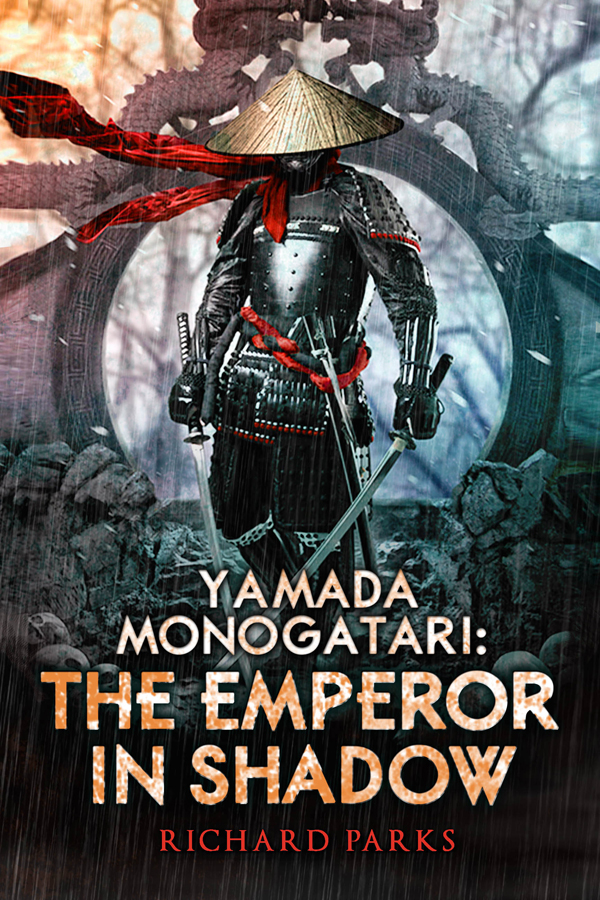
Which is why I thought I was done with Lord Yamada, or rather he was done with me. After The Emperor in Shadow, the story arc was wrapped up and that was that. Only last night I wrote a new Lord Yamada story. Granted, it was a piece of flash, but I’m thinking of expanding it to a proper short story, at least. There’s enough “there” there. So you never know.

As for the story I couldn’t remember? Something finally clicked, and I pulled it up. “The Right God,” from RoF August 2004, reprinted in my second collection, Worshipping Small Gods.

Took me long enough.

Review: Ahab’s Return: The Last Voyage

Ahab’s Return: The Last Voyage by Jeffrey Ford. William Morrow, 2018, 259pp.


In the mid19th century, a man named George Harrow works as a fabulist for a penny dreadful called The Gorgon’s Mirror, making up absurd stories for a willingly gullible readership. It’s hard work making up the right kind of nonsense and he’s going through a bit of a dry spell, so it seems a stroke of luck that brings a one-legged sea captain to his office, claiming to be ‘the’ Ahab from Moby Dick. Which, of course, was actually written by Ishmael, a former writer/copy editor at the Mirror, and not that Melville fellow.

Ahab, it seems, did not drown attached to the great white whale after all, and is now returned, looking for his wife and son who believed him dead. Harrow, of course, sees the possibility of a series of stories based on Ahab’s experiences and his search for his family, and offers his help in exchange and we are off and running.

Ahab’s wife has long since passed away and his son, Gabriel, is one of many young men in the thrall of a Fagin-like criminal boss called Malbaster, who keeps the so-called Jolly Host in line with opium and appeals to bigotry and racism. There’s also a sad zombie(ish) assassin named Bartleby, and a manticore who eats people and recites poetry. Ahab and Harrow assemble their own team: Arabella, an apparent opium fiend who is much more than she seems. Mavis, a courier for the Mirror and genuine badass, and Madi, a former harpooner and fellow survivor of the Pequod. Many alarms and excursions as the group attempts to rescue Gabriel from Malbaster’s clutches and put a stop to Malbaster.

All of which is and is not what the book is about. Malbaster himself drops a hint at what’s really at stake:

“…Love generates great energy with which to form the world. But Fear and Ignorance aren’t bad themselves, producing their own grim yet powerful magic. The secret, Harrow, is e pluribus unum.”

I don’t think I’m giving away too much by stating that a great deal of the book revolves around Malbaster’s true nature, and true danger. Any reader well in is going to pick up on that, and plainly see the correlation to certain events taking place in this country now. If you’re not into subtext, you’re still left with a rousing magical adventure taking place in the New York of 1853, including references to and plot points depending on: changing street names, Seneca Village, and John Jacob Astor’s secret stash of opium.

Reading over the above, I have to say that it just doesn’t do the book justice. Ford is at the top of his game here, and there isn’t anyone better (or at all) doing what he does. Read the book yourself and you’ll understand what I mean.