Imaginary Imaginings

YamadaEmperor-600I have a quirk which my wife has often remarked upon. I have conversations in my head which I then forget to have in real life, yet will sometimes believe that I’ve done so. I’m so used to holding up two ends (or more) of an imaginary conversation and spinning scenarios that it’s not always easy to turn off. Unchecked, it can play havoc in a normal relationship, and I do try to keep it under control. Nevertheless, I’d never want to eliminate this quirk, because it is simply too useful a tool. What is dialogue except an imaginary conversation between two beings who do not exist, save on the screen or page?

However….

What happens when the imaginary scenario turns into an imaginary scenario? By which I mean in the writing process an imaginary conversation did not manifest beyond the imagination?

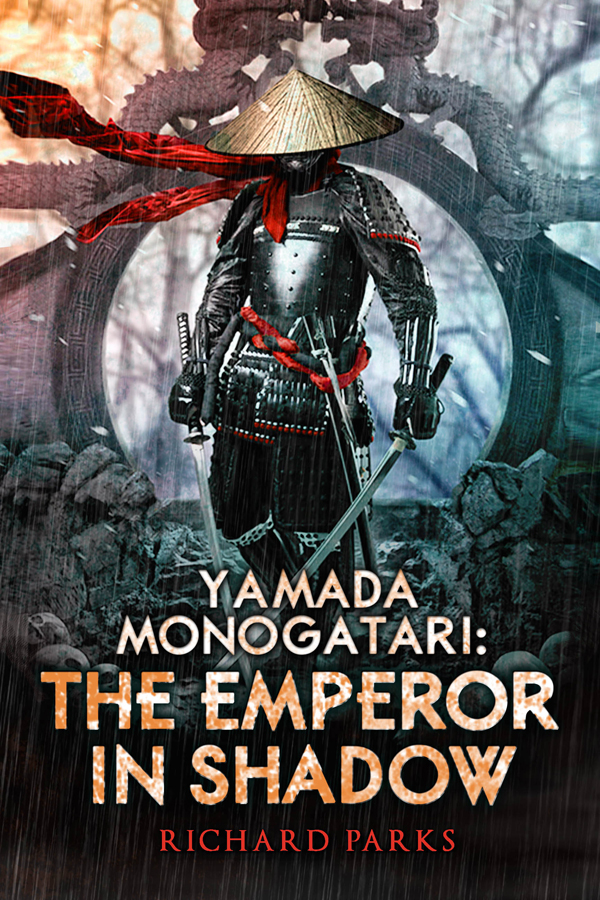
You’re right—I’m not sure I understood that last bit myself, so let me try again, more concrete, less surreal. I finished the rough draft of Yamada Monogatari: The Emperor in Shadow on May 24th. First Reader was kind enough to push it up to the top of her queue because of the time crunch, and the last several days I’ve been working through the rewrite. In the book Yamada needed a crucial piece of information. I worked out a logical way for him to receive said information without alerting the wrong people, and I worked out the scene where it happens. I set the logic bomb in motion and wrote out what followed from this crucial scene to the end of the book.

One problem—I never wrote the actual scene.

How did I manage to do this? Beats me, fore the reason already mentioned. I did not discover this until the read through. There was a hole in the book, left there by me because I had envisioned the scene and its aftermath so clearly, so completely, that somewhere in the twisty lump I call a brain, I thought I’d already written the darn thing. Only I hadn’t. This took all of ten minutes to correct, since the scene was still in my head, down to the last detail, right where I had left it. It was like sentences where someone leaves out a word—or perhaps you do it yourself—in a succession of words which flow such that your brain fills in the missing word even though it is not there. Sometimes you never even notice.

Fortunately for me and the book, I did notice. Though if I hadn’t, I fully expected to hear about it from my editor at Prime—“How the hell does he know this??”

I spared us both the aggravation, but it was a close call.

The book is turned in, and assuming no major revisions are needed—or I didn’t leave anything else out–we should be on track for a September 2016 release. Now it is on to other imaginary conversations, which I hope I will at least remember to write down.

Review: Escaping the Delta: Robert Johnson and the Invention of the Blues

Escaping the Delta: Robert Johnson and the Invention of the Blues by Elijah Wald (Amistad, 2012)

I thought I knew the Blues. After all, I was born and raised in Mississippi, and while I live in New York now I’ll probably not last long enough to match the chunk of my life spent within 40 miles of HWY 61 and within spitting distance of the Delta.Then a very good friend of mine recommended this book and I had sense enough to listen to her (Hi, Amiga).

Turns out I didn’t know squat, either about Robert Johnson or the Blues in general.

This book by Elijah Wald was both a revelation and an education and does as good a job as probably can be done with separating fact from legend. Spoiler Alert: No, Robert Johnson did not sell his soul to the devil at the crossroads of Highways 61 and 49 for his guitar chops. The real story is much more interesting. As is the real story of the Blues, where it started, who started it, who the early performers were and who they were not. How early 20th century popular music informed and shaped it. The role of the amateurs and the role of the professional musicians. If you’re at all interested in the Blues and how it relates–and more importantly, perhaps– how it DOESN’T relate to the early roots music of America, you need this book. While Wald, as I said, does a great job of separating fact from legend, the legends remain, of course. Legends are awfully hard to kill, and Robert Johnson at the Crossroads is too good a story. But if you want the real story, or at least as close to it as any of us are likely to get, this book is the place to go.

Escaping the Delta: Robert Johnson and the Invention of the Blues

What’s He On About Now?

YamadaEmperor-600One drawback of working on a longer project like a novel is you don’t have a lot left in you for anything else. Say, blogging, for example. Normally I try to post these every Monday like clockwork, but here it is Wednesday (thank you, Captain Obvious) and I am late. I don’t like being late. Normally I show up for appointments fifteen minutes early or more and everyone ELSE is late. Usually doctors and dentists, whose time as they will willingly tell you is much more valuable than yours.

Well, to them or anyone else this is literally true, since all any of us has is time. Everything else—money, cars, clothes, your ipod–is a temporary construct relating to how we live in the world, but time is what matters and no one as a general rule knows how much they have. There is much unnecessary fretting over this. I’m prone to it myself, especially when I’m under a deadline, either contractual or self-imposed, makes no difference. It reminds me of a scene from Neil Gaiman’s Sandman graphic novel series where his sister Death has just collected the soul of a baby who passes in SIDS, and the baby is not happy about it, to paraphrase, “That was it? That was all I got?” To which the reply was, again paraphrasing, “You had a life. That is all anyone has.”

So all we have is time, but the only time we really have is now. So what we decide to do with it? Yeah. It kind of matters. I don’t always make the best choices about that, but then I don’t know anyone who always does. We act like we have forever even when we know it is not true. Sometimes that illusion is all that gets you through a day, but best not to forget that it is an illusion. If there is anything at all which is not an illusion, it is now, the only point in time where action is possible. Like writing a late blog post, because there were things I believed to be more important at the time.

For instance, finishing the first draft of The Emperor in Shadow, complete at 94k words. It’ll probably be close to that after the rewrite. I usually put in as much as I take out. Sometimes more, sometimes less, but usually within close tolerances. I won’t call the book done, since that doesn’t happen until it has gone through rewrite then editing and come back from the printers. Then, for better or worse, it is done, and likely on time for a September release.

Then it is time to move on to something else because, you know, that whole “now” thing keeps happening. Until it doesn’t.


These Dreams…

YamadaEmperor-600The book has crossed the 80,000 word mark and is moving toward the end. Which means, rather than being created or complicated, situations are being resolved. I know who is behind most of the challenges Yamada has faced in this book. He’s about to find out, too, as matters move toward final settlements and crimes/sins accounted. There’s one scene I’m especially looking forward to writing. It won’t be a long one, by my estimate. Just a few pages, and I pretty much know how I’m going to write it and what happens and what it will mean to Yamada. I could have written it already, frankly, but I’ve held off, because it will be my reward for completing the book, even though part of me doesn’t want to write “The End.” A major story arc is being closed, and when it is done, I’m not sure what will be left. Perhaps nothing. We will see.

Something is happening that does happen now and again when I’m at this point in a story—I start to dream about it. Night before last and last night I was dreaming about possible events in the book, as if my subconscious was trying to suggest new avenues to explore. I considered them all, but realized they were all burdened with dream logic, which doesn’t really make sense to anyone outside the frame of reference of that dream. So they are no go. Except possibly for an image that I may use. I haven’t decided yet.

Once that dream was over, next I was surprised to find myself dreaming about Gwyneth Paltrow, and no, not that kind of dream. Her career was in danger, she was about to star in a new film, and she needed me to tweet the news. Why? Beats hell out of me. Apparently it was crucial, as she was almost literally begging me to make the tweet. And all I had was my phone and the tiny virtual keyboard, and I was messing up the hashtags and having all sorts of problems and her insistence wasn’t helping. I hit <Send> and the next thing I know she’s on some big talk show pimping the film, which is apparently of Oscar contention quality, so apparently I did okay.

The film? The story of a Marshall Tucker cover band.

Yeah.

That’s the thing about dreams. We all have them. We all need them. But they are not the most reliable things in the world. Take what you can from them. Learn what you can. Do not expect them to make too much sense. That is not their job.

We Could Be Heroes…But Probably Not

WRITING 02

Not everyone is entirely comfortable with the idea of heroes. They too often have feet of clay, or in these days of the media creature, turn out to be fabricated out of whole cloth, or at least a cheap polyester. Yet we all have them, and writers are no different. The difference is in what inspires us—the words on the page, not necessarily the people behind them. Writing heroes. That doesn’t mean it doesn’t hurt when you discover that one of your heroes, known for his gentle and optimistic fiction, is a right wing fascist at heart or another with a unique and powerful voice is a virulent racist. Such things usually kill off normal heroes. As a hero, that is. Writer heroes usually survive, not always, but usually, since it is the words on the page that matter, not the imperfect, venal, or just plain unworthy person behind them, but more so because there’s a secret that the process of writing fiction eventually teaches.

You write better than you are.

I’ve touched on this before, but it’s especially relevant, I think, in the genre today. We all do it, if we’re any good at all. What comes out on the page is smarter, wiser, usually more together than, well, we are. I don’t know how it all works, I just know that it does. So I’m not usually so surprised when it turns out that the writer behind books and stories I love is a deeply flawed human being. Someone you might even cross the street to avoid if you saw them coming.  It happens. It doesn’t matter. Any decent work we produce is, at its core, a reflection of our better selves, maybe even who we’re trying to be, not necessarily who we are. Which is probably why I’ve never been driven to meet writers I admire. Most of the writers I call friends are ones I met even before I discovered their work, and got to know and like them as people first. That way generally works. Someone you only know from their work? Not so much.

Oh, sure, there are exceptions. There are even times when I regret, say, that I never got to meet Fritz Leiber, even though I did have the chance, once, at a World Fantasy Con way back in 1987, and I will always treasure my one and only meeting with Parke Godwin, who turned out to be as grand a human being in person as he was on the page. It’s great when that happens, but I don’t expect it. No one should.

I started this blog post with the idea of talking a little about one of my writing heroes, but I got pulled in another direction. It happens, so I’ll save that one for next time. I never met her, but then again, see above, I didn’t need to. The books and stories were all I did need, or had any right to expect.

So, if you ever want to meet me and manage to do so, I apologize in advance. That is all.