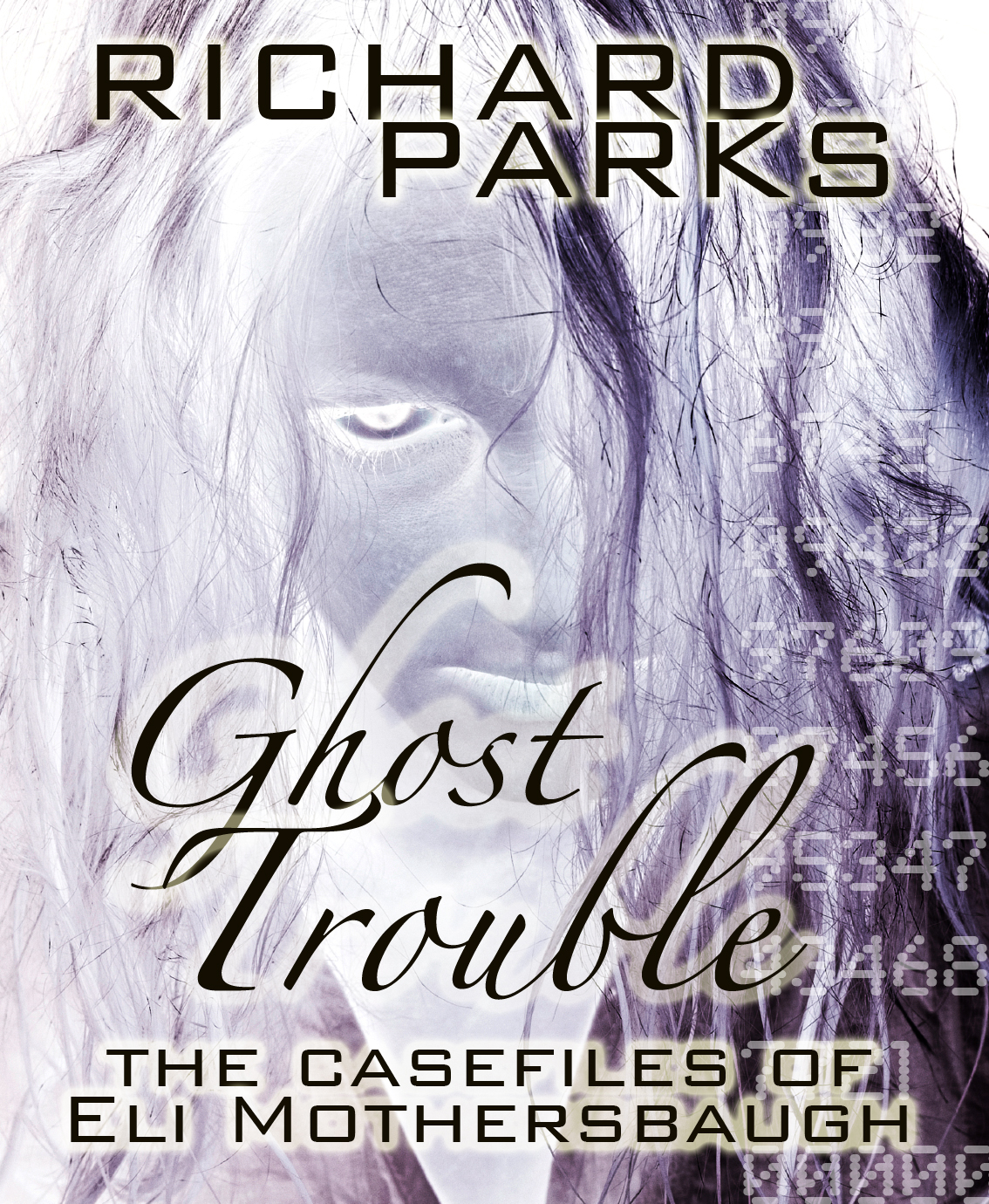
 I don’t usually get story ideas from dreams. Usually because my dreams are an ungodly mess in terms of story, and I usually can come up with something better—and more coherent—when I’m awake. Story ideas have happened a couple of times, but no more than that. What happened on my last outing to the dreamtime was something a bit different—I got, not a story, but a question.
In the dream, someone asked me why my skeletons didn’t sing and I was answering that question. Which sort of tells you all you need to know about my dreams. Silly things, the lot of them. And though I’ve never written about an animated skeleton I have written plenty of ghost stories staring my paranormal investigator, Eli Mothersbaugh, and the same principles applied. I have always considered the Eli stories to be science fiction, not fantasy, on the “change one thing and let the logic of your world building arise from that” school of science fiction construction. In Eli’s world, ghosts are a fact. A scientifically demonstrable, repeatable under laboratory conditions fact. And, as I was explaining in the dream, skeletons don’t need air, which is a good thing since they have no lungs and therefore no breath. Singing requires breath and vocal chords. Skeletons have neither, therefore skeletons don’t sing. Or scream, or talk, or do much of anything that requires breath. In the case of a paranormal ghost this isn’t even an issue. Of course an animated skeleton could talk in that situation, the same paranormal forces that would animate a skeleton in the first place would certainly not balk at speech. Logically, of course, it couldn’t talk, but then logically it wouldn’t exist in the first place, unless….
Unless the implied rules of the story universe which it inhabits allows for it. Since the thing exists in the first place, then it follows that it would be able to speak. Yet Eli’s universe has no animated skeletons. It might have ghosts that manifest visually as an articulated (not articulate) skeleton, but keep in mind that Eli’s universe is our universe, or rather one very much like it. With one small change. Ghosts may exist, but they have no physical form. They are pure bio-remnant energy in a more or less cohesive unity. In order to speak, they have to use that energy to manipulate sound waves and it takes a lot out of them, so most don’t bother. There was one exception, and if you’ve read the story “Diva” in the Eli Mothersbaugh collection, you know what—or rather who—that exception is. Yet even there a logical reason for Madame Caldwell’s ability exists. Has to exist, because the rules of this story universe require it.
Which brings me to my point, finally (Seriously, if you’ve stuck with me so far you had to be wondering if there was one, by now). Every story is set in its own universe, even the ones that appear to be set in our own, with the exception of series, in which case they’re set in their own universe. Most of the rules of that universe—and you might call them physical laws, but it goes beyond that—are implied in the setting and development of the story itself, and not always made explicit. That doesn’t matter. What does matter is that you violate those implied rules at your peril, because the reader won’t stand for it.
Whadya mean, “won’t stand for it”? How are they going to know that you’ve done so? They don’t know what the rules are! Oh, but they do, because everything they’ve read of your story up to that point has told them what they are. You imply, consciously or not. They infer, consciously or not. And when you break your own rules, they’ll know that something is not right. They might not know precisely what isn’t right, but they’ll know that something is off. And they’ll start thinking about what that something might be rather than being caught up in the story you’re trying to tell them, and you might as well butter it at that point, because that particular story is toast.
I’m not saying it’s impossible to pull off, mind. It can be done, especially if you’ve used a bit of misdirection to make the reader infer something that you did not in fact imply, but that’s very tricky to pull off, so you’d better have a really good reason for doing it. Readers like being fooled, but you have to do it honestly. Otherwise you’re playing fast and loose with the rules, and remember you never get to decide if those rules work or not. The reader does that. And their decision is always final.

 2013. Ugh. If that year had been a story in a slush pile, it wouldn’t have gotten past the first reader. I did see one new collection published by Prime, and finished the next Yamada novel (The War God’s Son), so it wasn’t a total waste. 2014 looks to be…interesting.