This is a Conversation, Not a Speech

Rusalka by Ruth Sanderson

Notice the lovely painting to the left, “Rusalka,” by the amazing artist, Ruth Sanderson. I was reminded of it by a FB post by the writer Theodora Goss, said post being about a different matter altogether (we can discuss serendipity on another day). But I recognized the painting she’d referenced immediately. Partly because I’m fond of Sanderson’s work, but mostly because that very painting was the original illustration for “The Swan Troika,” (Realms of Fantasy, February 2011) my final story in that much missed magazine (Seriously. Show me a current fantasy magazine with the same ecumenical spirit toward the genre that ROF had).  If you’ll look in the left background, the guy in the funny-looking sleigh is Pyotr on his way to his fateful meeting with the rusalka in question.

Ahem. Yes, I’m getting off of the subject. Of which there is one, implied in the blog title. Ursula Le Guin once said something to the effect that a story is just marks on wood pulp (or pixels on a screen) until someone reads it. That reading is an act of creation itself and the story isn’t complete until it’s read. I have no argument with that. We want people to read our work, complete it, create their own inner vision to echo the one in our own heads. It won’t be the same vision, but that’s kind of the point. There aren’t just two sides to every story, there are as many sides as there are readers for that story, and the more the merrier.

Sometimes, though, it goes even beyond that. “Rusalka” exists because I wrote a story and the editors at ROF commissioned an illustration of it. You cannot fathom how pleased I was when I saw its original appearance in ROF. After all, I’m no artist. I could never have created my vision of that scene the way Sanderson did. Instead, she showed me hers. I was and am thrilled.

I will now contrast that with an incident from a writer’s group I was involved with. The Heavenly Fox had just been published and another writer in the group really liked it. So much so, that he announced that he was going to write a Springshadow story of his own, at which point I was forced to stand on his head until the impulse passed. Okay, not literally. But you get the idea. I was not thrilled. A little flattered, sure. But not thrilled.

So why the difference? Well, one is an act of re-creation. The other was copyright infringement. As in any conversation, you know when one party has crossed the line. Granted, it’s a fine line. Or rather a tightrope that we all walk when it comes to what happens to a story once it’s out in the world. In a sense, to send a story out into the world is to cede control of it. Legally it may belong to you, but practically? Things will happen that you didn’t count on. My own opinion goes beyond legalities though. As I’ve mentioned before, I don’t care who has the right to continue the Hitchiker’s Guide to the Galaxy series. So far as I’m concerned, that series ended when Douglas Adams died. Sure, I know that’s unrealistic. Knowing that doesn’t change the way I feel.

Yes, reading is a creative act in itself, and stories were designed to be read. That’s kind of the point of them, but another thing they are is a conversation between the writer and reader. It’s an act of communication that, in the right context, creates something grander than the sum of its parts, witness that painting. Experience that a few times and you won’t wonder why we get cranky when someone tries to turn the conversation into a monologue.

Recommended Reading

WRITING 02It’s that time again—the Locus Recommended Reading List has been published at their web site. If you don’t know what this is, Locus has more or less been the trade magazine of the Science Fiction and Fantasy field for a lot of years. Every year they do a recommended reading list of the previous year’s fiction in several categories – novels, YA, collections, novellas, etc. You can see the entire list here. This time, my story from Beneath Ceaseless Skies, “Cherry Blossoms on the River or Souls” is included. Keep in mind that the LRRL acts as the unofficial “long list” for the 2013 Locus Awards, which will be decided by the votes of readers and subscribers. And yes, it’s always nice when your work is noticed in a positive way. Or, really, noticed in a negative way. The trick is to be noticed at all.

If you think I’m kidding, I invite you to take a look at the Locus reading list for 2013. Notice something? Yep. There’s a reason it’s referred to as a long list. Do you know how one gets a story or novel or collection on the Locus list? Two of the magazine’s contributors/editors/reviewers have to agree it belongs there. Sometimes, I am told, if a person argues passionately enough, it only takes one. Now, think of all the stories/novels whatever that did not make the list. For example, Yamada Monogatari did not make the list for collection. I’m disappointed but not surprised. It wasn’t reviewed by Locus and so didn’t come to their attention in any meaningful way. But there’s a lot of work out there in that same boat. And a significant percentage of it is of comparable or even better quality to what did make the list.

All this is not to complain but simply to point out a very basic reality—not every piece of fiction published in a given year is going to get any significant notice, regardless. There is simply too much of it. Great from a reader’s standpoint—there’s an embarrassment of riches out there. Not so good from the writer’s perspective. It’s hard not to feel like one snowflake in an avalanche. I mean, you’re there, but so what? Almost no one would miss you, and certainly not that small group of skiers you’re aiming at. If you’re lucky, maybe you’ll graduate to the status of one drop in a bucket. If you melt really well.

Put away the knives and nooses, this isn’t about despair. It’s about why we do what we do. If you’re writing to please other people, stop that. Find something more useful to do with your life while you still can. If you’re writing for posterity, for your own sake knock it off. Seriously. Posterity doesn’t give a damn. I’ve pointed out this fact before and it bears repeating—most writers, good, bad, and brilliant, are completely forgotten within fifty years of their shuffling off their mortal coils. I’d even go so far to say that most of them don’t even make it that long. If you’re doing it to make a living and you’re accomplishing that, great. You’re one of a rare breed.  If you’re writing fiction for yourself, if writing makes you a better, saner human being than you would otherwise be, also great. I can think of few better reasons

Otherwise, you’re wasting your time.


Muse and Writer Dialogues #11- Imping Perversely

FADE IN: Writer’s home office. You know the drill. WRITER is at the desk.
MUSE enters from somewhere. Since she has no corporeal form, egress and exeunt are rather flexible concepts to her. She appears to be wearing a sari.

MUSE: How was the kirtan last night?

WRITER: Great. The first chant was to Sarasvati, the goddess of the arts and music, and I need all the help I can get in both areas. It gave me an excuse to sing in a group where no one could hear me. Plus the instrumentation was much better than the first one.

MUSE: You’re just saying that because guitars were involved.

WRITER: How did you–?

MUSE: Don’t finish that, unless you’re a bigger idiot than I think you are. You were there, so I was there. It’s not complicated.

WRITER: Okay, fine. That was a bonus. All three of the performers were good, and two were playing classical style. I don’t get to see that very often. Amazed that I could tell that one of the chants was just a G, Cadd9, and A. I could probably play that.

MUSE: Should I even point out that you’re neither Hindu nor Jain?

WRITER: True, but what has that got to do with anything?

MUSE: Absolutely nothing. Not unlike what you’re writing now. Because, like your current project, the kirtan had little to do with getting the next novel written.

WRITER: Very funny. I just finished a novel, remember? I’m taking a break from them for a little while.

MUSE: Bull. You’re working on short stories instead because you’re being perverse.

WRITER: ?!

MUSE: Perverse in its correct, original meaning. Remember Edgar Allan Poe’s “Imp of the Perverse”?

WRITER: Yes, it was an imaginary creature that kept him procrastinating on writing projects until it was too late. Unlike imaginary creatures who bug me about writing. Well, I’m writing. Doesn’t apply.

MUSE: Wrong, as usual. You know you should be doing one thing, so you insist on doing something else entirely. It’s exactly the same. That the thing you shouldn’t be doing is also writing doesn’t change that fact.

 WRITER: Neither the next novel nor the short story is under contract, so how do you figure I “should” be doing one of them as opposed to the other?

MUSE: You said you’d work on the novel next. You’re not. That’s perverse.

WRITER: Merely contrary. And I will get the novel done, but right now is not its turn.

MUSE: That’s not the point. You’re not doing what you’d said you’d do. You broke a promise. To yourself, if no one else.

WRITER: True, but only to avoid breaking a greater one. The first one.

MUSE: ?

WRITER: I promised myself that, since I was never going to make a living doing this, I was free to write exactly what I wanted to write, when I wanted to write it. If I do anything else, I break that promise, and that one I’m keeping.

MUSE: Oh. That one.

WRITER: The ur-promise. I keep that one, or there really is no point to all this. Or you, for that matter.

MUSE: Hmmm, good point. Okay, but there are people who want to read that novel, you know, and have told you so.

WRITER: There are people who want to read this short story. They just don’t know it yet.

MUSE (sighs): You really are perverse.

WRITER: And damn proud.

FADE OUT.


A Picture is Worth…

Heavenly Fox - eBook1This weekend I received the preliminary sketch for the cover of To Break the Demon Gate. It promises to be pretty cool. I’d post it here, but first of all I don’t have the rights, and second, the artist would kill me, and rightly so. Like a rough draft, the job of a preliminary sketch is not to be good, but to be done, mainly to show the artist’s concept and whether those in a position to decide (mostly PS) think it’ll work. I do, and said so. If you’ve seen the cover art to The Heavenly Fox, you know the artist, Ben Baldwin. There will also be endpapers, because there will be a separate, signed edition. I wasn’t sure about that, but apparently it’s happening. For the endpapers he’s probably going to do one of my favorite scenes, Lady Snow dancing outside the Gion Shrine. I can’t wait to see what he comes up with.

Which brings me or leaves me at the subject of illustrations. I have to say that I have been very fortunate in my illustrators over the years. I mean, consider the list: Ben Baldwin, Jon Foster, John Berkey, Tiffany Prothero, Steve Fabian, Steven Gilberts, Ruth Sanderson. Heck, my first ever professional story was illustrated by Alicia Austin. And if you’re unfamiliar with any of these, a good Google search will quickly explain how chuffed I am about it all. Granted, the artist’s vision is never going to match your own, but that’s kind of the point. You get to see your work reimagined, and find out what it triggers in another creative perspective. Not everyone gets that chance.

Wait For It…

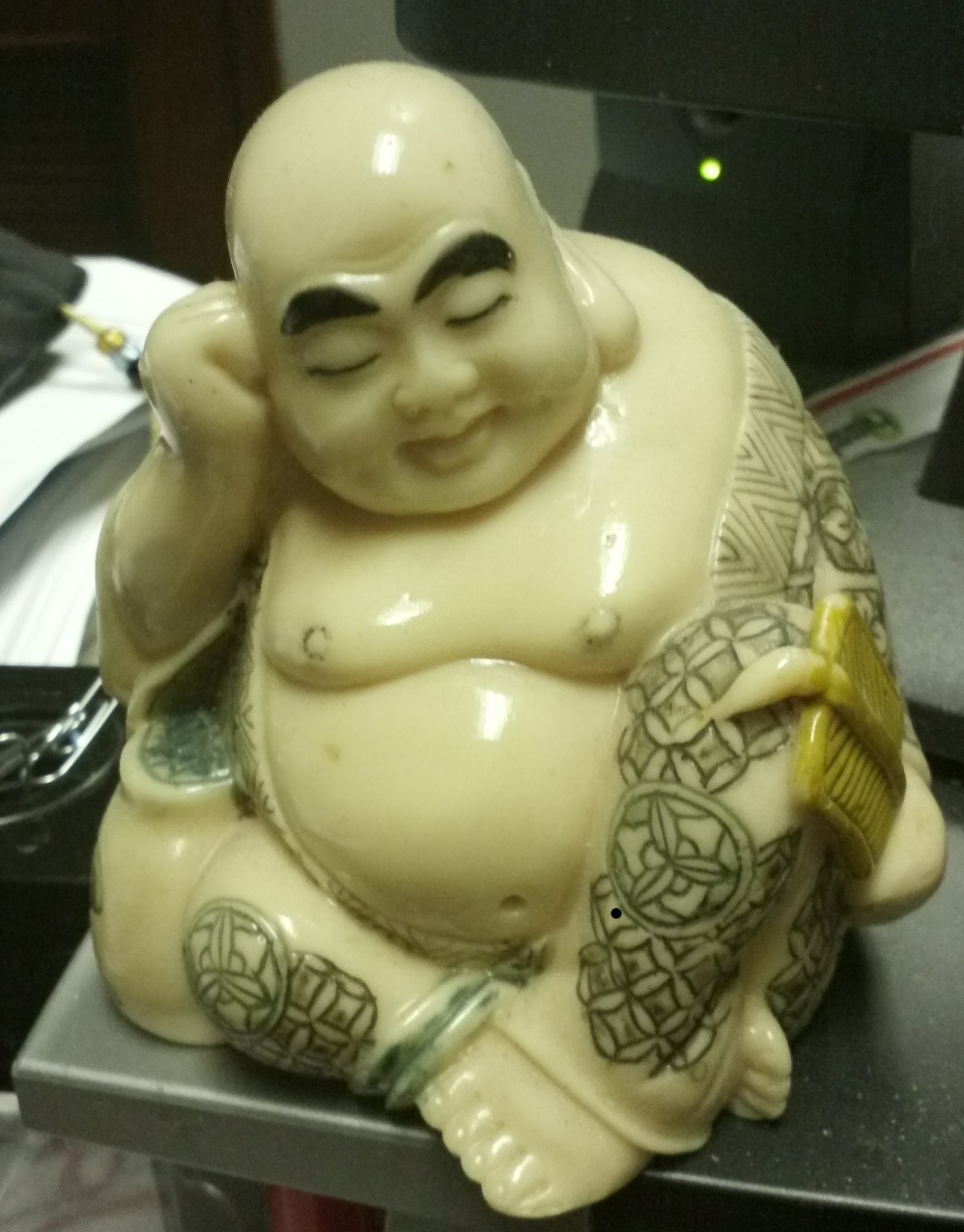
SleepingBuddhaI love to wait…said no one, ever. And yet it is one of those times. PS Publishing has an artist lined up for the cover of To Break the Demon Gate, but even preliminary sketches take time and I won’t have any idea what the cover is going to look like until much later in the process. I’ve got contracts and royalty payments hanging fire, but again nothing is ready now and won’t be for weeks, likely. I’ll send out the manuscript for The War God’s Son probably later this month, and there’s another long wait in the making.

Everyone has to “wait for it” at one time or another, in cases where it can’t be avoided, like the DMV or the dentist’s office. Relatively brief times, but they seem longer because there’s nothing else to do but anticipate the joy to come. But for what I call the real waiting, on matters that may take weeks, or months, even years? I sometimes think writers do more than their share. We’re always waiting, if we allow it.

Whaddya mean, “if we allow it”? It isn’t up to us! Oh, but it is. The key to bearing up to all the waiting, of course, is that you’re not waiting. Or to be more accurate, you’re not just waiting. There are things to do, stories to write, books to read, guitars to play, tires to patch and gutters to muck out. You don’t keep yourself busy as a distraction, you keep yourself busy because you’re alive and you’ve got better things to do than wait. Then one day a check and/or contract arrives in the mail, an email arrives with a decision made for good or ill, or maybe a preliminary/final cover jpeg arrives, and you go “What? Already?”

Or you can simply “wait for it” and focus on what isn’t happening and stew away your stomach lining and your last good nerve all the while, and waste one hell of a lot of precious, non-retrievable time in the process. That’s always an option. Not a good idea, but an option.

No one likes to wait. The trick, if there is one, is to simply refuse to do it.