When Advice Isn’t

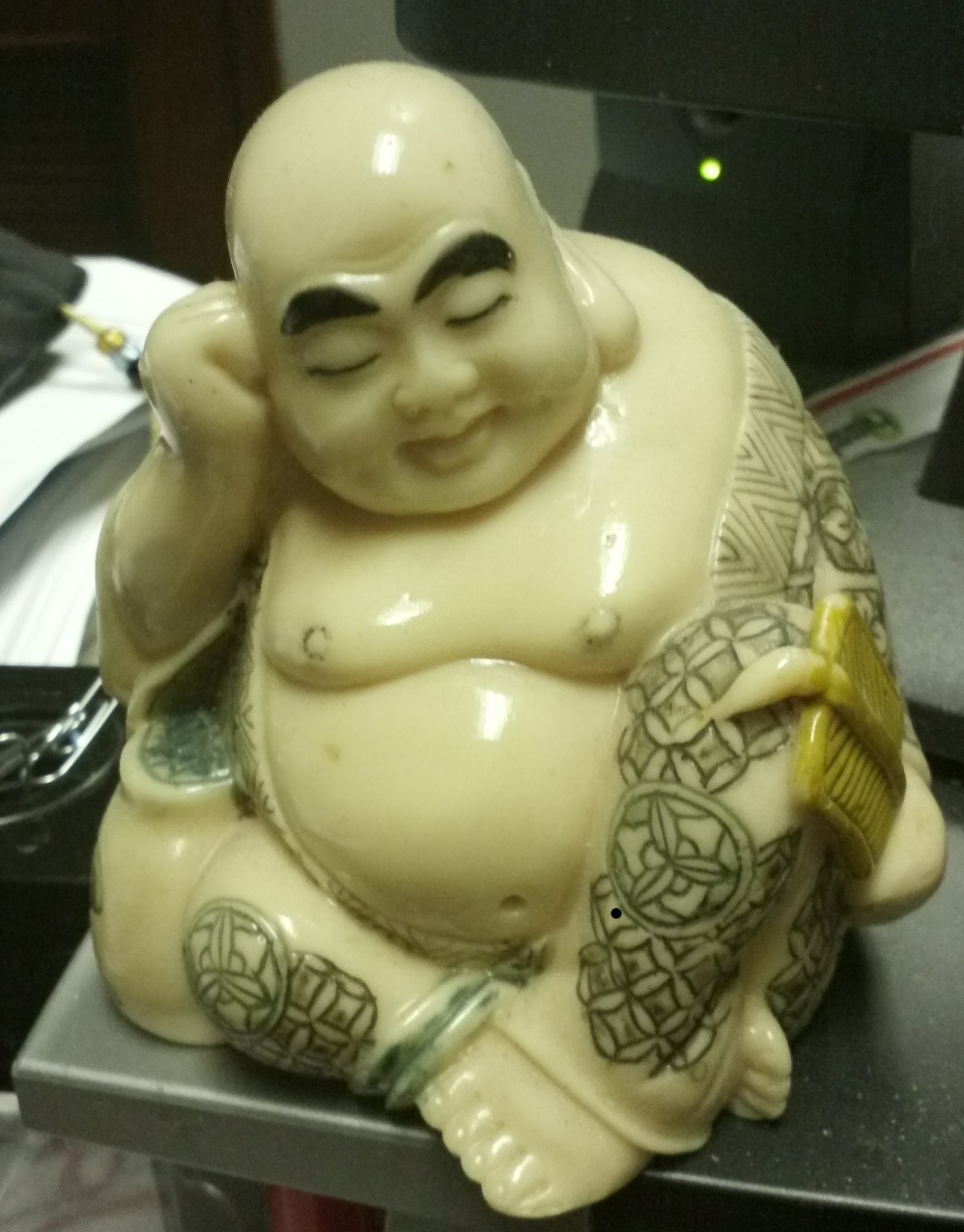
SleepingBuddhaI’ve heard it stated that “no one should give writing advice unless you’ve written at least ten million words.” The number of words varies sometimes, but it’s always high. Then there are other caveats attached, such as “unless you’ve had some measure of success” or “you’re known for a type of fiction/nonfiction” or…”<insert caveat here>.”

Now and again I’ll talk about writing on this page, and frankly after thirty plus years pushing words together I have no idea how many I’ve written. It might be fewer than ten million words. It might be greater. I don’t really care, as this never had much to do with the way I kept score in the first place. I always leaned more toward “Is this story better than the last one? Is it different? Is this progress or am I treading water?” Treading water was a sign of the dreaded plateau, where you know you’re writing at the top of your game, and it’s all at least good, probably publishable…and you are not getting better. Someone, possibly Gardner Dozois, once described writing progress as a series of plateaus. If you’re lucky and work hard, you eventually break through. Perhaps a new direction. Perhaps you simply get an order of magnitude better at what you’re (to whatever degree) known for. Then comes the next plateau, and eventually you reach one where you cannot break through no matter how hard you try, or you simply do not live long enough to find the next level.

Grim? Not really. There’s a lot to be said for doing what you love at the top of your game, whatever that level happens to be. You understand that this is not the goal, but a natural result of reaching for the goal. So long as you understand the difference, you’re doing it right.

So. Was that writing advice? I maintain that it wasn’t. Almost anytime you hear a writer talking about writing, all they’re doing is laying out their own understanding at whatever stage they happen to be, or in essence, talking to themselves. Sometimes it is helpful to other people. In workshop settings, it can be extremely helpful with the right student and the right teacher. But at heart, that is all it is. If what you hear makes no sense to you, there’s a reason, and that reason is you’re not at the right place in your own progress to understand it. That is not a problem unless you turn it into one by trying to apply it as advice to a situation where it is neither appropriate nor even advice. It is a statement of understanding, and that understanding might not be yours, because we may all be in this together, but we’re together alone, and that is grim.

At least, in my current understanding.

Orlando

New ImageSometimes I think all I have are words. And then I realize, on days like today, that I don’t even have that. I look at what has been said and will be said about the horror in Orlando. I hear the same politicians offering “thoughts and prayers” but who will never, ever, use their elected positions to do a damn thing to prevent another horror. I hear the same politicians trying their best not to gloat too openly, because they not-very-secretly side with the shooter and are used to pushing discriminatory laws while trying to make them sound, you know, about something else. I hear the ones who latch onto the fact that the guy was a Muslim, conveniently ignoring that he was first and foremost an unstable homophobe who had no trouble at all buying all the guns and ammo he wanted, and also ignoring the unstable Christian homophobe who—thank goodness—was caught with a carload of ordinance on his way to shoot up a Pride parade and so one horror did not happen. If one is a terrorist, then so was the other.

Mostly I hear the hopeful voices of those who believe maybe, just maybe, this time will be different, and people will put enough pressure on their “representatives” to overcome the NRA’s money and get some sensible regulations passed. Make it, you know, a little bit harder to kill fifty people you don’t know for reasons that are beyond reason. I want to join them in that hope, but the politicians have long learned that there are no real consequences to inaction and big consequences if they take a stand. We send the same ones back to office time and after time, but they no longer represent us, if they ever did. They work for someone else, and if you doubt that, just note that a vast majority of the American electorate favor some sensible regulation, such as background checks, mandatory safety training, and waiting periods, and yet it never seems to happen. Why? Follow the money. Thoughts and prayers from a politician? Sure. They’re free. They don’t hurt. Doing something? Sorry. Not happening.

I try to avoid politics here. No one is persuaded and everyone just ends up mad. Today I did not succeed. Today I started out mad. Sorry about that, but until we curb money in politics and start kicking people out of office for not doing their jobs, nothing is going to change. Everything else is just thoughts and prayers.


Imaginary Imaginings

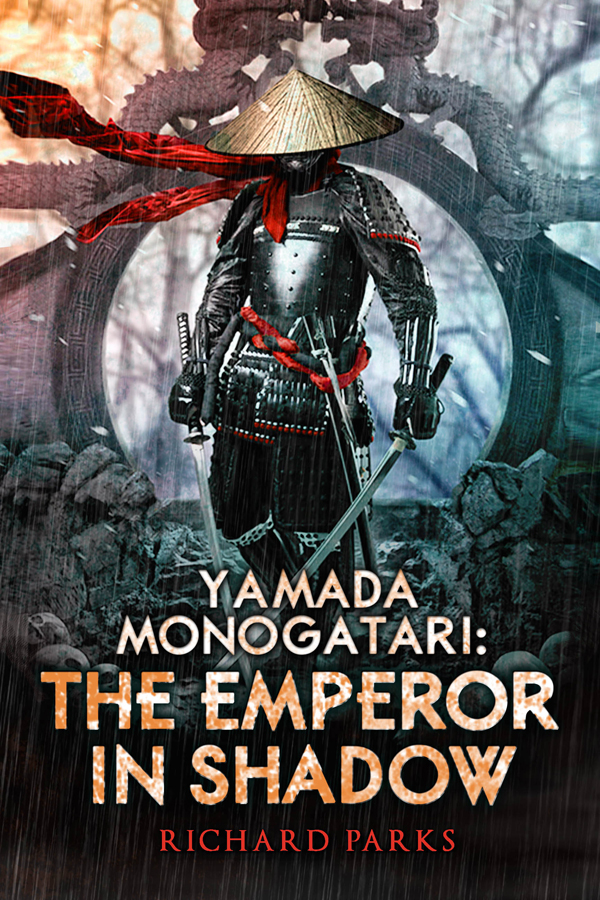
YamadaEmperor-600I have a quirk which my wife has often remarked upon. I have conversations in my head which I then forget to have in real life, yet will sometimes believe that I’ve done so. I’m so used to holding up two ends (or more) of an imaginary conversation and spinning scenarios that it’s not always easy to turn off. Unchecked, it can play havoc in a normal relationship, and I do try to keep it under control. Nevertheless, I’d never want to eliminate this quirk, because it is simply too useful a tool. What is dialogue except an imaginary conversation between two beings who do not exist, save on the screen or page?

However….

What happens when the imaginary scenario turns into an imaginary scenario? By which I mean in the writing process an imaginary conversation did not manifest beyond the imagination?

You’re right—I’m not sure I understood that last bit myself, so let me try again, more concrete, less surreal. I finished the rough draft of Yamada Monogatari: The Emperor in Shadow on May 24th. First Reader was kind enough to push it up to the top of her queue because of the time crunch, and the last several days I’ve been working through the rewrite. In the book Yamada needed a crucial piece of information. I worked out a logical way for him to receive said information without alerting the wrong people, and I worked out the scene where it happens. I set the logic bomb in motion and wrote out what followed from this crucial scene to the end of the book.

One problem—I never wrote the actual scene.

How did I manage to do this? Beats me, fore the reason already mentioned. I did not discover this until the read through. There was a hole in the book, left there by me because I had envisioned the scene and its aftermath so clearly, so completely, that somewhere in the twisty lump I call a brain, I thought I’d already written the darn thing. Only I hadn’t. This took all of ten minutes to correct, since the scene was still in my head, down to the last detail, right where I had left it. It was like sentences where someone leaves out a word—or perhaps you do it yourself—in a succession of words which flow such that your brain fills in the missing word even though it is not there. Sometimes you never even notice.

Fortunately for me and the book, I did notice. Though if I hadn’t, I fully expected to hear about it from my editor at Prime—“How the hell does he know this??”

I spared us both the aggravation, but it was a close call.

The book is turned in, and assuming no major revisions are needed—or I didn’t leave anything else out–we should be on track for a September 2016 release. Now it is on to other imaginary conversations, which I hope I will at least remember to write down.

Review: Escaping the Delta: Robert Johnson and the Invention of the Blues

Escaping the Delta: Robert Johnson and the Invention of the Blues by Elijah Wald (Amistad, 2012)

I thought I knew the Blues. After all, I was born and raised in Mississippi, and while I live in New York now I’ll probably not last long enough to match the chunk of my life spent within 40 miles of HWY 61 and within spitting distance of the Delta.Then a very good friend of mine recommended this book and I had sense enough to listen to her (Hi, Amiga).

Turns out I didn’t know squat, either about Robert Johnson or the Blues in general.

This book by Elijah Wald was both a revelation and an education and does as good a job as probably can be done with separating fact from legend. Spoiler Alert: No, Robert Johnson did not sell his soul to the devil at the crossroads of Highways 61 and 49 for his guitar chops. The real story is much more interesting. As is the real story of the Blues, where it started, who started it, who the early performers were and who they were not. How early 20th century popular music informed and shaped it. The role of the amateurs and the role of the professional musicians. If you’re at all interested in the Blues and how it relates–and more importantly, perhaps– how it DOESN’T relate to the early roots music of America, you need this book. While Wald, as I said, does a great job of separating fact from legend, the legends remain, of course. Legends are awfully hard to kill, and Robert Johnson at the Crossroads is too good a story. But if you want the real story, or at least as close to it as any of us are likely to get, this book is the place to go.

Escaping the Delta: Robert Johnson and the Invention of the Blues

What’s He On About Now?

YamadaEmperor-600One drawback of working on a longer project like a novel is you don’t have a lot left in you for anything else. Say, blogging, for example. Normally I try to post these every Monday like clockwork, but here it is Wednesday (thank you, Captain Obvious) and I am late. I don’t like being late. Normally I show up for appointments fifteen minutes early or more and everyone ELSE is late. Usually doctors and dentists, whose time as they will willingly tell you is much more valuable than yours.

Well, to them or anyone else this is literally true, since all any of us has is time. Everything else—money, cars, clothes, your ipod–is a temporary construct relating to how we live in the world, but time is what matters and no one as a general rule knows how much they have. There is much unnecessary fretting over this. I’m prone to it myself, especially when I’m under a deadline, either contractual or self-imposed, makes no difference. It reminds me of a scene from Neil Gaiman’s Sandman graphic novel series where his sister Death has just collected the soul of a baby who passes in SIDS, and the baby is not happy about it, to paraphrase, “That was it? That was all I got?” To which the reply was, again paraphrasing, “You had a life. That is all anyone has.”

So all we have is time, but the only time we really have is now. So what we decide to do with it? Yeah. It kind of matters. I don’t always make the best choices about that, but then I don’t know anyone who always does. We act like we have forever even when we know it is not true. Sometimes that illusion is all that gets you through a day, but best not to forget that it is an illusion. If there is anything at all which is not an illusion, it is now, the only point in time where action is possible. Like writing a late blog post, because there were things I believed to be more important at the time.

For instance, finishing the first draft of The Emperor in Shadow, complete at 94k words. It’ll probably be close to that after the rewrite. I usually put in as much as I take out. Sometimes more, sometimes less, but usually within close tolerances. I won’t call the book done, since that doesn’t happen until it has gone through rewrite then editing and come back from the printers. Then, for better or worse, it is done, and likely on time for a September release.

Then it is time to move on to something else because, you know, that whole “now” thing keeps happening. Until it doesn’t.