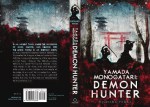
 The pre-publication prep on Yamada Monogatari: Demon Hunter is drawing to a close. So far the manuscript has been proofread by two people other than myself, and if any typos remain it wasn’t for lack of effort in hunting them down. It’s always best to have a pair of eyes other than your own when cleaning up a book—it’s far too easy to read what you expect to be there and what should be there rather than what actually is there. And no matter how long a manuscript sits, you’re never going to be able to review it with the objectivity that someone from the outside brings. That’s just the way it is.
Speaking of the way things are, the book already has its first review. From a reviewer who couldn’t finish it. You see, all the chapters “read like short stories.”
I know I heard a few of you snorting your coffee, or whatever beverage of choice, just now. “There’s a reason for that,” you might say, as did I when I first read the review. And it would be easy enough to slag on a reviewer who massively missed the point, but that itself would be missing the point. See, this is the exact opposite of the problem above. The book/story whatever it is, it’s your baby. You know it better than anyone. So well, so involved that you can never be completely objective about it. That’s when you’re trying to make it presentable to show the world, but then comes the next step—you show the world. And not anyone out there is going to know, to the core of their beings, as you do—just what is in front of them. Sure, it’ll look like a book, and have pages and words and things like, you know, a book. After that you’re into the realm of interpretation. Inevitable, completely out of your control, interpretation. Your book has left your world, where it was cherished and understood, and gone out into a world that, frankly, isn’t inclined to cut it any slack at all. They might read the cover copy about what your or another reader might have believed the book was about, but everyone knows that this much of it is hype and pitch. They will make up their own minds, thank you very much.
Here’s the thing—whatever your intention in creating it, you don’t get to decide what the book is. People who are not you are going to read the book (or attempt to). More to the point, they’ll compare it to their inner framework that tells them what a book is. Maybe that inner framework can’t take into account the fact that the book is a collection of short stories. Maybe they never read short stories. Maybe they don’t even know magazines and short stories exist. Don’t laugh, I’ve come across a few readers like that. Or they know about them but never read them. A book of fiction is a novel, and that’s how they’ll read your work, and find it lacking because it’s not a very good novel. Saying “It’s not a novel!” won’t melt any ice, because what you say the book is has no framework in their world, and you’re not going to be there to explain it anyway and it wouldn’t matter if you were.
I learned a long time ago that what I wrote wasn’t always what people read. Listening to reader interpretations of a story or book of mine over the years has been–and I hope continues to be–fascinating. If you’re a writer, you’ll probably see the same thing. There’s no point griping about it because, even though people will always read the book they think they’re reading and seldom the one you wrote, they’re not wrong. They decide what your work is for them: joyous or depressing, deep or ordinary. That’s their right.
What matters is that, now and then, you connect with a reader or two who is ready to read the book or story you actually wrote. They’re the ones you’re really writing for, and all you can hope for is that you find them.

 On Wednesday, January 30th, (tomorrow, as this post fits in linear time. Which is an illusion, but let’s not go there right now) Scott Andrews at Beneath Ceaseless Skies will be doing one more giveaway of a signed copy of Yamada Monogatari: Demon Hunter , this time on Twitter. You can see the full rules here, but basically all you need to do tomorrow between 2 and 6 PM Eastern Time is tweet the title of your favorite Lord Yamada story to Scott at @BCSmagazine. This will enter you in the contest, and the winner will be drawn at random.

 Richard Parks