Unknown's avatar

About ogresan

Richard Parks' stories have have appeared in Asimov's SF, Realms of Fantasy, Fantasy Magazine, Weird Tales, and numerous anthologies, including several Year's Bests. His first story collection, THE OGRE'S WIFE, was a finalist for the World Fantasy Award. He is the author of the Yamada Monogatari series from Prime Books.

To Those Who Wait

Heavenly Fox - eBook1You’ve heard the old saw, “Good things come to those who wait.” And of course, bad things as well. “Good” and “Bad” are matters of perspective. Something happened late last month that I consider very bad. However, it may lead to good things eventually, perhaps even better than matters would otherwise be. I just don’t know. Time and perspective are required, so I’ll wait for both, in the sense that I’m paying attention for when they arrive. In the meantime, I’m not waiting for anything. I’m doing my job and trying to accomplish things I consider important, so perhaps when more time and perspective have arrived, I’ll be ready for them.

That’s the key, of course—it’s not about waiting. It’s about being prepared. Doing your work, no matter what else may be going on in your life. Sowing the fields. And while you’re busy not waiting, crops can suddenly appear. Within the last week I’ve sold one new story and given permission for two reprints: one for production as a podcast and another for reprint in a new Mammoth anthology. More details when everything is set and ironed out. The new story is called “The Manor of Lost Time,” and, pending editorial approval of some relatively small revisions, it’ll be published by Beneath Ceaseless Skies, probably in late spring.

None of which would have happened if the work hadn’t already been done. I’ve told this before but it certainly applies here–I remember when one of our old writing group comrades, then still unpublished, was marveling at those of us who were selling—sporadically, sure, but selling—“Any day you check your email or go to the post office, something good might come to you.” When I pointed out that, on any given day, it was more likely that nothing at all would happen, she rightly dismissed that. “But it might. I can’t imagine what that’s like.” I understood what she meant, since I’d been on the other side too for a lot of years. Yet even then you’re laying the foundation, plowing the fields. Preparing for what may yet arrive.

Now and then, you get a sprout. But not if all you do is wait.
Leaving on My Mind

ATGOH-Proof CopyThere’s a chance we’ll be moving either late this year or early next. Nothing’s decided or settled yet, but at the moment all signs are pointing to a change. These days I find myself taking long hard looks around my library, trying to decide what things I merely like and what things I actually need. There’s usually a disconnect there, when you really do look. Sure, you may like having a complete set of the old Encyclopedia Brittanica, but do you really want to lug it to another state in the back of a car that’s already too small? If taking it means leaving something else, what then?

It’s a little hard to think of it in terms of revision when it’s your life you’re talking about, but the process is pretty much the same–decide what matters. Get rid of what doesn’t. Sure, you may have thought that was a cute scene and it was fun to write, but does it really serve the book/story? If you took it out, would the reader notice? More importantly, would the reader (if they ever found out) appreciate the fact that you didn’t bring the pace to a halt while your characters become pointlessly witty with one another? Do you really need to lug all those words to the next draft where you know you’ll be asking yourself this question again?

As with the clutter of accumulation, personally I find revision empowering, as in “Sure, the story is good. I can make it better.” We can make our workspaces and our lives less cluttered, too. All it takes is to consider what you like, and what actually matters, and knowing the difference.

The book sale continues, probably through April but no guarantees. I am nothing if not capricious. I have, however, added my ebook releases for the Kobo and Nook as well as the Kindle. This doesn’t, of course, include anything released by TOR or Prime. Those are under their publishers’ purview. You do what you can.

One Step Closer

SigningSheetImage2They have arrived. The signing sheets for the PS Publishing edition of To Break the Demon Gate, that is. There will actually be two PS editions: a 100 copy signed edition, and an unsigned edition of maybe 3-5 hundred. I will have to sign more than 100 copies of the sheet, of course. They always allow a little for spoilage and the fact that people can get really sloppy with their signatures. They’ll pick the 100 best ones and use those for the books. So if you get one and are shocked by my horrible handwriting, just consider–this is the best I could do.

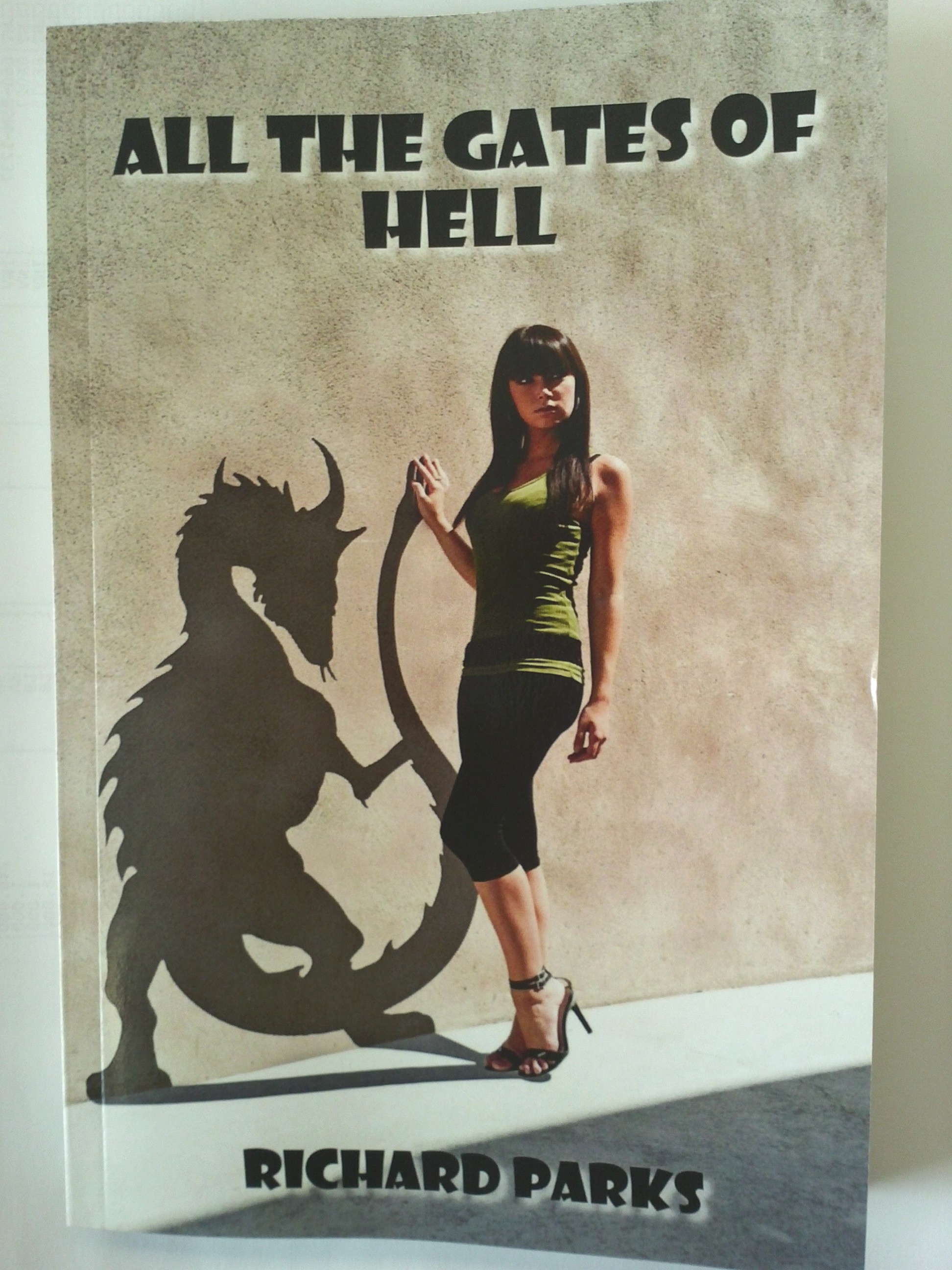
To acknowledge this festive (for me, anyway) occasion, I’ve decided to put a few of my Kindle(r) books on sale. For the time being, All The Gates of Hell, The Heavenly Fox, and The Ghost War are now at $0.99, down from $2.99 and $3.99. I’m not sure how long I’ll keep them there. Probably not long–I feel so cheap when I do this, so if you’re going to take advantage of me, now’s the time.

Edited to add: And I’ve thrown in a few more, what the heck. You can see which ones by going to the Kindle List.

Letting Go

WRITING 02I’ve written stand-alone books and stories and series books and stories. One advantage I’m finding with the stand-alone books/stories is that it’s easier to move on. Rather like the emotional difference between a brief fling and a long-term relationship. Note that this has nothing to do with either the quality or the emotional impact of a stand-alone book versus a series on the reader. I’m talking more about the length of time one spends in the headspace of a particular character or set of characters, and then one day, poof, you know you’re not going to be going there anymore. That’s the effect on the writer.

Some of you may have read a couple of my Eli Mothersbaugh ghost hunter stories. I wrote the first one, “Wrecks,” back in 1996. I wrote the last one (or rather I finished the last one, since it went through several iterations), “Diva,” in 2006. I’d spent ten years in Eli’s head, and when I finally realized that the story I was revising for the umpteenth time was going to be the last one, it was more than a little depressing. See, I liked Eli, and I liked reading about what he’d been up to, which was why I was writing those stories in the first place. Or to paraphrase The Most Interesting Man in the World (srysly?), “I don’t always write series, but when I do, they are not open-ended.” There’s always an overall story arc, even if I don’t realize what it is from the beginning. I finally realized that “Diva,” had left Eli in a good place, and he wasn’t inclined to budge from it. I haven’t written a new one in five years, so I must have been right.

Knowing where I’ve been, series wise, tells me where I’m going. The Laws of Power series, currently including The Long Look and Black Kath’s Daughter should eventually reach to four books, but that’s it. When I write the last one, Marta’s story will be told. I know I’ll grieve a little when that happens, since I’ve been writing about the character since 1994. The same thing will happen eventually with Lord Yamada. I’ll reach a point when I’ll know I’m done–or that he’s done–and that will be that. And it’s going to hurt a little when that happens. Yes, I know that none of those characters are real, but they were as real as I could make them.

The end has to sting at least a little bit, or I didn’t do my job.

TCB, No Flash

WRITING 02Last week I signed the official contracts for the first American edition of Yamada Monogatari: To Break the Demon Gate. The title will be shorter in the UK limited edition, since for them it’s a single book, but to Prime it’s the second book in a series. Assuming the stars align and nothing blows up, I should see the contracts for the third book—Yamada Monogatari: The War God’s Son sometime next month. I say “should” advisedly, because nothing IS signed yet and the stars might not align and something may very well blow up. I will point out here that I am not being pessimistic at all, merely realistic. Books may be imagination and dreams given corporeal form (and is that a neat trick or what?) but publishing is a business, and when it comes to business, being realistic is the order of the day.

I could be wrong, and often am—but I think it was Mike Resnick who first said “Writing is art until the piece is finished. Then it’s a business.” Selling a piece—short story, poem, novel, whatever—is just the first step in that business. It’s a tricky first step for a lot of people, which in part explains why so many go to self-publishing from the start. That works for some people, and there’s no denying it. Good for them. For most, however, it just means that it’s not the editors who are rejecting them now, but rather the readers who get to do it later. I can’t imagine that delayed anguish feels any better than the more immediate sort. And it lasts longer. Regardless, for the traditional route, it’s the initial acceptance that brings the stardust and trumpets. Contract time, on the other paw, is proper and necessary but one thing it isn’t is exciting. It almost feels like homework, or doing taxes. Read each clause, be sure you understand it. You do that whether or not you have an agent, because no one—no one—is looking out for you the same way you yourself are, or darn well better be. It’s your career, if you want to have one.

Important, yes, even crucial, but anti-climactic too. I always feel just a little bit depressed after I sign a contract. Maybe it’s the feeling that “It all comes down to this?” That feeling starts to pass by the time the check arrives. But when I see my book in my hands? That’s the excitement part again, and then the book is off to the readers for final judgment. And what it’s really all about.