Cutting to the Chase, or Chasing Cuts

Yesterday I wrote a short fairy tale, because I had a deadline and I like fairy tales. Either is reason enough on their own, but together? Kind of compelling. The story is about a girl and a magic fife, or rather it concerns those two; what it’s really about is a separate matter. It’s kind of like most stories that way.

See what I did there? I rambled a bit. Went off on a rather wordy tangent. Drifted from the point somewhat. Repeated myself, and then got redundant. All perfectly acceptable things to do, I might add, in a rough draft of a story. Because, as I’ve pointed out before, the job of a rough draft is not to be good. The job of a rough draft is to be done. “Good” is what the rewrite is about, and aside from continuity, structure, and thousands of other fiddly bits, one of the most important skills when approaching “good” is knowing when you’ve repeated yourself, gotten wordy, gone off on tangents, etc., and cutting it out mercilessly.

Lest you think I’m lecturing you, I will hasten to point out that I’m simply reminding myself of something I need reminding about every so often. See, when I wrote the story yesterday it only went about 700 words. Too short, right? Nope. The problem was it was too long. The strict length requirement was 500 words, and I had 200 more words than I could use. And it wasn’t a “simple” matter of cutting out 200 words; we also have to take into account the fact that any story is likely to need more words in certain spots, such as where a reasoning must be clarified, or a connection needs to be made explicit. Suddenly that 200 words is starting to look more like 300, to make room for words that are needed, or over 42% of the entire draft.

Here’s the first paragraph as I originally wrote it:

“Once upon a time there was a girl named Callie who played the fife. It was an old fife, a bit battered yet still capable of sweet music in the right hands. It had belonged to her grandfather. He taught her to play, and when he felt his time approaching, passed the instrument down on the condition that she care for it until her time came, when she was to pass it along as he had done. Cassie loved her grandfather and she loved playing the fife, so she agreed to everything he said.”

A bit wordy but not terrible. But I had to get those words from somewhere, and Callie’s relationship—and agreement—with her grandfather is already both implied and made explicit at other points in the story, where they serve better. So….

“Once upon a time there was a girl named Callie who played an old fife she had from her grandfather. She played for local dances and gatherings, and the people swore they had never heard sweeter music.”

Ninety-four words down to thirty-seven. The kick is that the first paragraph actually got longer than what you see here, because I combined the original first three paragraphs into one no longer than the original first. Which had the double virtue of removing excess words and getting to the story’s main conflict a lot sooner(kind of important in a 500 word story). For anyone who preferred the first paragraph the way it was, I’ll just point out that a piece of fiction, just like a sonnet, has to fit the parameters. When something has to go, it’s the writer’s sole judgment call as to what works and what doesn’t, and right or wrong doesn’t enter into it.

Only the reader gets to decide that part.


Ursula K. Le Guin

Ursula Le Guin

October 21, 1929 – January 22, 2018

I haven’t written anything about the passing of Ursula Le Guin before now because I couldn’t put two coherent thoughts together. I’m still not sure I’m ready but I’m going to try, despite the cat purring in my lap demanding all the attentions. Living creatures have their own priorities and in that sense I’m no different.

I never met her. Other people who knew her best will have the personal remembrances of the woman herself, I can only speak of her work and its effect on me. I’ve spoken at times about influences that made me whatever I am as a writer, though as I look back on it these influences were more about teaching me something I needed to know at the time I was ready to learn it. Parke Godwin? He taught me lessons about humanity. Fritz Leiber? That the limits of genre were illusory, and there was very little it could not do. Ursula Le Guin? She taught me what magic was and—just as important—what it wasn’t.

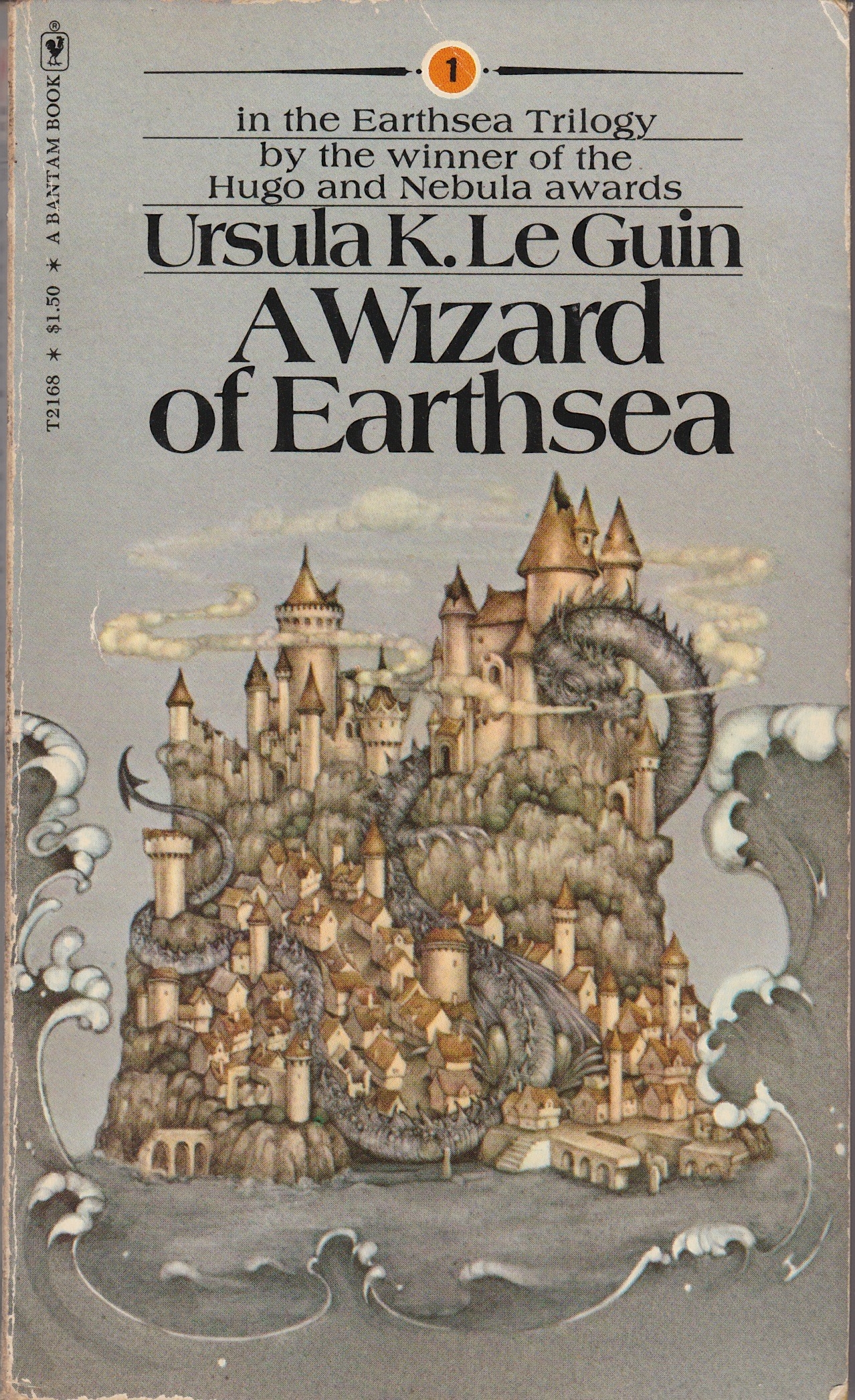
There are other lessons, of course. Some I still may not be ready for. Take her classic, The Word for World is Forest. I’m going to have to come back to that one, I hope when I’m a little stronger and wiser. At the time I needed it, however, there was The Earthsea Trilogy, which later became the Earthsea quintet with Tehanu and Tales of Earthsea. Yet in the beginning, there were three: A Wizard of Earthsea, The Tombs of Atuan, and The Farthest Shore. They were first marketed as “young adult,” probably because Atheneum, the original publisher, didn’t know what else to do with them, and it was true as far as it went. However, I read them in college, when I really was a young adult, or maybe just a kid trying to figure out what “adult” as in “grown up” really meant. Ged, the young wizard in Earthsea, was trying to sort out the same thing, and in the course of the three—then four—books, he does, even though all the books, especially the last few, aren’t really about him. Which makes sense—a lot of growing up isn’t about you at all, but everyone around you and your relationship with them. Some things I can see now that I couldn’t then, but that’s all right. The lesson was waiting for me.

Then there was her classic, The Left Hand of Darkness, which made me and a lot of other people think about gender and what it does and doesn’t mean. Her early collection of stories, The Wind’s Twelve Quarters, which remains one of my favorite books ever.

Now Ursula Le Guin the person is gone from the world, but Ursula Le Guin the writer remains, and there is, I realize, a lot of her work that I have yet to get to, and I hope I will.

I hope I’m ready.


Story Time: Closing Time

Today’s Story Time is from the collection The Devil Has His Due, published in 2012. It’s a book I put together myself, and many of the stories were originals. There’s a reason for both. See, I’ve always enjoyed “deal with the devil” stories. They’re fun to write, but old-fashioned (read “cliche”) and not likely to find sympathetic editors in most conventional places these days whether the story is good or bad. But sometimes I wrote them anyway, just because. So I put them there. “Closing Time” is a bit of an exception. It is not a “DWTD” story. It’s a consequences story. The fact that it takes place in hell is incidental.

Standard Note: “Closing Time” will remain online until next Wednesday, March 21st, when it will be replaced by something else.

Telling the Legend

Back when I was in high school, in some antediluvian age now best forgotten, in Mississippi history class, we were told of the legend of “The Singing River,” the Pascagoula. In much later life it occurs to me that we learned a lot of legends in that class, most of them not labelled as such. Sorting out the truth became our own responsibility. Most of us failed. Some of us are still working on it.

In that spirit I took a look at one of the few legends labelled as such, the story of the Singing River. The basic legend was simply this—there was once a peaceful tribe that lived on the river of the same name, though that wasn’t its name at the time. That the Pascagoula people actually existed is not in doubt. The name was probably derived from the Choctaw words meaning “bread people.” Early explorers like d’Iberville met them and wrote about them. They were indeed peaceful and not a very large tribe, perhaps 240 people spread among three villages when the first settlers came.

The story goes like this: The Pascagoula were allied with the Biloxi (Taneks) tribe, but had a falling out and the Biloxi planned to attack. Knowing they could not win, and rather than be killed or enslaved, the Pascagoula as a group joined hands and marched into the river singing their death song, so the Pascagoula  River was known thereafter as “Singing River.” Rather poetic and all, as legends should be. There’s also another account, by the historian Charles Gayarre, that a completely different tribe worshiped a river goddess in the form of a mermaid, singing and playing strange instruments in her honor. When they were approached by early missionaries their goddess appeared and summoned them all to join her in the river rather than be converted, so they did, where they still sing in her honor.

Sounds made up, doesn’t it? Especially that last one. In the case of the Pascagoula River, there’s another problem—the river was known to sing long before the Pascagoula tribe disappeared. Also according to Gayarré, the governor of Louisiana, accompanied by members of the Pascagoula tribe, heard the sound. Whether the river actually sings or not depends on who you ask, but there are people who claim to have heard it even today, and a report at the time described it as a low hum in the note of F.

So what did happen to the Pascagoula people? It’s not hard to sort out. Pressure from white settlers pushed them west. Some regrouped in Texas for a while, others assimilated into larger tribes (like the Biloxi) which in turn were pushed out, many following (not by choice) the trail of tears to Oklahoma. The Choctaw and Chickasaw were able to maintain their identity despite all this, but some smaller tribes like the Pascagoula could not, and passed from history. Most didn’t even get a legend. They’re just gone, surviving only as descendants in other tribes, or place names, or the names of rivers, or not at all.

Maybe that’s why our history books only told the legend.


Story Time: Could Be Worse

This Wednesday’s Story Time is an original piece of flash fiction titled “Could Be Worse.” Whether it could or not is up for the reader to decide, but that’s always the case. It was written as a writer’s group exercise on the key word “Warning.”

Consider yourself.


Standard Note: “Could Be Worse” will stay online until next Wednesday, March 14th. After that…likely not.