Review: The Last Rainbow by Parke Godwin

Continuing the purge of my old writing files after a hiatus to paint the master bath. Not only am I finding stories I never published (no surprise there, not every story is a winner), I’m finding stories and articles I’d forgotten I’d written. One of which was a fairly detailed review of Parke Godwin’s The Last Rainbow. I was reviewing for the long gone Fantasy Review at the time, and as I was going through my old file I found a letter from the editor telling me they already had a review of the book, so my review was never published and I’m including it here. There are a couple of spoilers, for those among you who believe that what happens in a book is what the book is really about, so fair warning.

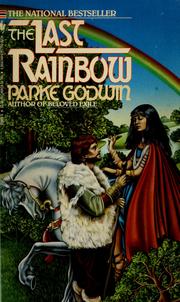
The Last Rainbow. Originally published by Bantam Spectra Books,
1985.

Parke Godwin’s The Last Rainbow is subtitled “A Novel of Saint Patrick” and that’s certainly true—in the same sense that Firelord was about King Arthur and Beloved Exile, Guenivere. As in it’s true so far as it goes, but it doesn’t go nearly far enough.

Novels about legendary figures are nothing new—the bare bones of fact and myth always beg for the flesh of the storyteller’s art, but to say that the vein has been mined before is to completely miss the point. What sets our best writers apart is not chosen genre, social consciousness, or even prose style. It is their ability to look at a subject, any subject, from their own unique perspective and let the rest of us see what they see. Communication is the heart and soul of any good story. Anything less is just ‘connect the dots’ and word games. T.H. White used “The Matter of Britain” in his The Once and Future King to reflect his own society, and if the images in his mirror are cloaked in fancy they’re never hidden. John Gardner took the Anglo-Saxon epic Beowulf and turned it on its head, telling the story from the monster’s point of view in the masterful Grendel, and suddenly we’ll never again be quite so righteously complacent in the hero’s triumph. Agree or not, we will look again, and wonder.

All of which is a roundabout way to point out that Godwin works a kindred magic in The Last Rainbow. He takes the stone statue life of Saint Patrick, and with a superb artist’s eye, patiently chips away the gilt of time and dogma to reveal the living flesh beneath. Continue reading

The Blood Red Scarf

The Blood Red ScarfI’ve always been fond of this short novel. I got to explore an area of folklore and myth that I don’t usually deal with. Or as a wise person once said, “Sometimes you have to let your dark side out to play.” And I did. I’m putting the Kindle edition on sale for the next two days, for .99, or about as much as I’d charge for a short story. It’s a deal.
The Blood Red Scarf


Yamada Monogatari: The War God’s Son — Audible Update

Break The Demon Gates endpapersI just got the news that Audible.com has made an offer for the third Yamada Book, The War God’s Son, so there will be an audiobook edition of this one as well. Word is they want the fourth one too, only there’s the slight technicality that it isn’t written yet.

I hope they’re able to get Brian Nishii to do the narration again, but that’s something to be determined later. In the meantime the third book actually is written, turned in, and scheduled for release in October of this year from Prime Books.

Capsule Description:

“With the Abe clan and its allies in full rebellion, the Emperor’s greatest military leader, Minamoto Yoshiie, is targeted for assassination by magic. It is up to the newly sober Lord Yamada and his exorcist associate Kenji to keep the young man alive long enough to put down the uprising before the entire country is consumed by war. Yamada knows how to deal with demons, monsters, and angry ghosts, but the greatest threat of all is one final assassin, hidden in a place where no one—especially Lord Yamada—would ever think to look.”

Something New, Nothing Old or Borrowed

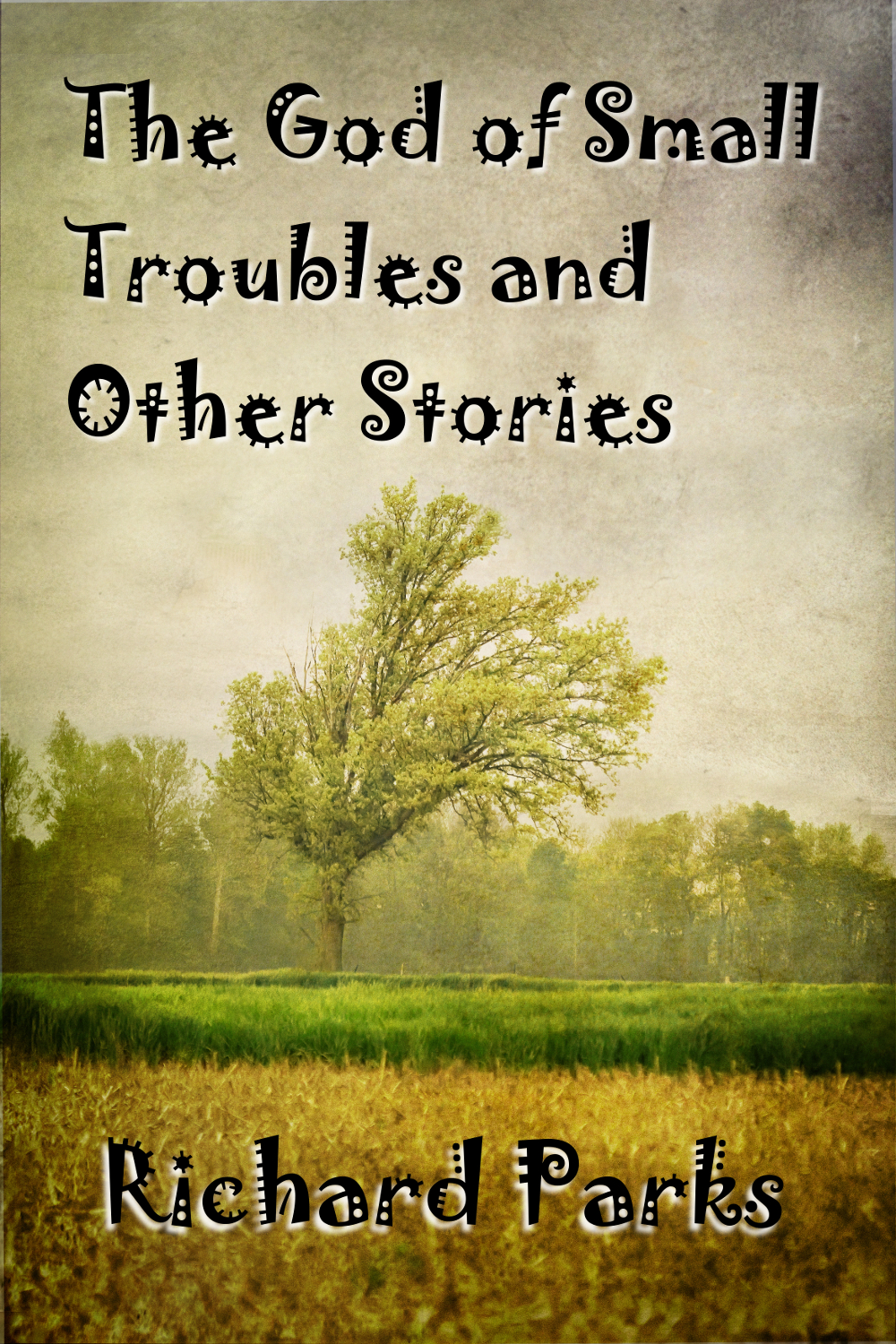
The God of Small TroublesThe official publication date for Yamada Monogatari: To Break the Demon Gate has been moved up from December 3rd to November 13th, but while we’re still waiting (humor me) I’ve put a new novella-length collection out in an ebook-only edition, The God of Small Troubles & Other Stories. This contains five new, original, never published anywhere else stories exclusive to this volume. The Kindle edition is out now. There will be a Nook and Kobo edition as well, but those are going to take a little longer.


TOC

The God of Small Troubles

Anchors and Sails

Olam Drexler’s School for Exceptional Children

Small Deaths

Miss Jean Takes a Walk

Things I Like – Part 1

I’ve talked about Parke Godwin as a person before, but now I’m going to concentrate on his legacy a bit. He tried out science fiction  (see The Masters of Solitude written with Marvin Kaye) but he really hit his stride with historical fantasy. I rank his take on the Matter of Britain at the very least in a league with Rosemary Sutcliff’s, and I do not say that lightly. My first exposure to this area of his work was The Last Rainbow, a take on the legend of St. Patrick, a subject I didn’t think I cared a whit about until I read his version. Parke Godwin came from a theatrical background (he was an actor long before he became a writer) and you see it in the care that goes into the creation of every one of his characters. They are never around just to serve the plot, a failing you’ll often run into even in the best of other authors’ work. Each and every one has, for want of a more appropriate term, stage presence. If a tinker shows up on page 234 for one scene only, you can bet he has a backstory, his own reasons for being where he is, and you’re likely to remember him when the book is done. There are no throwaway characters in a Parke Godwin Book.

Next up is Firelord. This is the beginning of the diptych of Godwin’s take on the legend of King Arthur. If I had to single out any one book as Parke Godwin’s masterpiece, this would proabably be it. Godwin’s take on the story of King Arthur takes him from Celtic tribal prince to a soldier in the last days of the Roman Empire’s influence in Britain to war commander to king. The fantasy element is always slight enough that one could ignore it, up to a point, but it’s there in a way that makes sense. Even Merlin plays his part, though he’s not who you might think he is. It’s a unique take on the legend, and I’m not giving any more away, so read it yourself, if you haven’t already. You’ll note above that I said “probably” his masterpiece. The only reason I’m a bit wishy-washy on that is because I waffle between Firelord and the second book, Beloved Exile. If Firelord is mainly Arthur’s story, then Beloved Exile is Guenivere’s. Specifically what happens after Camelot falls, a time period given fairly short shrift by most accounts of the story, maybe because the early tellers saw that as the end, but there are no endings, not really, and there was no way in hell that the Guenivere of Firelord was going to be retiring to a nunnery, then or ever. Which book is my favorite rather depends on what day you ask me.

There’s a lot more I could talk about, but then I don’t want to spoil it for anyone just getting into Godwin’s work. I will point out that you don’t want to overlook either Waiting For the Galactic Bus or The Snake Oil Wars, Godwin indulging his comedy chops with the linked stories of two extremely advanced aliens who get “temporarily” stranded on the Earth and the extreme mess they make of the place. There’s his one collection of short stories, The Fire When it Comes, including the World Fantasy Award-winning novella of the same name. There’s Tower of Beowulf. There’s his marvelously off-center take on Robin Hood—Sherwood, and Robin and the King. There’s…well, lots. Unfortunately a great many of these are out of print, but editions are available, and I’d jump on them while they are. You wouldn’t be disappointed by any of them, and if you are, well, we have nothing to discuss.