Do You Have the Time?

Sorry I’m late. Regular readers know, as a rule, that the blog goes live on Monday, and it is now Tuesday, and not even very early on Tuesday. Since we moved to New York state, as also some of you may know, we’ve been working on our new house, as well has having work done. I don’t claim to be the handiest fellow on the planet, but there are things I can do, and things I can’t. One thing I believed I could handle was the sun/mudroom, our three-season room that had sheetrock but no paint, window trim, or flooring. Its turn came at last so I’ve been working on that for the last few weeks, including rain delays, trying to get things finished before winter (the room may be indoors, but table saw, miter saw, and router are strictly outdoor critters which don’t take kindly to being rained/snowed on.) Anyway, to cut to the chase, the room was finally finished on Sunday, but in getting it done we had put off several errands that needed doing. That was Monday pretty much all day.

So here I am on Tuesday with a long, boring explanation of why this is going up Tuesday and not Monday. Also to talk a little bit about time management. Most of us who write do not have either the privilege or obligation of writing full time. Most of the time that I’ve been writing it’s been something I’ve squeezed in around all the other obligations of my life, mostly working for my actual living but not confined to that. Pretty much the same story as anyone else in my situation. We find a way, though having a regular schedule for most life events helps. At least that way you know what time might be available to you and you take it. In those situations your primary requirement is either being alone or having a very understanding spouse, significant other, or partner, because you will likely be taking time from those with a legitimate claim on that time.

I’m embarrassed to admit that, so far this year, I’ve only written two complete stories, “In Memory of Jianhong, Snake-Devil” and “On the Road to the Hell of Hungry Ghosts.” What’s more, I have absolutely no idea how I did even that much. I haven’t had a regular schedule since we moved here and I went into semi-retirement. Before I would have written in the evening after most of the day’s obligations were done, but redoing a house mostly on our own has been very demanding, and by evening almost all I’ve been good for is taking a nap, listening to music, or playing a bit of Skyrim. Now that the house is mostly done, this has to change. Whether or not I’ll have further work obligations is yet to be determined, but I still have this one obligation to myself that isn’t being met. I just have to find the time. We all do.
Story Time: Courting the Lady Scythe

Today’s Story Time is “Courting the Lady Scythe,” which first appeared in Ekaterina Sedia’s anthology, Paper Cities: An Anthology of Urban Fantasy in 2008. The anthology won a World Fantasy Award for the editor in 2009.

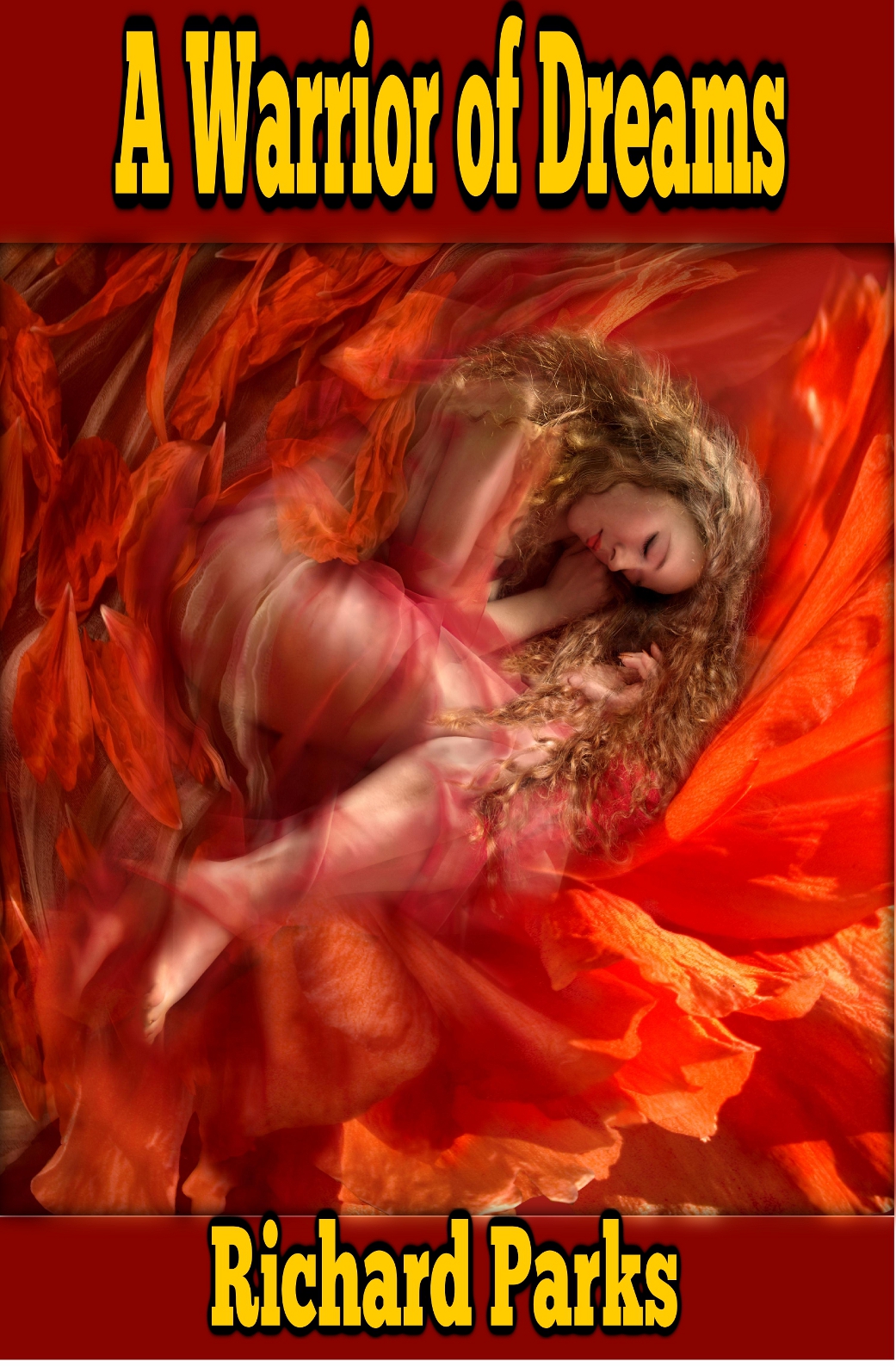
This story is set in the same universe as A Warrior of Dreams. Like any decent universe, there’s more that goes on beyond what you see in the main storyline. There are legends and fables and cautionary tales, and this is one of those. Which one is something you’ll need to decide for yourself.

Standard Reminder: “Courting the Lady Scythe” will be online until next Wednesday, October 25th. After that, there will be something else in its place.


Review: Tales of Falling and Flying by Ben Loory

Tales of Falling and Flying by Ben Loory, Penguin Books, 2017

I picked up Tales of Falling and Flying on the recommendation of Jeffrey Ford. Since I’d also discovered the weird and wonderful Strange Tales From a Chinese Studio from the same source, I was more than inclined to give this one a try, and was definitely not disappointed, especially in the weird and wonderful department. Tales of Falling and Flying excels in both categories.

At first glance, this looks like a collection of short stories. Once you’re into it, that perception gets stretched a bit, or at least mine did. Not that the tales within ran roughshod over classic definitions of a short story. I mean, they were about something. They had a beginning, middle, and end in the sense that they started somewhere, went somewhere, ended somewhere. It’s those “somewheres” that need a bit of a mental adjustment.

Take for example, the very first piece in the book, “The Dodo.” I’m just going to quote the opening line: “Once there was a dodo, and he died with the rest, but then he suddenly got back up again.” So what does a dodo who should be dead but isn’t do? If you guessed “Get forced into an identity crisis because he’s alive but all the dodos are dead, therefore everyone says he can’t possibly be one,” then you have the idea. Or consider “The Sloth,” which features, yes, a sloth, one who decides he doesn’t really want to hang around the jungle eating leaves and decides to go to the city and get a job.  What sort of job is there for a sloth in the big city? It takes the sloth a while to find out, but the answer follows very reasonably from what the sloth discovers in his search along the way. Or “Death and the Lady” where a woman goes to church and discovers Death sitting next to her, and if you think you might know where that particular story is headed, you’re both right and very wrong. If I had to pick one, I’d likely say that was my favorite, which is silly because you don’t have to pick one. The very idea is limiting.

One thing I can confirm is that there will be tales of “falling and flying.” Along the way the reader could be forgiven for thinking she was reading a book of special kinds of stories called parables, deep into double meanings and lessons and metaphors and whatnot. But then you hit a story like “The Ostrich and the Aliens” which, in its own metafictional way, pokes fun at the very idea. So maybe they’re not parables, or perhaps they are, or some of them, and I found myself thinking about each one even while I was reading it. Normally that sort of thing kicks me right out of a story, but not in this case. The stories invite a bit of consideration. Invite? Say rather they demand it. As for classification, well, I can’t speak for other readers, but after a while I stopped worrying about that and just gladly went wherever Loory was going. Plenty of time later to think about where that was. No conclusions yet, but I’m still thinking.

Which is just about the highest compliment I have to give.


Story Time: The Plum Blossom Lantern

I’m a bit late with this, so I have to apologize. A remodeling project took most of my day so I’m just getting to this now. Story Time this week is based on an Edo period ghost story called “The Peony Lantern.” The Edo period Japanese did love their spooky ghost stories, and who could blame them? However, I’d always felt there was aspect to the idea being neglected, and that was the ghost’s point of view. Once you look at it that way it becomes a different story entirely, and so my version, “The Plum Blossom Lantern.” Its first appearance was in Small Beer Press’ Lady Churchill’s Rosebud Wristlet back in 2003.

Standard Reminder: “The Plum Blossom Lantern” will be online until next Wednesday, October 18th. After that, there will be something else in its place.

Reviews and Whatnot

Quick Sip Reviews takes a look at Beneath Ceaseless Skies #235.  Aside from the fact that they liked the stories, it’s nice to find a review site doing short fiction reviews. You don’t see that much anymore. Novel reviews are easy to find by contrast, and part of the reason for that is there is so much short fiction it’s hard to keep track of even for dedicated fans. Novels are a little more manageable, though in sheer numbers they’re not too far behind. Even so, it’s easier to specialize in one facet of our fractured genre at novel length and keep a handle on things that way: Space Opera, Mannered Fantasy, Alternate History, Historical Fantasy, Hard SF, whatever.

Short fiction is a little harder to categorize, at least at first glance, and you sometimes can’t be certain how to pigeonhole something until you’ve read it, and sometimes even then. It sounds rather crass and limiting, to “pigeonhole” like that. It sounds limiting—and it is–but how else to break down the avalanche of material into manageable chunks? Once upon a time it was easier, there wasn’t so much and everything in genre was either sf or fantasy, and a reader/reviewer usually preferred one or the other. Now I don’t know how anyone could hope to keep up.

There are still some places where short fiction is reviewed regularly. Locus does a decent job, and has top notch reviewers. Locus was and is the trade magazine for the sf/fantasy field and it’s in any practitioner’s best interest to keep on top of what’s going on, yet I have to confess I recently let my subscription lapse after (mumble) years. Why? I’m still trying to figure that one out myself. I think it has something to do with how I’m seeing myself in relation to the genre, and considering things that I once thought were true which now I know aren’t. Pretty vague, I know, but right now it’s the best I can do. I’d still recommend it to anyone with an interest in what’s going on in sf/fantasy. No one place covers the field better or more completely.


Standard Reminder: Since I’m now on a weekly schedule with the Story Time page, on Wednesday the 11th of October “The Trickster’s Wife” will be replaced by something else. Read it while it’s there.